Yana Skakun

Autumn Mini Sessions in Cambridge: Golden Leaves & Family Portraits
By Yana Skakun·25 April 2036·5 min read
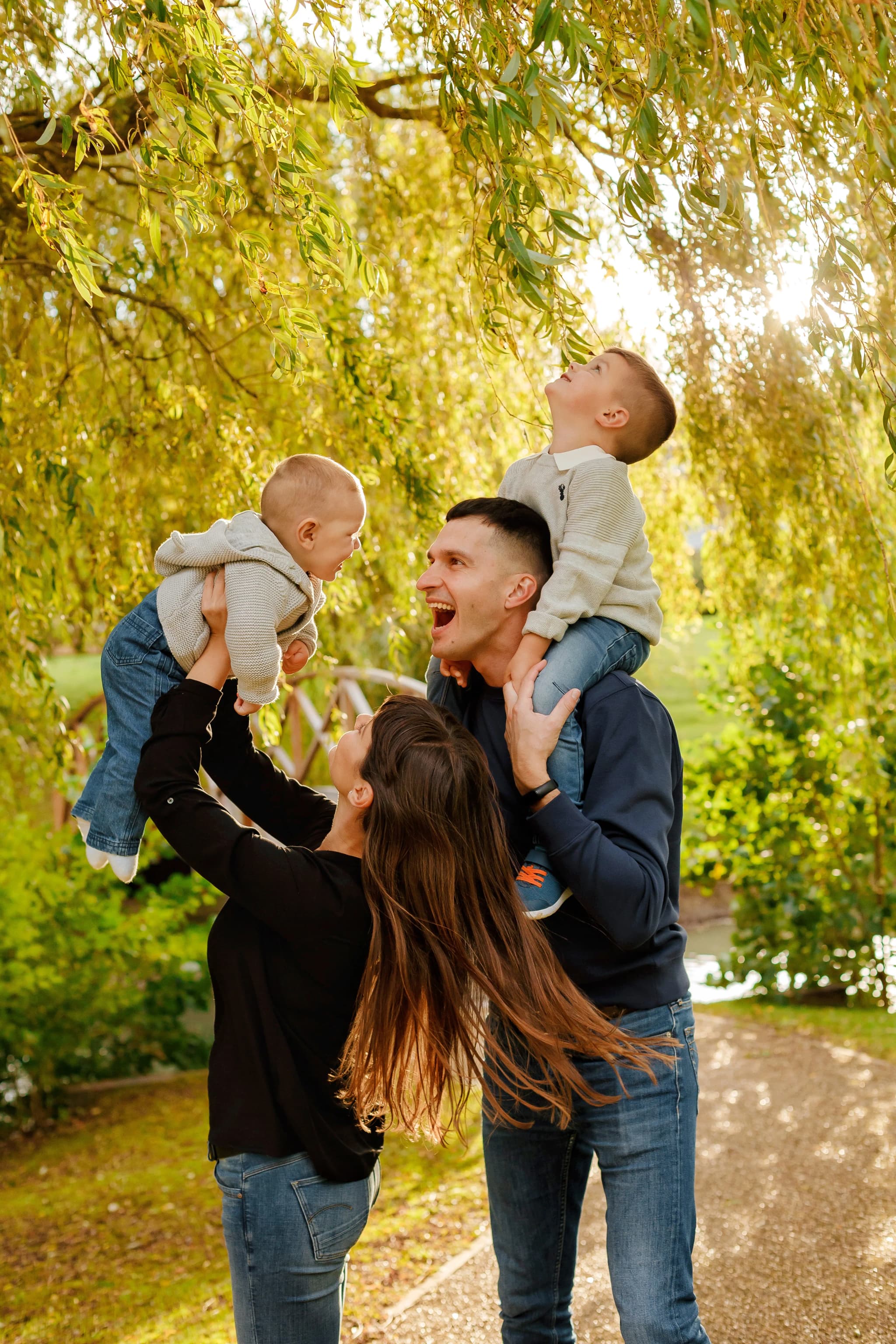
There is a very short window each year when Cambridgeshire turns into the kind of landscape that makes even people who never think about photography stop and reach for their phones. Copper beeches overhead, amber light filtering through thinning canopies, and the particular quality of October sunshine that sits low and warm rather than high and harsh. Autumn mini sessions exist to make the most of exactly that window, giving families, couples, and individuals a focused, unhurried slot in one of the county's most beautiful woodland settings before the leaves are gone and the grey of November arrives.
What an Autumn Mini Session Actually Involves
A mini session is a shorter, more focused appointment than a full family portrait session. Where a full session might run for ninety minutes to two hours and cover a variety of settings and moods, a mini session is typically twenty to thirty minutes at a single pre-scouted location, with a curated set of images delivered afterwards. The brevity is a feature, not a limitation. For young children especially, twenty-five minutes is often exactly the right amount of time before attention wanders and cooperation dissolves.
I schedule autumn mini sessions in back-to-back slots across two or three chosen weekends in October and early November. Each family or group gets their own dedicated time with no overlap, no rushing past another group in the same clearing, and no sense of being processed through a conveyor. The location is chosen and set up in advance so the session can begin immediately and every minute is used well.
The number of final edited images from a mini session is typically between twenty and thirty — enough to tell the story of that autumn afternoon, to capture the genuine moments alongside the more composed ones, without overwhelming you with hundreds of near-identical frames to wade through.
Why Autumn Light Is Different (and Why It Matters)
Professional photographers talk a great deal about light, and it can sound like mysticism to people outside the industry. But the difference between a photograph taken in flat midday summer light and one taken in October afternoon light is immediately visible to anyone, even without any technical knowledge. After the autumn equinox, the sun never climbs as high in the sky as it does in June. It stays lower, longer, and that lower angle creates shadows with more definition, warmth with more texture, and a general quality that flatters faces in a way that high summer sun simply does not.
The golden hour in October starts earlier and lasts longer than at any other time of year. By three or four o'clock on an October afternoon, the light in a woodland clearing already has that rich warmth that photographers in summer have to wait until eight in the evening to find. This means autumn mini sessions scheduled from early afternoon onwards can all benefit from genuinely beautiful natural light, rather than requiring everyone to turn up at awkward times around sunrise or sunset.
The foliage adds a layer of natural diffusion as well. Light filtering through a canopy of half-turned leaves creates a softness and evenness that is difficult to achieve artificially. I always position subjects to make use of this natural filter, so the images have a warmth and a gentleness that feels genuinely seasonal rather than artificially warmed in post-processing.
The Best Cambridgeshire Locations for Autumn Colour
Wandlebury Country Park on the Gog Magog Hills is my primary choice for autumn mini sessions. The beech woodland along the main paths at Wandlebury reaches peak colour in the third and fourth weeks of October most years, creating an overhead canopy that is completely golden at its best. The paths themselves are wide enough to work in, sheltered enough to be calm even on breezy days, and close enough to a car park that families with young children and buggies are not trekking for twenty minutes before the session even begins.
Hardwick Wood, a few miles to the west of Cambridge, is an ancient coppiced woodland with a more intimate character. The light there on a clear afternoon comes through the hazel canopy in the kind of dappled, shifting pattern that makes for genuinely magical images. Hayley Wood near Longstowe is another exceptional ancient woodland that reaches its colour peak slightly later, often into the first week of November.
For families based in Cambridge itself, the University Botanic Garden has an outstanding collection of mature specimen trees that turn at different times through October and November, meaning there is almost always something at peak colour somewhere in the garden. I also use the backs of the Colleges for certain sessions where the architectural context adds something to the images — King's College in particular, with its lawn and chapel, has a quality in October afternoon light that is genuinely difficult to replicate anywhere else.
A note on timing
Peak autumn colour in Cambridgeshire typically falls between 15 October and 5 November, depending on the year's weather. Warm, dry Septembers tend to push colour slightly later; wet autumns can bring it earlier. I watch the woodland locations closely from late September and set session dates to align with the peak as closely as possible. Booking early means you are confirmed for a slot and can swap to a nearby date if the colour is running early or late — flexibility I try to build in wherever possible.
Get in touch about autumn datesWhat to Wear: Practical Advice for Families and Couples
Clothing makes an enormous difference in woodland autumn photography and it is worth thinking about carefully. The background colours you are working with are warm — amber, gold, rust, deep copper — so clothing in those same warm tones blends into the background rather than contrasting with it. I generally recommend neutral mid-tones: camel, cream, terracotta, deep teal, forest green, burgundy, or warm grey. These sit alongside the autumn palette rather than fighting it.
Avoid bright white, which reads as very stark in woodland light, and avoid anything with large printed logos or text, which dates photographs quickly and draws the eye away from faces. For children specifically, layers work best: a jumper over a shirt allows for some variation through the session if they warm up from running around, and a light jacket or gilet adds texture to an image in a way that a single-layer top does not.
Wellies are genuinely useful for woodland sessions, especially for children. October woodland paths after rain have puddles and mud, and a child in wellies is a child who can run freely and enjoy themselves rather than one being steered away from anything wet. For adults, flat boots or ankle boots work much better than heels on uneven ground, and the practical footwear means you are comfortable for the whole session rather than tense about terrain. Bring a warm layer you can put on between shots — October mornings especially can be chilly when you are standing still.
How to Get Natural Photographs from Young Children
The number one question I get from parents before any session with children under eight is some variation of: "What if they won't cooperate?" My honest answer is that I rarely need children to cooperate in the way parents fear. A child who runs off chasing a squirrel is a child in motion, which is often a better photograph than a child standing still. A child who refuses to look at the camera can be photographed looking at something else, or photographed from behind, or photographed laughing at a sibling, and those images often end up being the favourites.
In practice I work with the energy and attention span children actually have rather than trying to impose a structure on them. For toddlers, having a parent throw leaves into the air produces genuine delight. For slightly older children, being told to race to a particular tree and back gets them moving and laughing. For teenagers, giving them something to do with their hands — holding something, walking, looking outward — is almost always more successful than asking them to pose and smile, which produces exactly the forced expression everyone wants to avoid.
The practical advice for parents: arrive at the session having managed expectations, not having over-hyped it. Children who are told they are going to have photographs taken and it is going to be amazing often arrive already in a state of resistance. Children who are told they are going for a walk in the woods where there will be leaves to jump in generally arrive in a much better frame of mind. The photographs happen during the walk.
How Autumn Mini Sessions Are Priced and Booked
Autumn mini sessions are offered at a fixed price that includes the session itself and a set of edited digital images delivered via an online gallery within two weeks. The gallery includes a download link for full-resolution files, a print-ordering option, and a selection tool for choosing a smaller curated set if you prefer a tighter edit. Prints, wall art, and albums can be added on from the gallery at any point after delivery.
Booking requires a deposit to secure the date, with the balance due before the session. Dates are released in September each year and typically fill within a few weeks, particularly the late October weekend slots which consistently have the best colour. Families who have booked in previous years are offered a priority window before dates go to general availability.
I limit the total number of autumn mini session slots each year deliberately. The experience of arriving at a woodland location to find it already occupied by three other photographers and their families simultaneously is one I want to avoid entirely. Each slot has a genuine gap before the next, the location is fresh, and you are not conscious of other groups nearby. That separation is part of what the session is meant to offer, and it is worth protecting.
Autumn in Cambridgeshire is genuinely beautiful and genuinely brief. The window when the woodland is at its peak lasts perhaps three weeks most years, sometimes less. Mini sessions are a way of making a defined, intentional space in that window — an hour including travel at a location that is already at its best, producing a set of images that capture your family as it is right now, in a season that will not come around again in quite the same way. If you would like to know about availability for this year's autumn sessions, get in touch and I will add you to the notification list as soon as dates are confirmed.

Yana Skakun
Photographer · England
Professional wedding, family and portrait photographer based in England. Passionate about capturing authentic emotions and timeless moments.
About Yana →autumn mini sessions cambridgeautumn family photography cambridgefall mini sessions cambridgecambridge autumn photographer
Mini Sessions — Professional Photography in Cambridge & England
Yana Skakun is a professional photographer based in Cambridge, covering weddings, families, and portraits across England. Every session is personal — planned around your story, your people, and the moments that matter most. This guide — Autumn Mini Sessions in Cambridge: Golden Leaves & Family Portraits — is part of the photography journal: practical, experience-based advice drawn from real sessions across England. Whether you arrived searching for autumn mini sessions cambridge or autumn family photography cambridge, the same care and attention shapes every session Yana photographs.
Professional Photography sessions are available year-round, with bookings open across Cambridge, Ely, Huntingdon, Peterborough, and further afield — East England, London, the Midlands, and beyond. If you have specific questions about fall mini sessions cambridge, mention it in your enquiry. Get in touch through the contact form above to check availability and discuss your session. Enquiries are welcomed from anywhere in the UK.
Frequently Asked Questions
What camera settings should I use for outdoor portraits?+
For outdoor portraits, shoot in aperture priority mode. Use a wide aperture (f/1.8–f/2.8) to blur the background and isolate your subject. Keep ISO as low as possible in good light. In bright conditions, use a neutral density filter or switch to manual to avoid overexposure at wide apertures.
What is the golden hour in photography?+
Golden hour is the period roughly 30–60 minutes after sunrise and before sunset. The sun is low in the sky, producing warm, soft, directional light that flatters skin tones and creates beautiful long shadows. It's widely considered the best natural light for portrait and outdoor photography.
How do you get sharp photos in low light?+
In low light, increase your ISO (accepting some grain), use the widest aperture your lens allows, and slow your shutter speed to the slowest you can hand-hold without camera shake (roughly 1/focal length as a guide). Use image stabilisation if available, and consider a tripod for static subjects.
What is the rule of thirds in photography?+
The rule of thirds divides the frame into a 3×3 grid. Placing your subject on one of the four intersection points — rather than dead centre — creates a more dynamic, visually interesting composition. It's a guideline, not a rule: some of the most powerful images break it deliberately.
How do you edit photos to look professional?+
Professional editing starts with shooting in RAW format. In Lightroom or similar software, correct exposure, white balance, and contrast first. Recover shadow and highlight detail. Apply gentle colour grading for mood. Be conservative with skin retouching — the goal is natural enhancement, not transformation. Consistency across a set of images is what separates professional from amateur editing.
Continue Reading
Related Articles
Mini Sessions
Pet Mini Sessions: Professional Portraits for Your Dog, Cat, or Rabbit
5 min read · Read Article
Mini Sessions
Back to School Mini Sessions: Portrait Every September
5 min read · Read Article
Mini Sessions
Cake Smash Mini Sessions: Celebrating Your Baby's First Birthday
5 min read · Read Article
Get in Touch
Ready to Book Your Session?
Get in touch to discuss your vision — I'll reply within 24 hours.