Yana Skakun
Wedding Photography in Fulbourn & the Wilbrahams: South Cambridgeshire Villages
By Yana Skakun·12 August 2026·6 min read
Fulbourn and the Wilbrahams — Great Wilbraham, Little Wilbraham, and Six Mile Bottom — form a cluster of South Cambridgeshire villages that sit quietly east of Cambridge, where the land begins to open toward the chalk downland of the Suffolk border. For photography, this is productive country: old parish churches, ancient earthworks, duck ponds, and an unhurried pastoral landscape that has changed remarkably little in its essentials, even as Cambridge itself has grown around it.
Fulbourn Village and Its Church
Fulbourn is the largest of the group — a proper village with a primary school, shops, a church, and a pub, sitting three miles east of the Cambridge ring road. It is close enough to the city that guests unfamiliar with rural Cambridgeshire have no trouble finding it, yet it feels genuinely separate from the university-town character of the centre. The Church of St Vigor and All Saints is unusually interesting architecturally: the chancel has a spectacular medieval painted roof, and the building shows evidence of continuous worship stretching back to the twelfth century, giving ceremony photographs a real sense of depth and history behind the couple.
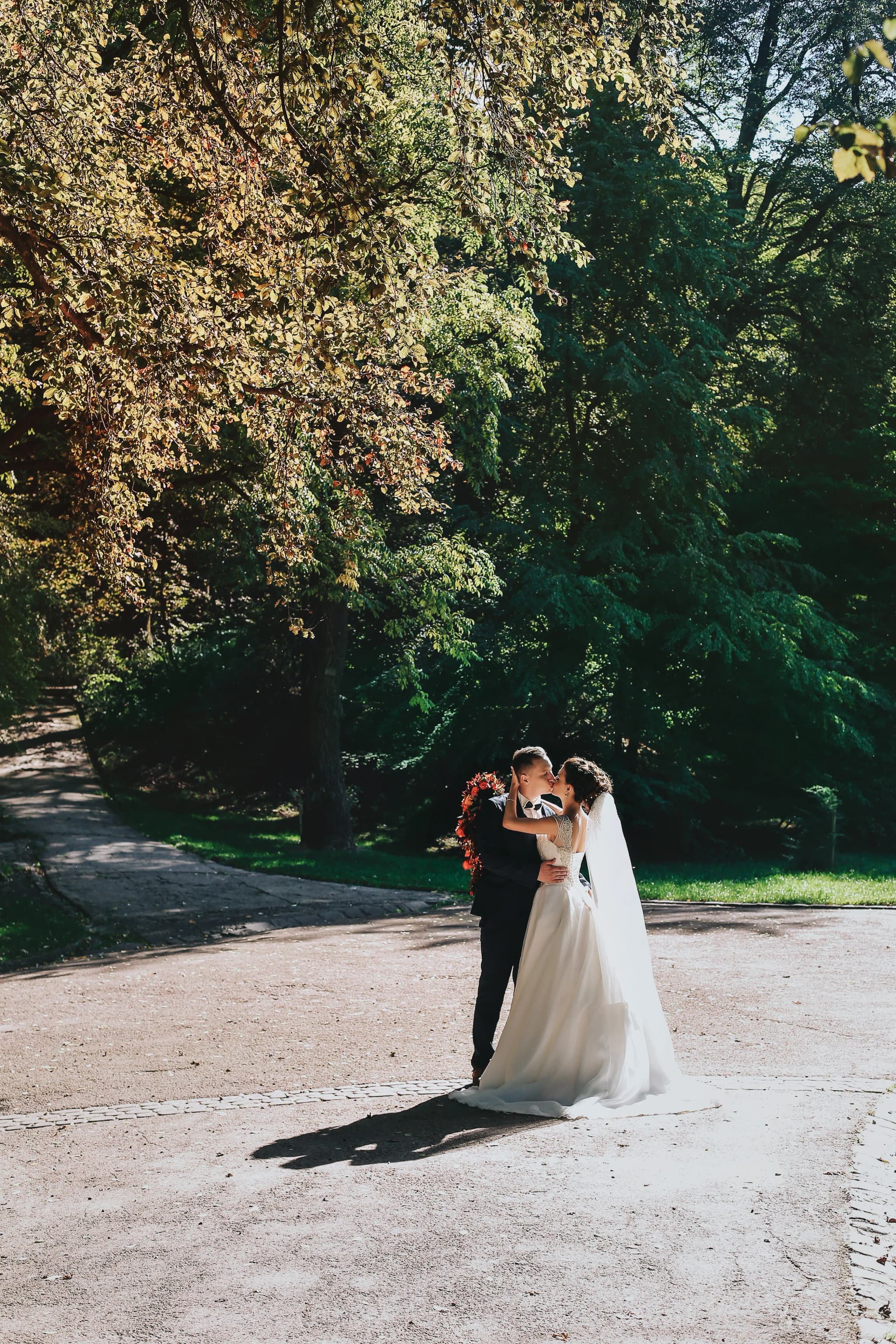
The Fleam Dyke, a late-Iron Age or early-medieval earthwork that runs east from near Fulbourn across the chalk, creates a raised ridge with wide landscape views west toward Cambridge. I use this stretch of dyke often for couple portraits after the ceremony — the combination of close pastoral ground underfoot and the distant Cambridge skyline of colleges, cranes, and country on the horizon is particular to this eastern approach, and produces images that could not be mistaken for anywhere else in the county.
Beyond the church and the dyke, Fulbourn's network of footpaths and hedgerowed lanes gives plenty of quieter backdrops for a relaxed, walking-paced portrait session between the formal parts of the day, without needing to travel far from the main venue.
Great and Little Wilbraham
Great Wilbraham is perhaps the finest of the three villages as a wedding photography location: a single main street of seventeenth- and eighteenth-century farmhouses in Cambridgeshire brick, a duck pond, and the tower of St Nicholas's church visible across the meadows beyond. The unhurried quality of the village makes it genuinely difficult to believe Cambridge city centre is only six miles away — it feels like stepping into an entirely different pace of life for the afternoon.
Great Wilbraham Church, dedicated to St Nicholas, has a fourteenth-century tower, a lychgate, and a churchyard yew that between them make a classic English village ceremony setting, the kind of backdrop that needs almost no dressing to look complete. The duck pond and village street nearby, with their thatched cottages and small ford, offer a quieter, more domestic set of images for the portrait portion of the day.
Little Wilbraham, a short distance further along, is smaller again and correspondingly more intimate. Wilbraham Temple, a fifteenth-century preceptory gatehouse ruin standing in the fields just outside the village, is a striking and slightly unexpected location for portraits if a couple wants something with real historical texture. Six Mile Bottom, at the eastern edge of the cluster, sits where the River Granta runs close by, offering riverbank portrait opportunities with something closer to a trout-stream character than the broader river through Cambridge itself.
A note on timing and light
These villages are most easily reached by car. The B1102 from Cambridge runs through Fulbourn directly, with Great Wilbraham a further two miles along minor roads. The area works well for wedding coverage in any season, but the flat light of the chalk lands takes on a particular warmth in the early morning or late evening, which is worth building into the day's timeline if portraits are a priority.
Enquire about your village weddingPractical Considerations for a Village Wedding
Weekend vehicle traffic through Fulbourn and the Wilbrahams is minimal, which means village street portraits are genuinely achievable without careful traffic management or a second pair of hands to hold cars back. This is a real practical advantage over more built-up locations, where a five-minute portrait can easily eat fifteen minutes of coordination with passing cars and curious onlookers.
Parking is generally straightforward in all three villages, though on a wedding day it is worth confirming with the venue whether guest parking will be on the main street or in a designated field, since that affects how much walking is involved between the ceremony and any portrait locations. Mobile signal is patchy in pockets of this stretch of countryside, so if timings need to be communicated on the day, a printed schedule shared with the wedding party in advance is more reliable than relying on messages sent from a phone.
Because the villages sit close together, it is entirely possible to have a ceremony in one and portraits in another within the same afternoon, without eating significantly into the reception timeline. I plan this kind of route carefully in advance so that travel time between locations is accounted for properly rather than guessed at on the day.
Guest accommodation is worth thinking about early as well, since none of these villages has a large hotel of its own. Cambridge itself, six to eight miles away, has the widest range of options, and several of the nearby larger villages have smaller guest houses and inns that suit a wedding party well if guests are travelling from further afield and staying over.
Seasonal timing shifts the character of these villages considerably. Spring brings blossom along the hedgerows and a fresh green to the meadows around Great Wilbraham that photographs beautifully against the older brick. High summer gives long evening light over the open chalk land, ideal for portraits on the Fleam Dyke well into the evening. Autumn turns the fields around Fulbourn gold and brings a softer, more atmospheric light generally, while a crisp winter wedding, though less common, has its own stark beauty across the open downland that few couples consider until they see it.
Why This Corner of Cambridgeshire Works So Well
What makes Fulbourn and the Wilbrahams stand out among the many villages around Cambridge is the sheer variety within such a small geographic area: a substantial parish church with genuine architectural interest, an ancient earthwork with sweeping views, a chocolate-box village street with a duck pond, a ruined medieval gatehouse, and a gentle river, all within a few miles of one another. Few clusters of villages this close to a major city offer quite that range without needing to drive between them for an hour.
For couples marrying at a village church or a nearby barn or estate venue in this part of South Cambridgeshire, that variety means the portrait session does not have to compromise on backdrop just because the ceremony venue itself is modest in scale. There is almost always somewhere within a short drive, or even a short walk, that adds exactly the texture a set of images needs.
I also value this stretch of countryside for the quality of light it produces, which is a slightly different thing from the quality of the scenery itself. Because the land here is open and gently rolling rather than densely wooded, the low sun of early morning and late evening travels a long way across the fields before it reaches a couple standing on the Fleam Dyke or in a Wilbraham lane, picking up a warmth and a softness that more enclosed locations simply cannot produce in the same way.
Planning a Wedding Day Around These Villages
Couples marrying in Fulbourn or the Wilbrahams often ask how much time to allow for travel and portraits between the ceremony and the reception, particularly if the two venues are not the same place. My general advice is to allow more time than feels strictly necessary on paper — guests move at a slower pace than the couple expects, cars need to be found and loaded, and the genuinely unhurried character of these villages tends to slow everyone down in the best possible way, but it does need to be accounted for in the schedule.
For couples wanting a specific portrait location built into the day, I always recommend deciding on it well in advance and confirming access if it sits on private land, such as some stretches of the Fleam Dyke or the fields near Wilbraham Temple. A short site visit beforehand, even informally, makes a noticeable difference to how efficiently the portrait session runs on the actual day, since neither of us is discovering the location for the first time under time pressure.
If you are getting married in Fulbourn, Great or Little Wilbraham, Six Mile Bottom, or any of the villages within this eastern stretch of South Cambridgeshire, get in touch and I can talk you through the best locations for your specific venue and timings.

Yana Skakun
Photographer · England
Professional wedding, family and portrait photographer based in England. Passionate about capturing authentic emotions and timeless moments.
About Yana →Fulbourn wedding photographerSouth Cambridgeshire village weddingGreat Wilbraham wedding photographyFleam Dyke engagement photos
Location Guides — Professional Photography in Cambridge & England
Yana Skakun is a professional photographer based in Cambridge, covering weddings, families, and portraits across England. Every session is personal — planned around your story, your people, and the moments that matter most. This guide — Wedding Photography in Fulbourn & the Wilbrahams: South Cambridgeshire Villages — is part of the photography journal: practical, experience-based advice drawn from real sessions across England. Whether you arrived searching for fulbourn wedding photographer or south cambridgeshire village wedding, the same care and attention shapes every session Yana photographs.
Professional Photography sessions are available year-round, with bookings open across Cambridge, Ely, Huntingdon, Peterborough, and further afield — East England, London, the Midlands, and beyond. If you have specific questions about great wilbraham wedding photography, mention it in your enquiry. Get in touch through the contact form above to check availability and discuss your session. Enquiries are welcomed from anywhere in the UK.
Frequently Asked Questions
What camera settings should I use for outdoor portraits?+
For outdoor portraits, shoot in aperture priority mode. Use a wide aperture (f/1.8–f/2.8) to blur the background and isolate your subject. Keep ISO as low as possible in good light. In bright conditions, use a neutral density filter or switch to manual to avoid overexposure at wide apertures.
What is the golden hour in photography?+
Golden hour is the period roughly 30–60 minutes after sunrise and before sunset. The sun is low in the sky, producing warm, soft, directional light that flatters skin tones and creates beautiful long shadows. It's widely considered the best natural light for portrait and outdoor photography.
How do you get sharp photos in low light?+
In low light, increase your ISO (accepting some grain), use the widest aperture your lens allows, and slow your shutter speed to the slowest you can hand-hold without camera shake (roughly 1/focal length as a guide). Use image stabilisation if available, and consider a tripod for static subjects.
What is the rule of thirds in photography?+
The rule of thirds divides the frame into a 3×3 grid. Placing your subject on one of the four intersection points — rather than dead centre — creates a more dynamic, visually interesting composition. It's a guideline, not a rule: some of the most powerful images break it deliberately.
How do you edit photos to look professional?+
Professional editing starts with shooting in RAW format. In Lightroom or similar software, correct exposure, white balance, and contrast first. Recover shadow and highlight detail. Apply gentle colour grading for mood. Be conservative with skin retouching — the goal is natural enhancement, not transformation. Consistency across a set of images is what separates professional from amateur editing.
Continue Reading
Related Articles
Location Guides
Ramsey Abbey & the Fens: Wedding Photography in East Cambridgeshire
7 min read · Read Article
Location Guides
Linton & South Cambridgeshire Village Wedding Photography
7 min read · Read Article
Location Guides
Wedding Photography in Histon & Impington: Bauhaus Architecture & Village Charm
6 min read · Read Article
Get in Touch
Ready to Book Your Session?
Get in touch to discuss your vision — I'll reply within 24 hours.