Yana Skakun
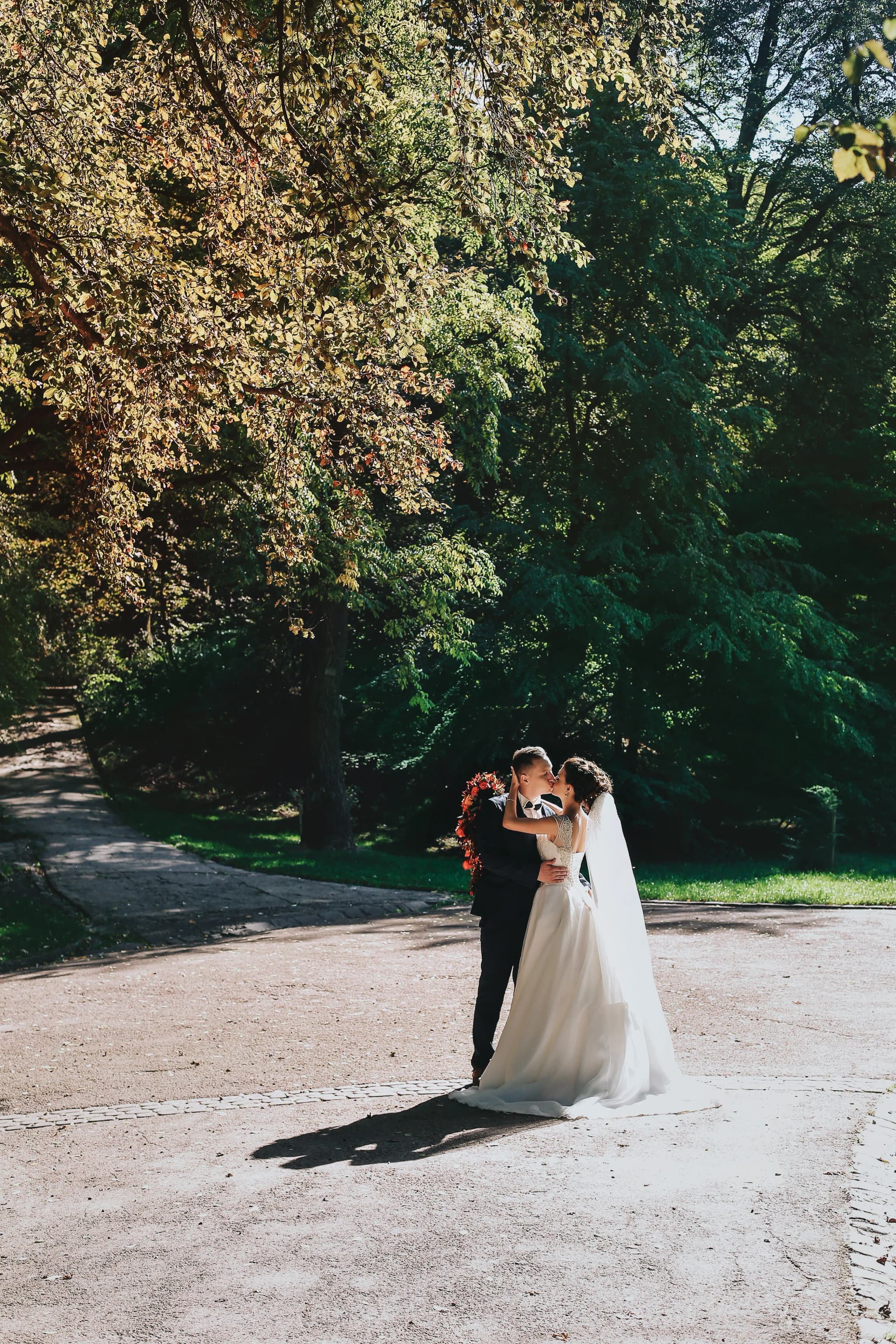
Linton & South Cambridgeshire Village Wedding Photography
By Yana Skakun·14 August 2026·7 min read
Linton is one of South Cambridgeshire's most rewarding market villages — a proper old town rather than a dormitory suburb, set in the River Granta valley where the low chalk hills give the surrounding landscape real topographical interest. It sits just 10 miles southeast of Cambridge, close to the Essex and Suffolk borders, and draws together elements that make for excellent photography: a medieval church, timbered high-street buildings, a chalk river, and a wooded valley. I photograph weddings and portrait sessions here regularly, and it remains one of the villages I recommend most often to couples who want somewhere with genuine character rather than a generic countryside backdrop.
What makes Linton stand out from many of the villages ringing Cambridge is the sheer density of good locations within a short walk of each other. In most villages you find one strong spot — a church, perhaps, or a river crossing — and the rest of the session has to be built around driving to somewhere else. In Linton, the church, the river, the high street, and the surrounding chalk hills are all within about ten minutes of each other on foot, which means a couple can move through several genuinely different settings during a single afternoon without losing time to travel.
The River Granta and Village Centre
The Granta flows through the centre of Linton — chalk-fed, clear, shallow, and lined with willows and overhanging trees. The series of footbridges, the mill pool, and the riverside meadows north of the village form one of Cambridgeshire's finest small-river photography settings. Unlike the popular stretches of the Cam near Cambridge city, the Granta here is entirely untrafficked by punts and tourists — a photographer and their couple can occupy a stretch of riverside in near-complete isolation, which matters enormously when you are trying to get natural, unselfconscious expressions rather than ones performed for an audience of onlookers.
The footbridges themselves are a particular favourite of mine. There are several crossing points along the village stretch of the Granta, each with a slightly different character — one framed by overhanging willow, another opening onto a wider view of the mill pool, another tucked between garden walls where the light comes through in dappled patches by mid-morning. For couples, walking a bridge slowly, hand in hand, with the water and reflections beneath, produces some of the most naturally romantic images I take anywhere in South Cambridgeshire. The chalk stream water is clear enough that reflections read strongly in the frame, which adds depth to compositions in a way that murkier rivers simply cannot.
The riverside meadows to the north, just beyond the built-up part of the village, open the frame right out. These are useful later in a session when you want wider, more environmental portraits — the sort of image that places the couple or family clearly within the landscape rather than close-up against a backdrop. In summer the meadow grass and wildflowers add texture and colour; in winter the bare willows and low light over the water create a starker, more atmospheric mood that some couples specifically ask for.
The High Street and Historic Buildings
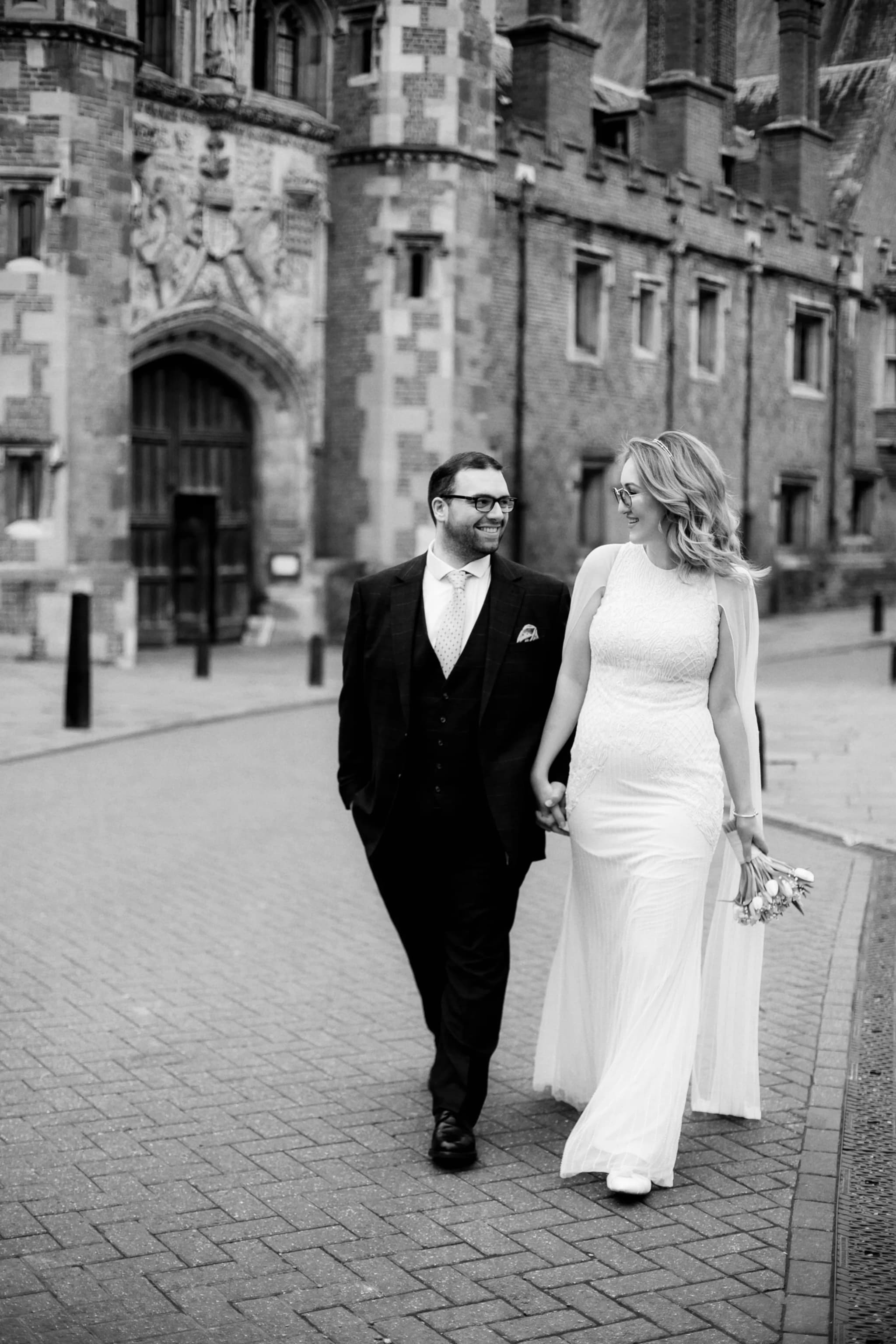
Linton's high street preserves an unusually complete run of pre-Victorian buildings — timber-framed houses from the 14th and 15th centuries, Georgian brick behind later facades, and the surviving coaching inn of The Crown. The combination of jettied upper floors, the breadth of the valley, and the absence of traffic on quiet mornings creates streetscape portraits of genuine historical texture. Early on a Saturday or Sunday morning, before the village wakes up properly, the high street is quiet enough to work in freely, and the low sun angle down the length of the street creates long shadows and warm sidelight against the timber frontages that is very hard to replicate anywhere more built-up.
For couples who want a documentary, walk-through-the-village feel to part of their session, the high street delivers that without needing to travel anywhere else. It also photographs beautifully in overcast conditions, which is worth knowing if your day does not deliver blue skies — the timber and brick hold their colour and texture just as well under soft grey light, arguably better, since there is no harsh contrast to manage.
St Mary the Virgin Church
Linton's parish church is one of the finest medieval churches in South Cambridgeshire — a 14th-century building with a chancel that dates partly to the 13th century, set in a generous churchyard with lychgate, ancient yews, and wide views south toward the Granta valley. For church wedding photography, the combination of the church exterior, the lychgate approach, and the valley backdrop gives more visual variety than most village churches, where you are often confined to a single flat approach shot and little else.
The lychgate in particular is worth planning around if you are marrying here. Confetti shots taken under and just beyond the lychgate, with the church tower rising behind and the churchyard yews framing the edges, are consistently among the images couples come back to years later. The churchyard itself sits slightly elevated, so there are useful sightlines out over the rooftops of the village and down toward the river valley — a good spot for a handful of portraits straight after the ceremony, while guests are still filtering out and before the group photographs need to begin in earnest.
Inside, the church has the kind of proportions and window light that make for good ceremony coverage without excessive flash — something I always assess in advance with any couple marrying here, since every church has its own character in terms of available light, and Linton's is generally cooperative for a natural, unobtrusive documentary style through the service itself.
Linton Zoo and the Chalk Hills
Linton Zoo, at the edge of the village, occupies a site in the chalky knoll land above the valley — its position on the rising ground creates a useful vantage point back toward the village and river. While the zoo itself is a private attraction rather than a photography venue, the surrounding public footpaths across the chalk hills give access to some genuinely wide, open landscape that contrasts nicely with the tighter, more enclosed feel of the village centre and riverside.
The chalk hills east and south of Linton form part of the same geological belt as the Gog Magog Hills near Cambridge — good walking and wide-sky landscape photography within a few minutes of the village. For couples or families who want at least part of their session to feel like open countryside rather than village architecture, a short walk up onto this higher ground delivers exactly that: rolling arable land, big sky, and views back across the valley that put the whole setting in context. It works particularly well in early evening, when the low sun rakes across the fields and the light has that same warm, low quality that makes any landscape photograph more compelling.
Planning a session or wedding around Linton
Because the village packs the river, the high street, the church, and the surrounding chalk hills into such a compact area, a Linton session rarely needs more than one or two locations to feel varied. I am always happy to walk the village with you in advance, or simply plan a route on the day, so the time is used well.
Enquire about a session near LintonPractical Notes for Couples and Families
Parking in Linton is straightforward compared with many Cambridgeshire villages — there is a public car park close to the high street, and most of the locations described above are within a short, flat walk from there, which matters if anyone in the wedding party is in heels or if you are managing young children between locations. The village is small enough that nothing requires a car journey between spots, which keeps a session feeling relaxed rather than logistically rushed.
Linton also sits conveniently for guests and family travelling from Essex or Suffolk as well as Cambridge itself, given its position near the county borders. For weddings at the church or at one of the venues in the surrounding villages, that central position often makes Linton a genuinely practical choice rather than purely an aesthetic one. If your ceremony or reception is elsewhere but you would like part of your photography to make use of the village — the river, the high street, or the churchyard — that is easy to build into a timeline, particularly if the light works best in the couple of hours either side of your ceremony.
I would also gently flag that some of the riverside and churchyard spots can be busy with dog walkers and locals going about their day, especially at weekends. This is rarely a problem in practice — most people in Linton are used to seeing wedding parties and photography sessions around the village and are courteous about it — but if complete privacy matters to you, an early morning or early evening slot avoids the busier midday hours almost entirely.
Linton rewards photographers and couples who take the time to actually explore it rather than treating it as a single backdrop. Between the chalk river, the historic high street, the medieval church, and the open hills just beyond the village edge, there is enough genuine variety here to build a full session or a full wedding day's worth of photography without ever needing to leave. If you are planning a wedding, engagement session, or family portrait session in or around Linton and would like to talk through locations and timing, get in touch and I will help you plan a route around the village that makes the most of the light and the setting on your date.

Yana Skakun
Photographer · England
Professional wedding, family and portrait photographer based in England. Passionate about capturing authentic emotions and timeless moments.
About Yana →Linton Cambridge photographerSouth Cambridgeshire village wedding photographyRiver Granta wedding photosLinton wedding venue
Location Guides — Professional Photography in Cambridge & England
Yana Skakun is a professional photographer based in Cambridge, covering weddings, families, and portraits across England. Every session is personal — planned around your story, your people, and the moments that matter most. This guide — Linton & South Cambridgeshire Village Wedding Photography — is part of the photography journal: practical, experience-based advice drawn from real sessions across England. Whether you arrived searching for linton cambridge photographer or south cambridgeshire village wedding photography, the same care and attention shapes every session Yana photographs.
Professional Photography sessions are available year-round, with bookings open across Cambridge, Ely, Huntingdon, Peterborough, and further afield — East England, London, the Midlands, and beyond. If you have specific questions about river granta wedding photos, mention it in your enquiry. Get in touch through the contact form above to check availability and discuss your session. Enquiries are welcomed from anywhere in the UK.
Frequently Asked Questions
What camera settings should I use for outdoor portraits?+
For outdoor portraits, shoot in aperture priority mode. Use a wide aperture (f/1.8–f/2.8) to blur the background and isolate your subject. Keep ISO as low as possible in good light. In bright conditions, use a neutral density filter or switch to manual to avoid overexposure at wide apertures.
What is the golden hour in photography?+
Golden hour is the period roughly 30–60 minutes after sunrise and before sunset. The sun is low in the sky, producing warm, soft, directional light that flatters skin tones and creates beautiful long shadows. It's widely considered the best natural light for portrait and outdoor photography.
How do you get sharp photos in low light?+
In low light, increase your ISO (accepting some grain), use the widest aperture your lens allows, and slow your shutter speed to the slowest you can hand-hold without camera shake (roughly 1/focal length as a guide). Use image stabilisation if available, and consider a tripod for static subjects.
What is the rule of thirds in photography?+
The rule of thirds divides the frame into a 3×3 grid. Placing your subject on one of the four intersection points — rather than dead centre — creates a more dynamic, visually interesting composition. It's a guideline, not a rule: some of the most powerful images break it deliberately.
How do you edit photos to look professional?+
Professional editing starts with shooting in RAW format. In Lightroom or similar software, correct exposure, white balance, and contrast first. Recover shadow and highlight detail. Apply gentle colour grading for mood. Be conservative with skin retouching — the goal is natural enhancement, not transformation. Consistency across a set of images is what separates professional from amateur editing.
Continue Reading
Related Articles
Location Guides
Ramsey Abbey & the Fens: Wedding Photography in East Cambridgeshire
7 min read · Read Article
Location Guides
Wedding Photography in Histon & Impington: Bauhaus Architecture & Village Charm
6 min read · Read Article
Location Guides
Wedding Photography in Fulbourn & the Wilbrahams: South Cambridgeshire Villages
6 min read · Read Article
Get in Touch
Ready to Book Your Session?
Get in touch to discuss your vision — I'll reply within 24 hours.