Yana Skakun

Parent Albums: A Beautiful Thank-You Gift for Mums and Dads
By Yana Skakun·26 September 2036·5 min read
There is a quiet tradition in wedding photography that rarely gets the attention it deserves, tucked away as it usually is at the very end of a much longer conversation about the couple's own album. The parent album — a smaller companion volume given to the bride's parents and the groom's parents as a thank-you gift — is one of the most genuinely appreciated presents a couple can arrange after the wedding. It costs relatively little compared with the overall investment in the day, it takes almost no extra effort to organise if you plan for it at the right stage, and the emotional return on it is completely disproportionate to either the cost or the effort. I have lost count of the number of parents who have told me, months or even years later, that the album sitting on their coffee table gets picked up and looked through more than almost anything else they own.
Why This Particular Gift Lands So Well
Parents at a wedding occupy a strange emotional position. They are present for the whole day, often more present than the couple themselves, and yet they frequently see very little of it in any detailed sense. A mother is greeting guests, checking that the caterers have arrived, quietly managing a dozen small logistics, and trying not to cry during the vows, all more or less simultaneously. A father is walking his daughter down the aisle in a state that leaves very little room for actually absorbing the visual details of the room around him. Afterwards, when people describe their own wedding day back to them, parents often say some version of the same thing: it went by in a blur, and they wish they could have properly seen more of it.
A parent album gives them exactly that. It hands back the day in a slower, more considered form — the moments they were too busy or too overwhelmed to fully take in at the time, presented as a physical object they can return to whenever they like. For a generation of parents who are, generally speaking, less inclined to scroll through an online gallery on a phone and more inclined to want something they can hold, that physical quality matters enormously. A grandparent who does not use a smartphone gallery, a parent who has never once printed a digital photograph in their life — for them, a printed album is not a nice-to-have alternative to the online gallery. It is often the only format in which they will ever actually look at their child's wedding photographs in a considered, unhurried way.
There is also something in the gesture itself that parents respond to beyond the object. Ordering a parent album says, in a fairly direct way, thank you for everything you did to make this day happen — the years of support, very often a financial contribution, the hosting of family members, the endless logistics in the weeks beforehand. It is a small thing that carries a large amount of meaning, and it tends to be remembered for far longer than almost any other gift given around a wedding.
Size, Format, and What Makes It Feel Distinct
Parent albums are, by convention, a step down in scale from the couple's own album, which helps them feel like a considered companion piece rather than a duplicate. Where a main wedding album might run to a generous 30 by 30 centimetre format or larger, a parent album is more commonly produced at something like 20 by 20 centimetres or 25 by 20 centimetres — substantial enough to do the images justice, compact enough to sit comfortably on a shelf or coffee table in a parent's home without dominating the room.
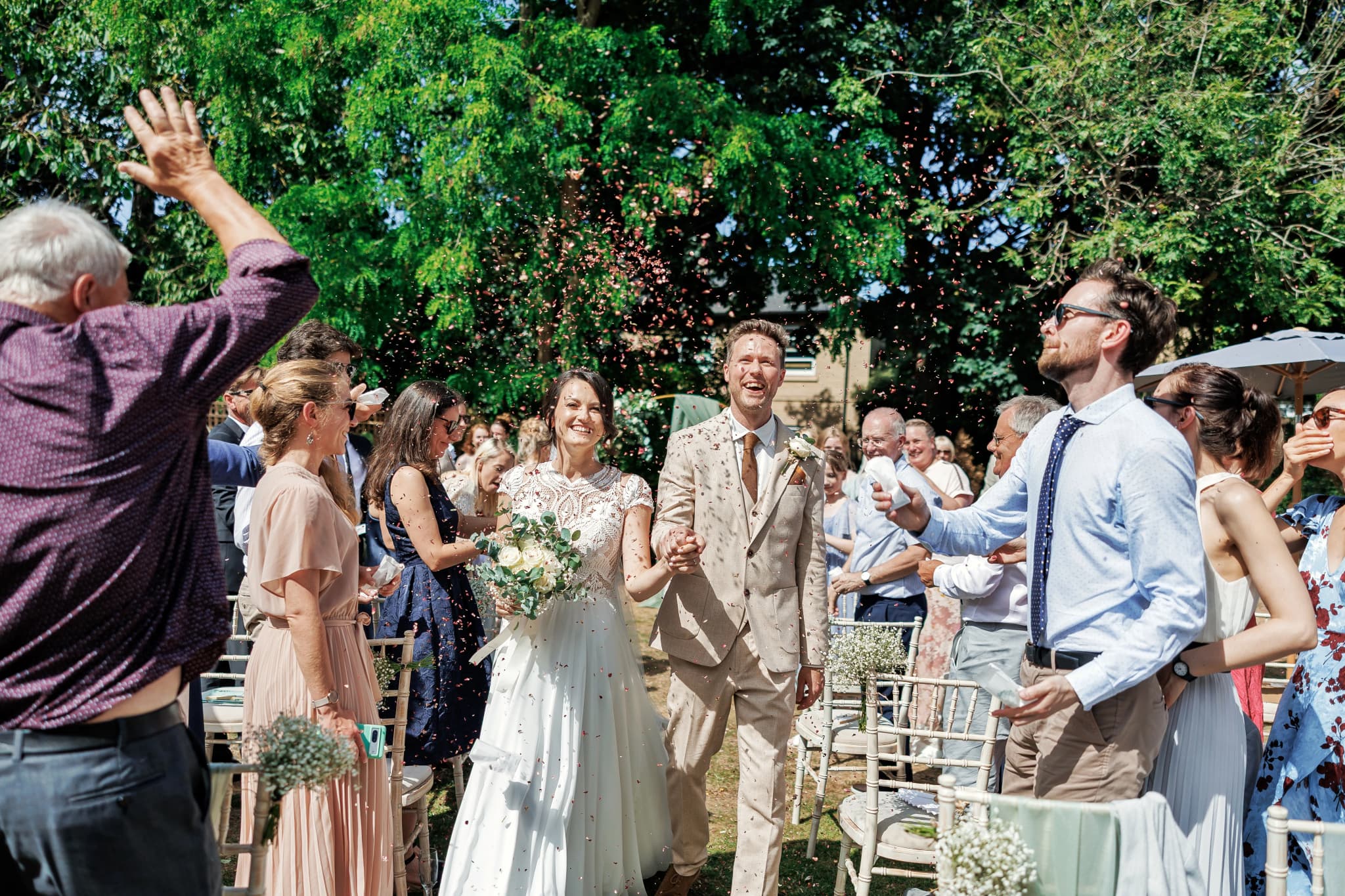
The image selection for a parent album is also different in character, not just smaller in number. Rather than telling the entire arc of the day exhaustively, a parent album is usually built from a curated set of somewhere around thirty to fifty images, chosen specifically with that parent's vantage point in mind. That means particular weight is given to the moments where the parents themselves appear: the first look between a father and his daughter before the ceremony, a mother helping with the final adjustments to a dress or a buttonhole, the walk down the aisle, family formals with grandparents and siblings, a speech, a quiet embrace on the dance floor at the end of the night. These are the images parents tend to return to again and again, far more than a wide shot of the table settings or the venue exterior, however beautiful those might be.
It is entirely possible, and often the better approach, to produce two distinct parent albums — one weighted slightly more towards the bride's side of the family and one towards the groom's, reflecting where each set of parents naturally appears more often in the day's events. This is a small design decision but it makes a real difference to how personal the final object feels when it is opened for the first time.
Designing an Album Parents Will Actually Treasure
The design language for a parent album tends to sit on the calmer, more classic end of the spectrum compared with a couple's own album, which sometimes leans into more editorial or contemporary layouts. Generous white space around images, clean single or double-page spreads, and restrained, classic typography for any captions tend to serve a parent album best. The point of the design is to let the photographs themselves carry the emotional weight rather than layering additional stylistic flourishes on top of them — parents are generally looking for clarity and warmth rather than a fashion-forward design statement.
That does not mean the parent album needs to be visually disconnected from the couple's own album. Quite the opposite — coordinating the two, using the same cover material, the same binding style, and the same paper finish but at the smaller format with a distinct image selection, creates a lovely sense of family continuity. It also simplifies the ordering process considerably, since the same design decisions made for the main album largely carry across, with only the page count and image choices needing separate attention.
Cover options are worth thinking about specifically for parents, since their taste in a physical object sitting in their own home may differ slightly from the couple's. A linen or leather cover in a neutral tone tends to age well and suit most home interiors, and a discreet, elegant option is usually a safer choice than anything highly personalised or trend-led, simply because the album will likely be on display for decades rather than years.
Planning ahead makes it easy
Parent albums are simplest to arrange when they are folded into the same conversation as your own wedding album, rather than treated as a separate project afterwards. I am always glad to talk through sizes, cover options, and image selection alongside your main album design.
Ask about parent albumsWhen and How to Order Them
The most straightforward point at which to add parent albums is during the design process for your own wedding album, once the full gallery has been delivered and the initial image selection conversation is already underway. At that stage I am already deep in the gallery, already have a strong sense of which images carry the most emotional weight, and can put together parent-focused selections alongside the main design with very little additional lead time. Because the album layout software and the overall design approach are already in motion, adding a smaller companion album at this point is a modest addition to the process rather than a separate undertaking.
Ordering a parent album much later, after the main album has already been finalised and printed, is entirely possible but does involve a bit more coordination — effectively reopening the gallery, revisiting image selection with fresh eyes, and running it as its own standalone design and print job. It can absolutely be done this way, and some couples do choose to order parent albums as a birthday or anniversary surprise well after the wedding itself, which is a lovely gesture in its own right. But for anyone who simply wants the least complicated route to a beautiful finished object, including parent albums in the initial album order alongside your own tends to be the easiest path, both in terms of timeline and in terms of keeping the overall design coherent across all the albums produced from the same wedding.
A sensible rule of thumb is to raise the idea of parent albums early — even as early as your initial booking conversation — so that it can simply be built into your collection rather than treated as an afterthought once the wedding has already happened and everyone's attention has moved on to other things.
A Gift That Keeps Working Long After the Day
What makes a parent album different from most wedding-related gifts is that its value does not diminish with time in the way a bottle of something or a bouquet inevitably does. It sits on a shelf, gets taken down when family visits, gets shown to new grandchildren years later, gets pulled out on anniversaries. It becomes, in a small but real way, part of the furniture of a parent's home and a fixed point they can return to. Many parents describe it as the item from the whole wedding that means the most to them personally, precisely because it was made with them specifically in mind rather than simply being a smaller copy of something designed for someone else.
If you are already planning your own wedding album, or your wedding has taken place and you are thinking about how best to thank the people who supported you through it, a parent album is a genuinely lovely and low-effort way to do that. If you would like to talk through sizes, formats, and how a parent album might fit alongside your own collection, get in touch and we can work out an approach that suits both families.

Yana Skakun
Photographer · England
Professional wedding, family and portrait photographer based in England. Passionate about capturing authentic emotions and timeless moments.
About Yana →parent album wedding giftparent wedding albumthank you gift parents weddingsmaller wedding album parents
Wedding Photography — Professional Photography in Cambridge & England
Yana Skakun is a professional photographer based in Cambridge, covering weddings, families, and portraits across England. Every session is personal — planned around your story, your people, and the moments that matter most. This guide — Parent Albums: A Beautiful Thank-You Gift for Mums and Dads — is part of the photography journal: practical, experience-based advice drawn from real sessions across England. Whether you arrived searching for parent album wedding gift or parent wedding album, the same care and attention shapes every session Yana photographs.
Professional Photography sessions are available year-round, with bookings open across Cambridge, Ely, Huntingdon, Peterborough, and further afield — East England, London, the Midlands, and beyond. If you have specific questions about thank you gift parents wedding, mention it in your enquiry. Get in touch through the contact form above to check availability and discuss your session. Enquiries are welcomed from anywhere in the UK.
Frequently Asked Questions
What camera settings should I use for outdoor portraits?+
For outdoor portraits, shoot in aperture priority mode. Use a wide aperture (f/1.8–f/2.8) to blur the background and isolate your subject. Keep ISO as low as possible in good light. In bright conditions, use a neutral density filter or switch to manual to avoid overexposure at wide apertures.
What is the golden hour in photography?+
Golden hour is the period roughly 30–60 minutes after sunrise and before sunset. The sun is low in the sky, producing warm, soft, directional light that flatters skin tones and creates beautiful long shadows. It's widely considered the best natural light for portrait and outdoor photography.
How do you get sharp photos in low light?+
In low light, increase your ISO (accepting some grain), use the widest aperture your lens allows, and slow your shutter speed to the slowest you can hand-hold without camera shake (roughly 1/focal length as a guide). Use image stabilisation if available, and consider a tripod for static subjects.
What is the rule of thirds in photography?+
The rule of thirds divides the frame into a 3×3 grid. Placing your subject on one of the four intersection points — rather than dead centre — creates a more dynamic, visually interesting composition. It's a guideline, not a rule: some of the most powerful images break it deliberately.
How do you edit photos to look professional?+
Professional editing starts with shooting in RAW format. In Lightroom or similar software, correct exposure, white balance, and contrast first. Recover shadow and highlight detail. Apply gentle colour grading for mood. Be conservative with skin retouching — the goal is natural enhancement, not transformation. Consistency across a set of images is what separates professional from amateur editing.
Continue Reading
Related Articles
Get in Touch
Ready to Book Your Session?
Get in touch to discuss your vision — I'll reply within 24 hours.