Yana Skakun

Photographing Parents: A Gift They'll Never Ask For But Always Treasure
By Yana Skakun·10 July 2026·8 min read
Nobody's parents ever ring up and say, "I'd love a proper portrait session, just of me." It doesn't happen. Most parents in their sixties, seventies, and beyond will tell you they don't need photographs, that there are already plenty of pictures from birthdays and Christmases, that it feels a bit self-indulgent to book someone to come and photograph just them. And yet almost every adult child I have ever spoken to about this — in enquiry calls, at family sessions, in passing conversations at other people's weddings — says some version of the same thing: they wish they had more photographs of their parents from when they were still exactly as they are now. Not photographs snatched on a phone at a family lunch, blurred and badly lit, but photographs that actually look at them properly. This is a gift category that sits slightly outside the usual gift logic. Nobody asks for it, and almost everybody treasures it once it exists.
Why This Matters More Than It Seems To
There is a particular kind of quiet regret that surfaces after a parent becomes ill, or after they pass away, and it is almost always the same: not enough proper photographs. Plenty of images exist on phones, scattered across years of holidays and gatherings, but very few of them show a parent looking like themselves — composed, unhurried, photographed with any real intention. The snapshots we take at family events are usually rushed, badly lit, taken from an awkward angle, or catch someone mid-sentence with their eyes half closed. They are documentation, not portraits.
A dedicated session changes that entirely. It is not about creating something artificial or overly formal — it is about giving a parent the same quality of attention and care that we would naturally give to photographing a baby, a wedding, or a milestone birthday. Parents deserve that too, and the fact that they will never request it themselves is exactly why it tends to fall to an adult child, a partner, or occasionally the parents' own realisation on a significant birthday that the time has come to actually do it.
I photograph a good number of these sessions each year, arranged by adult children as gifts, by couples marking a parent's milestone birthday, and sometimes by parents themselves who have simply decided they are done avoiding cameras. The motivations vary but the outcome is consistently the same: relief, and then real gratitude, once the images exist.
What to Expect From the Session Itself
These sessions are gentle by design. There is no studio lighting rig, no pressure to strike particular poses, and no attempt to make anyone look like a different person. I usually spend the first ten or fifteen minutes simply talking — about the garden, about a dog, about whatever is genuinely on their mind — before a camera comes out properly, because the difference between a portrait taken of someone who is relaxed and one taken of someone who is braced for the camera is enormous and immediate.
A typical session runs between forty-five minutes and an hour and a half, depending on the setting and how many people are involved. If it is just one parent, we might move through three or four locations within a short walk of each other — a favourite chair by a window, a spot in the garden, somewhere with good afternoon light. If both parents are being photographed together, or if grandchildren are joining for part of the session, I build in time for that combination separately from the individual portraits, so nobody feels rushed through their own moment.
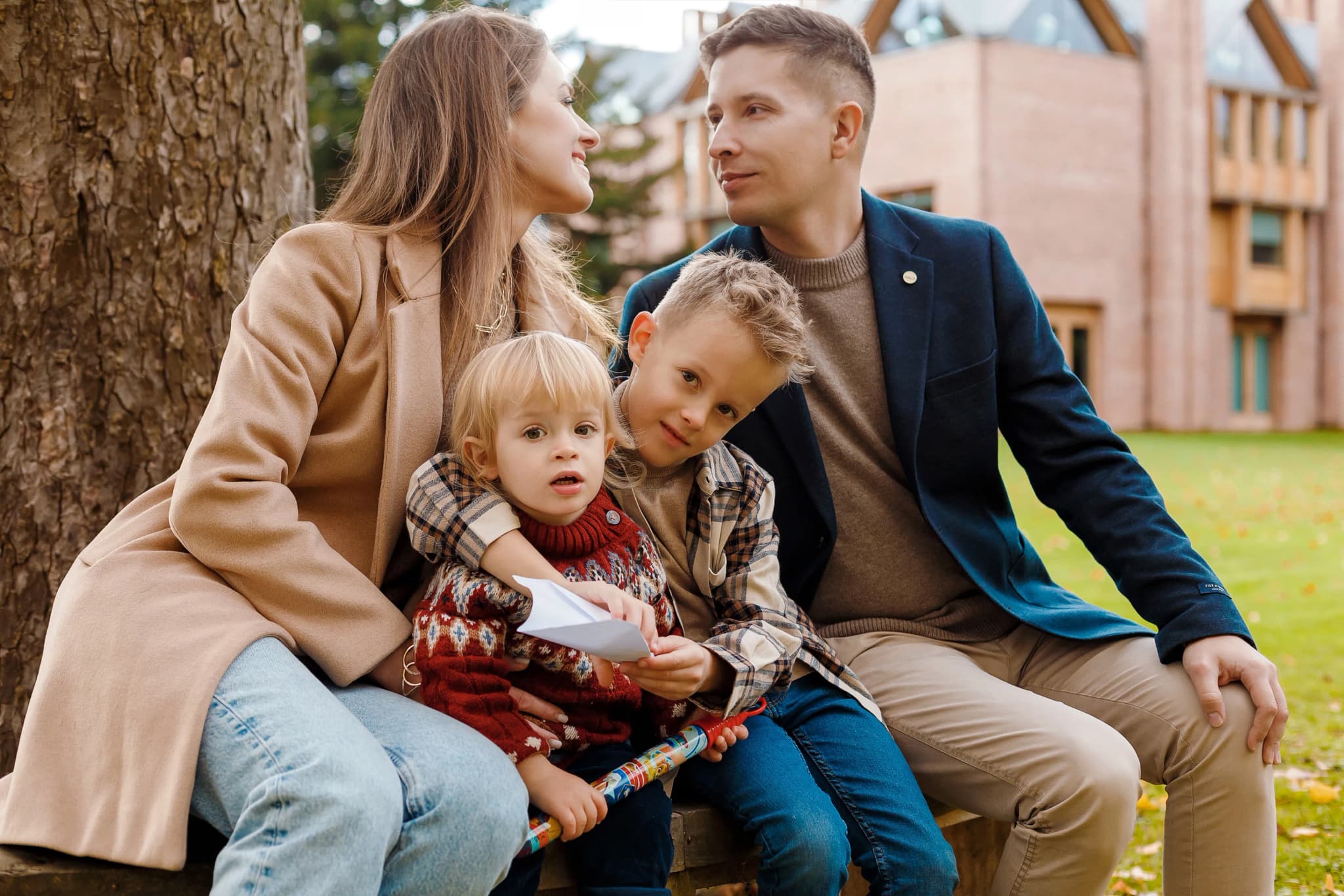
I photograph a mix of directed and candid images throughout. Some frames are composed and looking at the camera — the kind of portrait that works well printed and framed. Others are quieter: a parent reading, laughing at something a grandchild has said, hands wrapped around a cup of tea. These candid images are very often the ones that end up meaning the most, because they show a person being themselves rather than being photographed.
How I Put Nervous Parents at Ease
Almost every parent I photograph in this context starts the session with some version of "I hate having my photo taken" or "I don't know what to do with my hands." This is completely normal and I don't try to talk anyone out of the feeling — I just work around it. Giving someone something to do rather than something to perform is the single most effective tool available. A parent walking through a garden, tending a plant, holding a mug, or simply talking to their adult child produces a far more natural expression than a parent standing still and being told to smile.
I also keep instructions minimal and specific rather than vague. "Look at the door" works better than "relax your face." "Turn slightly towards your daughter and finish that sentence" works better than "just be natural," which is one of the least helpful instructions anyone can give another human being in front of a lens. Most of the self-consciousness dissolves within the first ten minutes once people realise nobody is judging how they look, and that the whole point is to capture them as they genuinely are, not as some idealised or younger version of themselves.
For parents who are older or less mobile, the pace slows further still, and breaks are built in without anyone needing to ask for them. If a wheelchair or walking frame is part of daily life, it is part of the photographs too, or deliberately kept out of frame for a portion of the session — whichever the family and the parent themselves prefer. There is no single correct approach here beyond listening to what feels right for the people in front of the camera.
Choosing a Location That Feels Like Them
The best portraits of parents are rarely taken in unfamiliar studio settings. They tend to be taken somewhere that already means something — the home they have lived in for decades, a garden they have spent years shaping, a favourite bench in a local park, or a spot they walk to every morning. Familiar surroundings do two things at once: they relax the person being photographed, because there is no unfamiliar environment to navigate, and they root the images in something specific and real rather than a generic backdrop that could belong to anyone.
Home sessions work particularly well for this reason, and I photograph a good number of them across Cambridgeshire and further afield. A parent in their own kitchen, in their reading chair, on their own front step, produces images with a sense of place that a hired location simply cannot replicate. If mobility is a consideration at all, staying at home removes an entire layer of logistics and stress from the day.
For parents who are more active and would enjoy a proper outing, a favourite local spot works beautifully too — somewhere in Cambridge itself, along the river, in one of the botanic gardens, or in the grounds of a National Trust property they visit often. The about page has more on how I generally approach locations and light, which applies just as much here as it does to family or wedding work.
Not sure how to bring it up with them?
Many adult children book this as a surprise arranged around a birthday, Mother's Day, Father's Day, or simply "because it's time," and then present the session itself as the gift rather than trying to explain the whole idea in advance. Others prefer to involve their parents from the start so nobody feels ambushed by a camera. Either approach works well — get in touch and we can talk through what would suit your family best.
Get in touchSimple Preparation Without the Fuss
There is no need for elaborate styling here, and in fact over-preparation often works against the goal. I always suggest clothes that already feel comfortable and familiar rather than anything bought specifically for the occasion — a favourite jumper, a shirt they wear often, something in a colour that suits them rather than something trend-led. Solid mid-tones photograph better than busy patterns, but beyond that the instruction is really just: wear what feels like you.
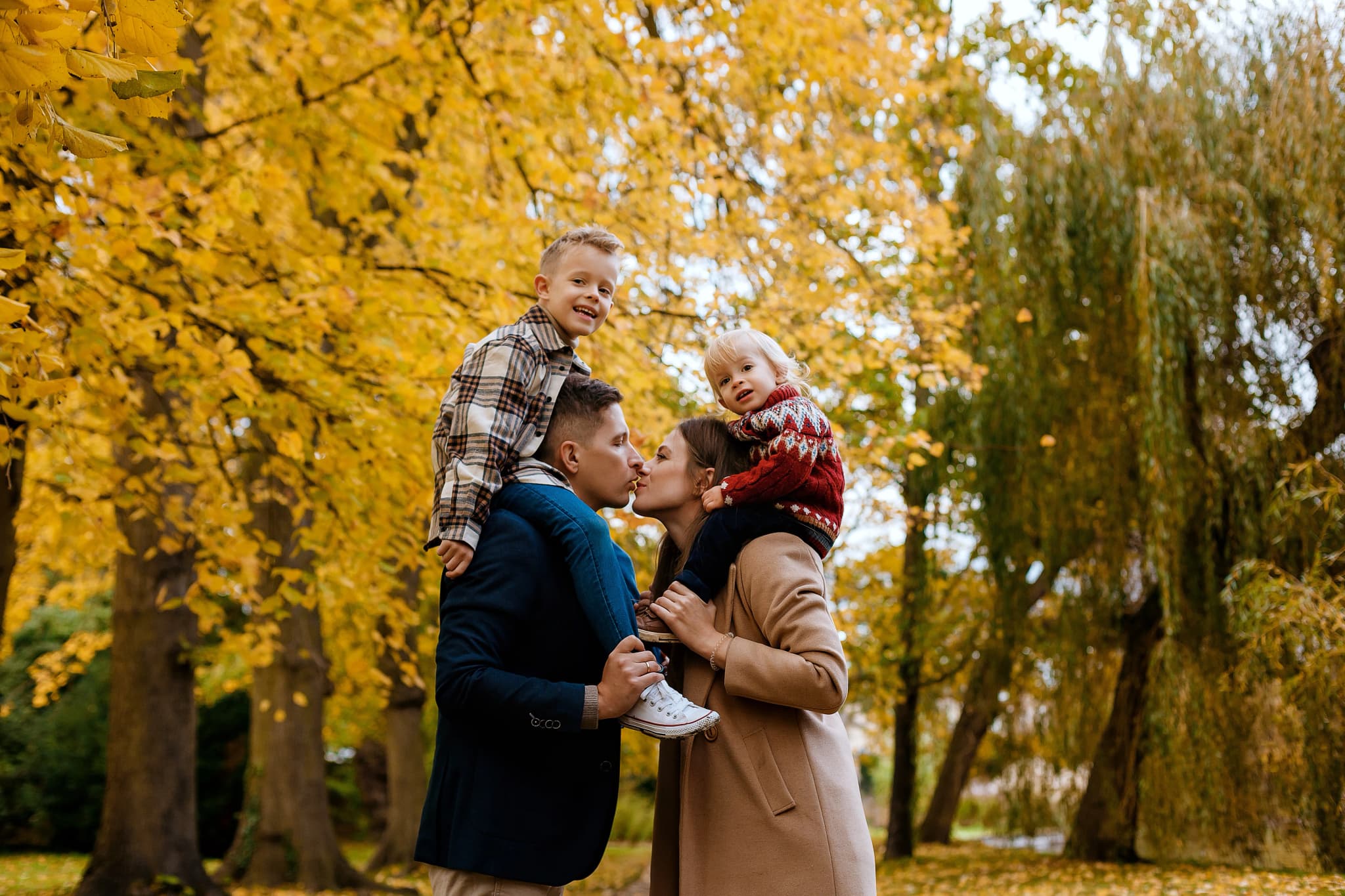
If more than one generation is involved, loosely coordinating colours across the group avoids visual clash in photographs without requiring anyone to match outfits, which almost always looks stiff and overly staged. A shared palette of two or three complementary tones is enough.
The other piece of preparation that matters more than clothing is simply managing expectations beforehand. Telling a parent "we're just going to spend some time together and I've asked a photographer to come along and capture bits of it" produces a far more relaxed session than announcing a formal photoshoot, which can make people tense up before the camera has even arrived. The less it is framed as a performance, the better the results tend to be.
What Families Do With the Images Afterwards
The images from these sessions get used in ways that differ noticeably from a typical family shoot. A framed print goes up in the parents' own hallway, often the first properly considered portrait of themselves they have ever had on their own wall. Adult children print smaller copies for their own homes. Occasionally an image becomes the photograph used at a milestone anniversary celebration, or later, difficult as it is to think about in advance, the photograph used to remember someone by. That last use is not something anyone wants to dwell on when booking a session, but it is part of why these photographs carry the weight they do, and why so many families say afterwards that they wish they had done it years earlier.
If weddings, engagements, or other family milestones are also part of your family's plans this year, it is worth looking at how I approach wedding photography across the UK or browsing recent wedding work for a sense of the same relaxed, documentary style applied to a different occasion. The pricing page has current details for portrait and family sessions if you are ready to look at practicalities.
A Few Questions I Get Asked Often
How long does a session take? Usually forty-five minutes to an hour and a half, depending on how many people are involved and how much moving between locations is needed.
Can you photograph at home if my parent has mobility issues? Yes, and it is often the best option. Staying in a familiar setting removes travel and stress entirely, and I am happy to work around a slower pace, seated portraits, or shorter sessions with breaks.
What if my parent genuinely doesn't want to be photographed? This comes up more than you might expect, and gentle honesty tends to work best. I keep instructions light, give people things to do rather than poses to hold, and never push past what someone is visibly comfortable with. Most reluctance fades within the first few minutes once the session starts to feel like conversation rather than performance.
Is there a best time of day? Late morning or mid-afternoon generally suits older parents best, avoiding both the rush of early morning and the tiredness that can set in by early evening, though this varies from family to family and I am glad to work around whatever timing suits yours.
This is one of the gift categories nobody thinks to ask for and almost everybody is glad someone else thought of. Yana Skakun Photography is based in Cambridge and available for sessions across the UK, and I would be glad to talk through what a session for your own parents might look like, whatever their situation or however far you are travelling. Get in touch and we can find a time that works.

Yana Skakun
Photographer · England
Professional wedding, family and portrait photographer based in England. Passionate about capturing authentic emotions and timeless moments.
About Yana →photographing parents giftmeaningful photo sessionportrait session for parentselderly parent photographyfamily portrait giftCambridge portrait photographer
Family Tips — Family Photography in Cambridge & England
Yana Skakun offers natural, relaxed family photography sessions across Cambridge, Cambridgeshire, and the wider East of England. Sessions take place outdoors — in parks, woodland, and countryside — or at your family home, wherever everyone feels most at ease. This guide — Photographing Parents: A Gift They'll Never Ask For But Always Treasure — is part of the photography journal: practical, experience-based advice drawn from real sessions across England. Whether you arrived searching for photographing parents gift or meaningful photo session, the same care and attention shapes every session Yana photographs.
Family Photography sessions are available year-round, with bookings open across Cambridge, Ely, Huntingdon, Peterborough, and further afield — East England, London, the Midlands, and beyond. If you have specific questions about portrait session for parents, mention it in your enquiry. Get in touch through the contact form above to check availability and discuss your session. Enquiries are welcomed from anywhere in the UK.
Frequently Asked Questions
How do you prepare children for a family photoshoot?+
Keep it low-key beforehand — don't over-explain or build it up too much. Make sure children are fed and rested. Bring a snack and a favourite toy or comfort item. Let them warm up at their own pace rather than forcing poses from the start. The best family photos happen when children forget there's a camera.
What should a family wear for photos?+
Choose a colour palette — 2–3 complementary tones — rather than identical outfits. Earthy neutrals, blues and greens, or cream and blush all work beautifully outdoors. Avoid large logos, neon colours, and very small patterns that create visual noise. Dress for the location and season, and make sure everyone is comfortable.
When is the best time for an outdoor family photoshoot?+
The golden hour — the first hour after sunrise or the last hour before sunset — gives the softest, warmest light. Overcast days are also excellent: the cloud acts as a natural diffuser, eliminating harsh shadows. Midday summer sun is the most challenging light to shoot in.
How long does a family photography session take?+
Most family sessions last 45–75 minutes. Mini sessions (30–40 minutes) work well for smaller families and toddlers who have shorter attention spans. Larger extended family groups may need 90 minutes to cover everyone comfortably.
How many photos will I get from a family photoshoot?+
A standard 60-minute family session typically produces 30–60 edited images delivered in a private online gallery. Mini sessions deliver 15–25 images. All images are colour-corrected, naturally edited, and ready for printing.
Continue Reading
Related Articles

Family Tips
Blended Family Photography: A Sensitive Guide to Step-Families, Co-Parenting & Group Portraits
11 min read · Read Article
Family Tips
Baby Milestone Photography: Capturing Every Stage of the First Year
10 min read · Read Article
Family Tips
Maternity Photography in England: When to Book, What to Wear & Where to Shoot
11 min read · Read Article
Get in Touch
Ready to Book Your Session?
Get in touch to discuss your vision — I'll reply within 24 hours.