Yana Skakun
Woodland Elopement Photography UK: Ancient Forest Locations and Bluebell Season
By Yana Skakun·23 May 2026·7 min read
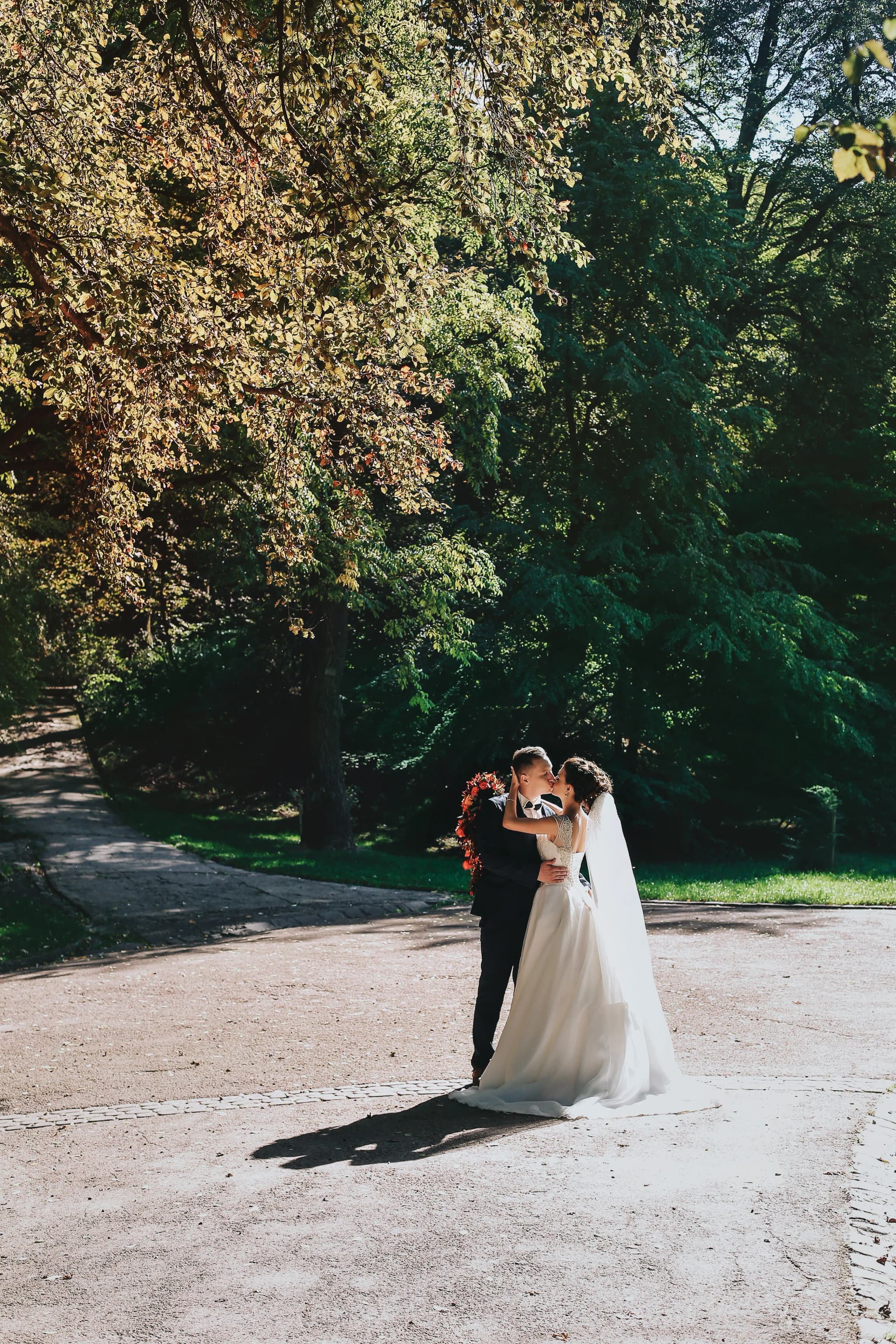
A woodland elopement takes the intimacy of an elopement and places it in the most evocative natural setting the UK has to offer. Ancient trees, filtered canopy light, forest floors carpeted with bluebells in May, and a silence broken only by birdsong — woodland elopement photography produces images that are genuinely unlike anything possible in a venue setting. This guide covers the best woodland elopement locations in England and Wales, the ideal timing, and how to plan around the season and light.
Why Woodland Elopement Photography Works
- ◆Complete visual separation from modernity: Ancient woodland removes every contemporary visual element from the photograph — no buildings, no roads, no signage, no other people. The image exists outside of time in a way urban or even rural open-landscape images do not.
- ◆Canopy-filtered natural light: The forest canopy acts as a natural diffuser of extraordinary scale. Even on a bright sunny day, the light in woodland is soft, directional, and flattering — it wraps subjects rather than creating harsh shadows. On overcast days, the even ambient light in woodland is close to perfect portrait conditions.
- ◆Scale and intimacy simultaneously: Ancient trees provide genuine scale — they dwarf human subjects in a way that emphasises intimacy and insignificance simultaneously. A couple standing at the base of a 200-year-old oak is both very small and the absolute centre of attention.
- ◆Seasonal spectacle: No other UK setting transforms as completely and as spectacularly between seasons as ancient woodland. Plan your timing to use this.
Bluebell Woodland Elopements — The May Window
The English bluebell season is the most photographically extraordinary event in the natural UK calendar. From approximately late April to mid-May (the exact timing shifts by 1–2 weeks depending on the spring temperature), ancient woodland floors turn violet-blue, creating an effect that cannot be replicated artificially and lasts only 2–3 weeks before the flowers fade.
Planning a woodland elopement for bluebell season is one of the best decisions you can make photographically. Demand is high — book several months in advance, discuss timing flexibility with your photographer, and choose a woodland with a known bluebell presence.
Best Woodland Elopement Locations — England
- ◆Ashridge Estate, Hertfordshire: National Trust managed ancient woodland with outstanding bluebell carpets. Accessible from London (1 hour) and Cambridge (1.5 hours). Large enough that you can find genuinely quiet areas even on busy weekends.
- ◆Heartwood Forest, Hertfordshire: One of England's largest new native forests, with some older ancient woodland sections. Excellent bluebell coverage and good access.
- ◆New Forest, Hampshire/Wiltshire: Ancient woodland at genuine scale — the Forest has been managed and protected since the Norman Conquest. A wide variety of woodland character across a large area. Outstanding in autumn as well as spring.
- ◆Forest of Dean, Gloucestershire: One of England's last remaining ancient Crown forests. Dramatic old-growth timber, excellent in any season. Access is straightforward.
- ◆Epping Forest, Essex/East London: Technically accessible from East London, and large enough that inner sections feel genuinely removed from the city. Ancient pollarded hornbeams are particularly striking in winter.
- ◆Delamere Forest, Cheshire: The largest area of woodland in Cheshire. Well-maintained for access, with good variety. Less well-known for weddings but excellent quality.
- ◆Grizedale Forest, Cumbria: Within the Lake District — combines woodland character with proximity to the lake landscapes of Windermere and Coniston.
Legal Considerations for Woodland Ceremonies
Free-standing woodland is not a licensed premises for legal marriage in England and Wales. If you want a legally binding ceremony in woodland, the woodland or an adjacent venue must hold an approved premises licence. Some woodland-adjacent barn and country house venues have woodland areas within their licensed grounds. Alternatively, complete the legal ceremony at a register office on an adjacent day, and hold a symbolic ceremony in the woodland location. This is the most common approach for truly wild woodland elopements.
Woodland Elopement Photography
I travel throughout England and Wales for woodland elopement photography, and I plan sessions around seasonal conditions — bluebell season, autumn colour, and winter structure are all in my calendar. Let me know your preferred timeframe and I can advise on the best woodland options.
Plan Your Woodland Elopement

Yana Skakun
Photographer · England
Professional wedding, family and portrait photographer based in England. Passionate about capturing authentic emotions and timeless moments.
About Yana →woodland elopement photography UKforest elopement photographer Englandbluebell elopement photographyAshridge Forest elopementNew Forest elopement photographer
Wedding Styles — Professional Photography in Cambridge & England
Yana Skakun is a professional photographer based in Cambridge, covering weddings, families, and portraits across England. Every session is personal — planned around your story, your people, and the moments that matter most. This guide — Woodland Elopement Photography UK: Ancient Forest Locations and Bluebell Season — is part of the photography journal: practical, experience-based advice drawn from real sessions across England. Whether you arrived searching for woodland elopement photography uk or forest elopement photographer england, the same care and attention shapes every session Yana photographs.
Professional Photography sessions are available year-round, with bookings open across Cambridge, Ely, Huntingdon, Peterborough, and further afield — East England, London, the Midlands, and beyond. If you have specific questions about bluebell elopement photography, mention it in your enquiry. Get in touch through the contact form above to check availability and discuss your session. Enquiries are welcomed from anywhere in the UK.
Frequently Asked Questions
What camera settings should I use for outdoor portraits?+
For outdoor portraits, shoot in aperture priority mode. Use a wide aperture (f/1.8–f/2.8) to blur the background and isolate your subject. Keep ISO as low as possible in good light. In bright conditions, use a neutral density filter or switch to manual to avoid overexposure at wide apertures.
What is the golden hour in photography?+
Golden hour is the period roughly 30–60 minutes after sunrise and before sunset. The sun is low in the sky, producing warm, soft, directional light that flatters skin tones and creates beautiful long shadows. It's widely considered the best natural light for portrait and outdoor photography.
How do you get sharp photos in low light?+
In low light, increase your ISO (accepting some grain), use the widest aperture your lens allows, and slow your shutter speed to the slowest you can hand-hold without camera shake (roughly 1/focal length as a guide). Use image stabilisation if available, and consider a tripod for static subjects.
What is the rule of thirds in photography?+
The rule of thirds divides the frame into a 3×3 grid. Placing your subject on one of the four intersection points — rather than dead centre — creates a more dynamic, visually interesting composition. It's a guideline, not a rule: some of the most powerful images break it deliberately.
How do you edit photos to look professional?+
Professional editing starts with shooting in RAW format. In Lightroom or similar software, correct exposure, white balance, and contrast first. Recover shadow and highlight detail. Apply gentle colour grading for mood. Be conservative with skin retouching — the goal is natural enhancement, not transformation. Consistency across a set of images is what separates professional from amateur editing.
Get in Touch
Ready to Book Your Session?
Get in touch to discuss your vision — I'll reply within 24 hours.