Yana Skakun

Cute Alternatives to Floral Bouquets for Your Bridesmaids
By Yana Skakun·10 July 2026·8 min read
Somewhere around the third or fourth wedding where I watched a bridesmaid quietly hand her bouquet to a chair during the speeches because her arms had gone numb from holding it upright for photographs, I started paying real attention to what bridesmaids actually carry down the aisle. Flowers are lovely. They photograph beautifully in the right light, they smell wonderful, and there is a reason the tradition has lasted this long. But they are also expensive per stem, they wilt over the course of a long day, they need to be kept out of the sun and away from radiators, and by the time the evening reception starts most bouquets look noticeably tireder than they did at 11am. If you are planning a wedding and wondering whether your bridal party has to carry flowers at all, the honest answer from someone who photographs several dozen weddings a year is: no, not even slightly. There are alternatives that photograph just as well, sometimes better, and that solve real practical problems along the way.
Why Couples Are Rethinking the Bridesmaid Bouquet
The traditional matching bouquet look is still popular and I photograph it often, but I have noticed a real shift over the last few years in how couples think about it. Some of this is cost — bridesmaid bouquets can add several hundred pounds to a florist's invoice once you multiply a modest arrangement by four, five, or six attendants, and that is before the bride's own bouquet and any buttonholes are added. Some of it is practicality: flowers need refrigeration or careful conditioning the night before, they need to survive transport to the venue, and on a hot July afternoon a hand-tied bouquet of garden roses can genuinely wilt within a couple of hours.
There is also a simpler reason. More couples are building weddings around what actually reflects them rather than what a magazine says a wedding should include, and once you start asking "does this need to be here?" about every element, bouquets are often one of the first things that gets a second look. None of this means flowers are wrong — they remain one of the most reliably beautiful elements of a wedding day, and if you love your florist's work there is no reason to change course. But if you are looking for something different, either for budget reasons or because you want your bridal party photographs to feel a little more distinctive, there are genuinely good options.
Fans
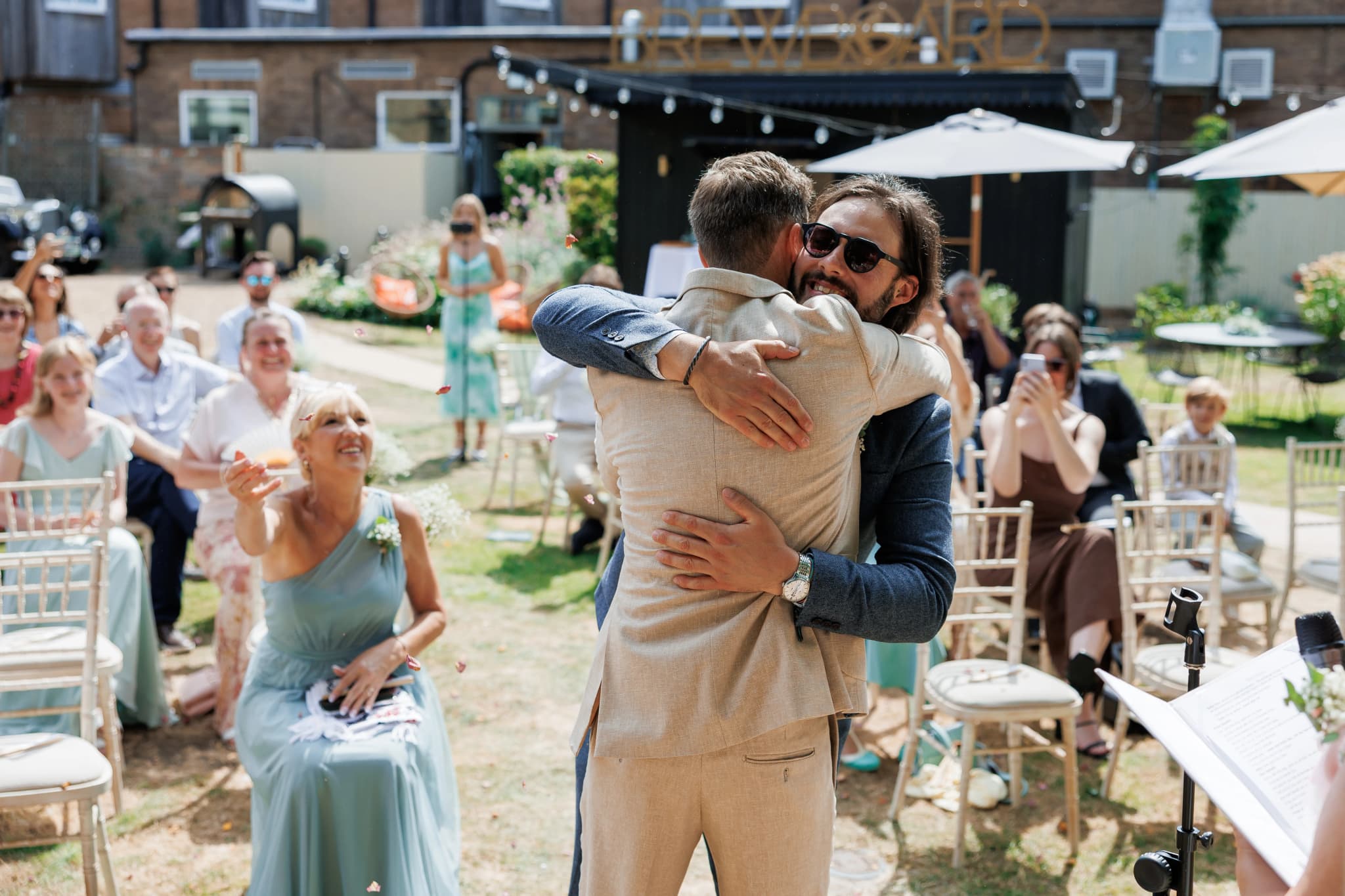
Hand fans have become one of the most popular bouquet alternatives I see, and for good reason. A folding fan in ivory silk, lace, or a colour that ties into the wedding palette gives bridesmaids something elegant to hold, something that photographs beautifully whether closed or fanned open, and something genuinely useful if the wedding is in summer. I have photographed several late June and July ceremonies where the temperature climbed into the mid-twenties, and the bridesmaids with fans were visibly more comfortable than they would have been standing in direct sun holding flowers for forty minutes.
From a photography perspective, fans give you options that flowers do not. A row of bridesmaids holding fans at chest height, fans partially open in front of their faces for a candid moment, or fans held loosely at their sides during a relaxed group shot all create different compositions from a single prop. They also work well as a keepsake — unlike flowers, a fan survives the day, the honeymoon, and years afterwards, which many bridesmaids genuinely appreciate.
Books, Ribbon Wands, and Personalised Objects
For couples with a literary bent, a small stack of hardback books tied with ribbon makes a genuinely striking alternative, particularly for autumn or winter weddings with a more traditional aesthetic. I photographed a wedding in Cambridge last year where each bridesmaid carried a different classic novel with a ribbon marker in the wedding colours, and the images from the bridal prep and the walk down the aisle had a warmth and personality that a standard bouquet simply would not have given.
Ribbon wands — a decorated stick with long trailing ribbons, sometimes with a small floral or greenery detail at the top — work particularly well for outdoor and countryside weddings, since the ribbons move in the breeze and add genuine motion to photographs in a way that a static bouquet cannot. They are also a favourite for flower girls, who often find a full bouquet cumbersome, and pairing a smaller version with what the bridesmaids are carrying creates a cohesive look through the whole bridal party.
Other objects I have seen work beautifully include small parasols for a summer garden wedding, single oversized blooms rather than full bouquets (a single peony or protea held simply gives a modern, editorial look), and personalised items connected to the bridesmaid's relationship with the couple — a musician friend carrying sheet music tied with ribbon, for instance. The best of these choices tend to say something true about the people involved rather than being alternative for its own sake.
Thinking through your bridal party styling?
I always ask couples early on what their bridesmaids will be carrying, because it genuinely changes how I plan group photographs and the walking-down-the-aisle sequence. If you are working through these decisions and want a photographer's perspective on what will look best in the finished images, I am happy to talk it through before you book anything.
Get in touchGreenery-Only Bundles
If you love the shape and texture of a bouquet but want to reduce cost and lengthen how well it survives the day, a greenery-only bundle is worth considering. Eucalyptus, olive branch, fern, and trailing ivy tied simply with ribbon give you the traditional silhouette of a bouquet — something to hold, something with weight and shape, something that photographs as a considered accessory rather than an empty hand — without the cost of premium flower stems and without the wilting problem that delicate blooms suffer through a long day. Greenery is considerably hardier than most flowers and will still look fresh at 9pm in a way that garden roses often will not.
This option also tends to suit a more relaxed, natural aesthetic that pairs well with barn weddings, marquee weddings, and countryside venues generally. If your wedding has an outdoorsy, unfussy feel to it, greenery bundles often photograph more honestly against that backdrop than a very structured, formal bouquet would.
Pinned Flowers and Corsages Instead of Bouquets
Some couples skip hand-held bouquets for bridesmaids entirely and move the floral element to a wrist corsage or a pinned flower on the dress or hairstyle instead. This solves the physical problem outright — nothing to hold, nothing to put down during the ceremony, nothing to worry about wilting visibly in someone's hand through the reception. It also frees bridesmaids' hands for practical things: helping with the bride's dress, holding a niece or nephew's hand during the confetti exit, or simply being comfortable during a long day of standing, hugging, and holding a champagne glass.
Photographically, this works best when it is a deliberate styling choice rather than an oversight, so it is worth discussing with your florist or stylist how the pinned flowers will read in group photographs. A well-placed flower crown, a single stem pinned into an updo, or a delicate wrist corsage can look every bit as intentional and beautiful as a bouquet in the finished images, and I have shot several weddings where this choice actually simplified the getting-ready photography considerably, since there was less to arrange and hand out before the ceremony began.
Seasonal and Budget Considerations
Cost is a genuine factor for most couples, and it is worth being honest about where the savings actually come from with each alternative. Fans, books, and personalised objects are typically a one-off purchase rather than a recurring floristry cost, which means the same items can sometimes be reused or kept as gifts afterwards, unlike flowers which are gone within days. Greenery bundles save money mainly on the flower stems themselves while keeping florist labour costs similar, since arranging still takes skill and time. Pinned flowers and corsages usually cost less than full bouquets simply because they use fewer stems, though this varies by florist.
Season matters too. If you are marrying in high summer, anything that does not need to survive several hours of heat — fans, ribbon wands, greenery — has a practical advantage over delicate flowers that were conditioned the night before. Winter weddings can lean into richer materials: a book with a velvet ribbon, a small lantern, or a fur-trimmed muff are all seasonally appropriate alternatives that add warmth to photographs taken in low winter light. I photograph weddings across the year and always factor the season into how I advise couples on styling choices like this, because what works beautifully in June can look slightly out of place in December, and vice versa.
How to Decide What Is Right for Your Bridal Party
My honest advice, after years of photographing bridal parties with every combination of the above, is to start with how your bridesmaids will actually spend the day rather than only how the item will look in the group photograph outside the ceremony room. Will they be helping with a flower girl, holding drinks during a long drinks reception, dancing later in the evening? A fan or a pinned flower survives all of that far more gracefully than a bouquet that needs somewhere safe to be put down every time hands are needed for something else.
It is also worth talking to whoever is styling your wedding — florist, stylist, or a friend with a good eye — about how any alternative you are considering will sit alongside your own bouquet and the overall colour scheme, since cohesion across the bridal party still matters even when moving away from tradition. And if you are unsure how a particular choice will actually photograph, that is a genuinely useful question to bring to your photographer before the day itself. I would always rather talk through styling decisions in advance than discover on the day that something does not read the way a couple hoped in the finished gallery.
Whether you keep the classic hand-tied bouquet, move to something a bridesmaid can actually hold onto comfortably for twelve hours, or land somewhere in between, what matters most in the photographs is that the choice feels genuinely yours rather than borrowed from someone else's wedding. If you are planning your day and want to talk through styling, timeline, or anything else that will shape how your photographs turn out, I would love to hear from you — you can read more about how I approach a full wedding day on my weddings page, see current packages on the pricing page, or simply get in touch directly. I am Yana Skakun, a Cambridge-based wedding photographer, and I am always happy to help couples think through the details that make a wedding day feel authentically theirs.

Yana Skakun
Photographer · England
Professional wedding, family and portrait photographer based in England. Passionate about capturing authentic emotions and timeless moments.
About Yana →bridesmaid bouquet alternativeswedding bridal party ideasbridesmaid fans weddinggreenery bouquet alternativewedding styling tipsCambridge wedding photographer
Wedding Tips — Wedding Photography in Cambridge & England
Yana Skakun is a professional wedding photographer based in Cambridge, covering weddings across England — from intimate elopements to full-day ceremonies at country houses, barns, and city venues. Every couple receives a relaxed, documentary approach that captures the day as it truly unfolds. This guide — Cute Alternatives to Floral Bouquets for Your Bridesmaids — is part of the photography journal: practical, experience-based advice drawn from real sessions across England. Whether you arrived searching for bridesmaid bouquet alternatives or wedding bridal party ideas, the same care and attention shapes every session Yana photographs.
Wedding Photography sessions are available year-round, with bookings open across Cambridge, Ely, Huntingdon, Peterborough, and further afield — East England, London, the Midlands, and beyond. If you have specific questions about bridesmaid fans wedding, mention it in your enquiry. Get in touch through the contact form above to check availability and discuss your session. Enquiries are welcomed from anywhere in the UK.
Frequently Asked Questions
How much does a wedding photographer cost in England?+
Wedding photography in England typically ranges from £1,500 to £4,000+ for a full day. Price depends on experience, coverage hours, and whether albums or engagement shoots are included. Most photographers charge between £2,000–£3,000 for 8–10 hours of coverage.
How early should you book a wedding photographer?+
For peak season (May–September), book 12–18 months in advance. For autumn and winter weddings, 9–12 months is usually sufficient. Popular photographers at popular venues fill up fast — as soon as you have a date and venue confirmed, start reaching out.
How many photos do you get from a wedding photographer?+
Most professional wedding photographers deliver 400–800 edited images for a full-day wedding. The exact number depends on coverage hours, how many guests there are, and the photographer's editing style. Quality matters more than quantity — a curated gallery of 500 images tells the story better than 1,500 unedited files.
Do you need a second photographer at your wedding?+
A second photographer is helpful if you want simultaneous coverage of getting-ready moments in different locations, multiple angles during the ceremony, or more candid coverage during the reception. It adds cost but significantly increases the variety and completeness of your gallery.
What is the difference between documentary and editorial wedding photography?+
Documentary (reportage) wedding photography captures moments as they happen — the photographer observes and doesn't intervene. Editorial photography involves deliberate direction: placing you in good light, shaping compositions, creating intentional portraits. Most photographers blend both styles throughout the day.
Continue Reading
Related Articles

Wedding Tips
Sustainable Eco-Friendly Wedding Guide — Planning a Green Celebration
15 min read · Read Article
Wedding Tips
Trash the Dress Session — Complete Planning and Photography Guide
14 min read · Read Article
Wedding Tips
Client Communication for Photographers — From Enquiry to Gallery Delivery
15 min read · Read Article
Get in Touch
Ready to Book Your Session?
Get in touch to discuss your vision — I'll reply within 24 hours.