Yana Skakun
Why professional business headshots are worth the investment in 2025
By Yana Skakun·9 February 2027·7 min read
Most professionals I photograph arrive with one of three headshot situations. There is a photograph taken at a company away day several years ago, shot in unflattering hotel ballroom light with a colleague's shadow half in frame. There is a cropped personal photo — a wedding guest shot, a holiday snap, a selfie taken on a good hair day — pressed into service because there was nothing else. Or there is no photograph at all, an empty grey circle on a LinkedIn profile that a client or collaborator notices before they read a single word of the bio beneath it. Each of these situations costs something, quietly and continuously, and it is worth understanding exactly what before deciding whether a proper session is worth the time.
The Problem With Your Current Headshot
A headshot is very often the first piece of information anyone has about you before a meeting, a pitch, or a conversation. Long before someone reads your job title or your last piece of published work, they have looked at your face and formed an impression — competent or uncertain, warm or guarded, current or dated. That impression happens almost instantly and it colours everything that follows, whether we like to admit that or not. A poor photograph does not doom a professional relationship, but it does create a small amount of friction that every subsequent interaction then has to work to overcome.
There is also a simple visibility problem. Profiles with photographs are engaged with more than profiles without, and a photograph that looks like an afterthought — badly lit, oddly cropped, several years and one hairstyle out of date — can undercut a strong CV or an otherwise polished profile. I have photographed consultants updating a five-year-old photo taken before they changed industries entirely, and the difference in how they describe feeling about their own profile afterwards is consistently the most rewarding part of the session for me.
This is not a hypothetical problem. I have had clients hand me a company-away-day photograph as their "current" headshot only for us both to realise, looking at it properly for the first time in years, how visibly dated the styling and even the surrounding context had become. Updating that single image is often the fastest, cheapest improvement any professional can make to how they present themselves online.
What Actually Makes a Headshot Work
A genuinely good professional headshot does three things at once. It looks like you, on an ordinary good day, not an airbrushed stranger. It communicates ease and confidence without tipping into stiffness or, at the other extreme, an overly casual look that undersells the seriousness of your work. And it functions in the specific place it will actually be seen, which is the part people think about least and which matters most.
That third point deserves more attention than it usually gets. A photograph that looks striking printed large on a conference backdrop can fall apart as a small circular thumbnail on a phone screen, where fine detail disappears and only the broadest shapes and tones read clearly. A headshot styled for a creative portfolio — loose, expressive, off-centre — may not carry the gravitas expected in a legal or financial services context, where a more centred, evenly lit, formally composed image tends to land better. Before I photograph anyone, I ask where the image is actually going to live: website team page, LinkedIn, a press pack, a conference programme, an email signature. That answer shapes background choice, framing, and even how close in I bring the camera.
Expression matters as much as any technical choice. A headshot with a forced, over-bright smile reads as performative in a way viewers register even if they cannot say why. The expressions that work best are usually quieter — a slight, genuine engagement with the camera, eyes doing more of the work than the mouth. Getting there takes conversation and time, not a countdown to a shutter click, which is part of why I never rush a headshot session even when the brief is straightforward.
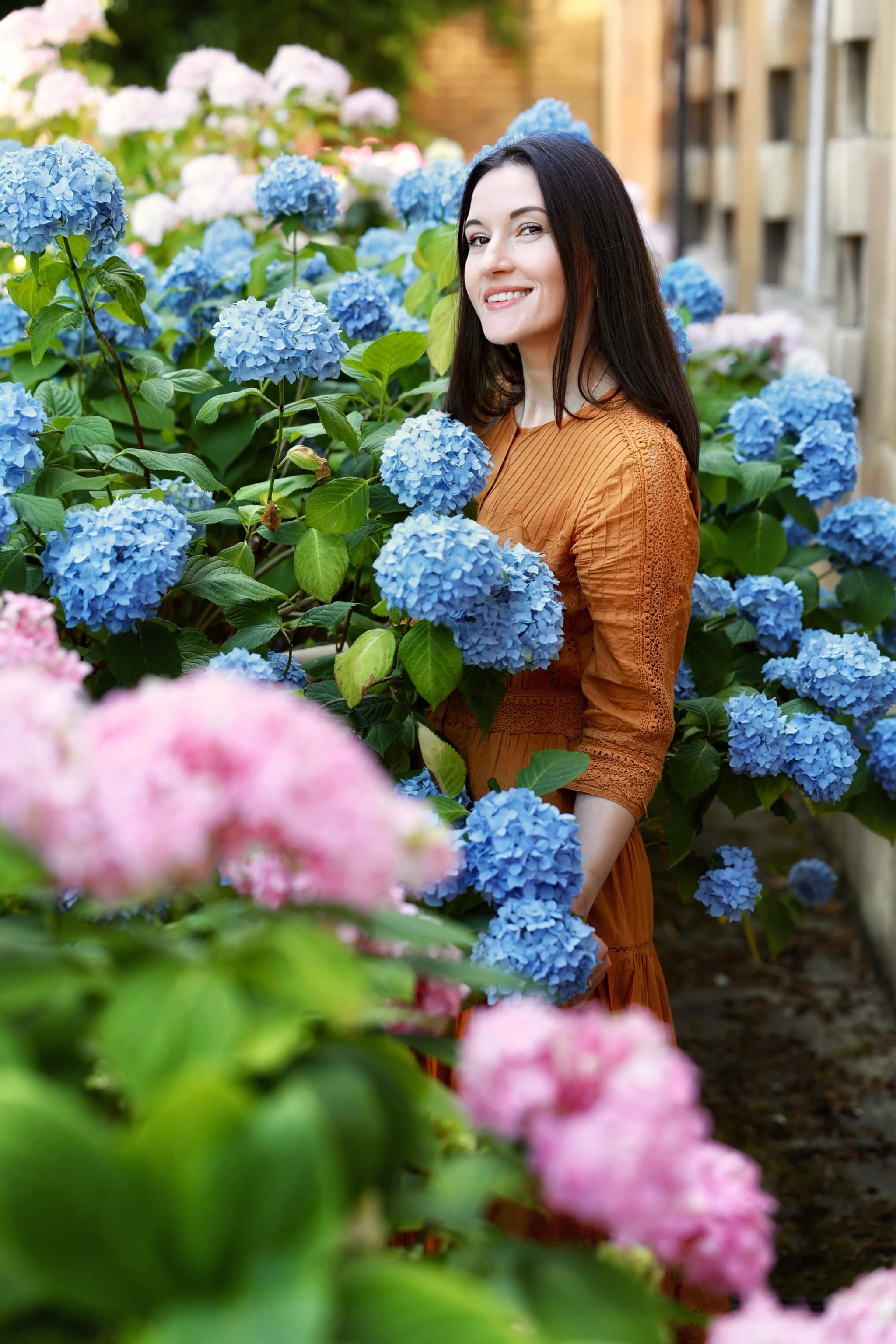
Clothing and background choices should follow the same logic. A busy patterned shirt or a background full of visual clutter competes with your face for attention, which is exactly the opposite of what a headshot needs to do. I generally recommend solid, mid-tone clothing and a simple, uncluttered background, whether that is a plain wall, soft outdoor greenery, or a considered office setting, so the viewer's eye goes straight to your expression rather than wandering the frame.
Natural Light Versus Studio Lighting
The most common complaint people have about existing headshots, once you get them talking, is that the photo looks stiff or artificial. Almost always this is a lighting problem rather than a posing one. Hard, directional studio lighting — a single flash close to the lens, or unmodified strobes — creates sharp shadows that emphasise every line and crease and gives the whole image an over-lit, slightly clinical quality that reads as unnatural the moment it is scaled down on a screen.
I work primarily with natural light, either genuine daylight through a large window or door, or portable diffused artificial light set up to replicate that same soft, even quality. Large, soft light sources wrap around a face rather than carving hard shadows into it, which is why window light has been the gold standard for portrait photographers for as long as portrait photography has existed. The effect is a headshot that looks like you were caught in a genuinely good, flattering moment rather than processed through a lighting rig, and it is the single biggest factor separating headshots that people are proud to use from headshots people tolerate using.
Location choice follows from this. A bright office with large windows, an outdoor spot with open shade, or a studio space set up to mimic daylight all work well. What does not work well is fluorescent overhead office lighting on its own, which casts an unflattering colour cast and flattens the face — a detail worth flagging if your session is happening at your own workplace rather than a dedicated shooting location.
A note on session planning
Headshot sessions work best when we talk beforehand about where the images will actually be used — LinkedIn, a website, press materials, a conference programme — so I can plan background, framing, and lighting around that specific context rather than shooting something generic and hoping it fits everywhere.
Get in touch about a headshot sessionI also always shoot a small range of expressions and slight variations within a single set-up, rather than a single fixed pose repeated identically. This gives you options afterwards — a warmer, more approachable version for a personal bio, a slightly more composed version for a formal press pack — without needing an entirely separate session for each context.
Thinking About It as an Investment
A professional headshot session is a modest cost set against images that, done properly, remain genuinely usable for several years. For anyone whose work depends even partly on personal reputation — consultants, lawyers, accountants, founders, creative leads, freelancers of every kind — those images appear repeatedly across proposals, email signatures, speaker bios, press mentions, and thousands of small LinkedIn impressions over time. Considered against that volume of use, a proper session is one of the more straightforwardly worthwhile investments a working professional can make in how they are perceived before anyone has met them.
The return is clearest for people in visibly client-facing roles, where a stranger's first encounter with you is very often your photograph rather than your voice or your handshake. But it holds just as well for people working mostly behind the scenes, because internal profiles, team pages, and conference bios all still carry a photograph, and a strong one quietly signals the same care and attention that shows up in the rest of your work.
When It Is Time to Update
There are a few reliable signals that a new headshot is due. If your appearance has changed noticeably since the current photograph — different hair, glasses, a beard grown or shaved off — the existing image is no longer an honest representation of you, and clients or colleagues meeting you for the first time in person will notice the gap. A change of role, industry, or career direction is another clear trigger, since the tone and context a headshot needs to communicate shifts along with the work itself. And simply put, three years is a reasonable outer limit for most people before a refresh is worth considering, sooner for anyone in a role with regular public or media exposure.
For executives and public-facing professionals who speak at conferences or appear in press coverage, more frequent updates make sense, since the photograph is being seen by larger and more varied audiences more often. The underlying benchmark I use with every client is simple: your headshot should be an accurate, flattering representation of how you look and carry yourself in a confident professional setting today, not a flattering representation of how you looked several years and one job ago.
A good headshot is a small, contained project — usually no more than an hour of your time — that pays back for years afterwards, every time someone forms a first impression of you before you have said a word. If you are weighing up whether it is time to update yours, or want to talk through what a session for your team might look like, get in touch and we can plan something that fits how and where your photographs are actually going to be used.


Yana Skakun
Photographer · England
Professional wedding, family and portrait photographer based in England. Passionate about capturing authentic emotions and timeless moments.
About Yana →professional headshots worth itbusiness headshot investmentLinkedIn profile photocorporate headshot photographerprofessional portrait ROI
Business Headshots — Corporate Headshot Photography in Cambridge & England
Corporate photography with Yana Skakun covers individual headshots, team portraits, and event documentation — all delivered with the same consistent quality and professional tone. Available in Cambridge and across England for businesses of all sizes. This guide — Why professional business headshots are worth the investment in 2025 — is part of the photography journal: practical, experience-based advice drawn from real sessions across England. Whether you arrived searching for professional headshots worth it or business headshot investment, the same care and attention shapes every session Yana photographs.
Corporate Headshot Photography sessions are available year-round, with bookings open across Cambridge, Ely, Huntingdon, Peterborough, and further afield — East England, London, the Midlands, and beyond. If you have specific questions about linkedin profile photo, mention it in your enquiry. Get in touch through the contact form above to check availability and discuss your session. Enquiries are welcomed from anywhere in the UK.
Frequently Asked Questions
What camera settings should I use for outdoor portraits?+
For outdoor portraits, shoot in aperture priority mode. Use a wide aperture (f/1.8–f/2.8) to blur the background and isolate your subject. Keep ISO as low as possible in good light. In bright conditions, use a neutral density filter or switch to manual to avoid overexposure at wide apertures.
What is the golden hour in photography?+
Golden hour is the period roughly 30–60 minutes after sunrise and before sunset. The sun is low in the sky, producing warm, soft, directional light that flatters skin tones and creates beautiful long shadows. It's widely considered the best natural light for portrait and outdoor photography.
How do you get sharp photos in low light?+
In low light, increase your ISO (accepting some grain), use the widest aperture your lens allows, and slow your shutter speed to the slowest you can hand-hold without camera shake (roughly 1/focal length as a guide). Use image stabilisation if available, and consider a tripod for static subjects.
What is the rule of thirds in photography?+
The rule of thirds divides the frame into a 3×3 grid. Placing your subject on one of the four intersection points — rather than dead centre — creates a more dynamic, visually interesting composition. It's a guideline, not a rule: some of the most powerful images break it deliberately.
How do you edit photos to look professional?+
Professional editing starts with shooting in RAW format. In Lightroom or similar software, correct exposure, white balance, and contrast first. Recover shadow and highlight detail. Apply gentle colour grading for mood. Be conservative with skin retouching — the goal is natural enhancement, not transformation. Consistency across a set of images is what separates professional from amateur editing.
Continue Reading
Related Articles
Business Headshots
The complete corporate headshot guide: What to expect and how to prepare
7 min read · Read Article
Business Headshots
LinkedIn headshot: What actually makes a profile photo work
7 min read · Read Article
Business Headshots
Virtual backgrounds vs real headshots: Why your LinkedIn photo still matters
6 min read · Read Article
Get in Touch
Ready to Book Your Session?
Get in touch to discuss your vision — I'll reply within 24 hours.