Yana Skakun
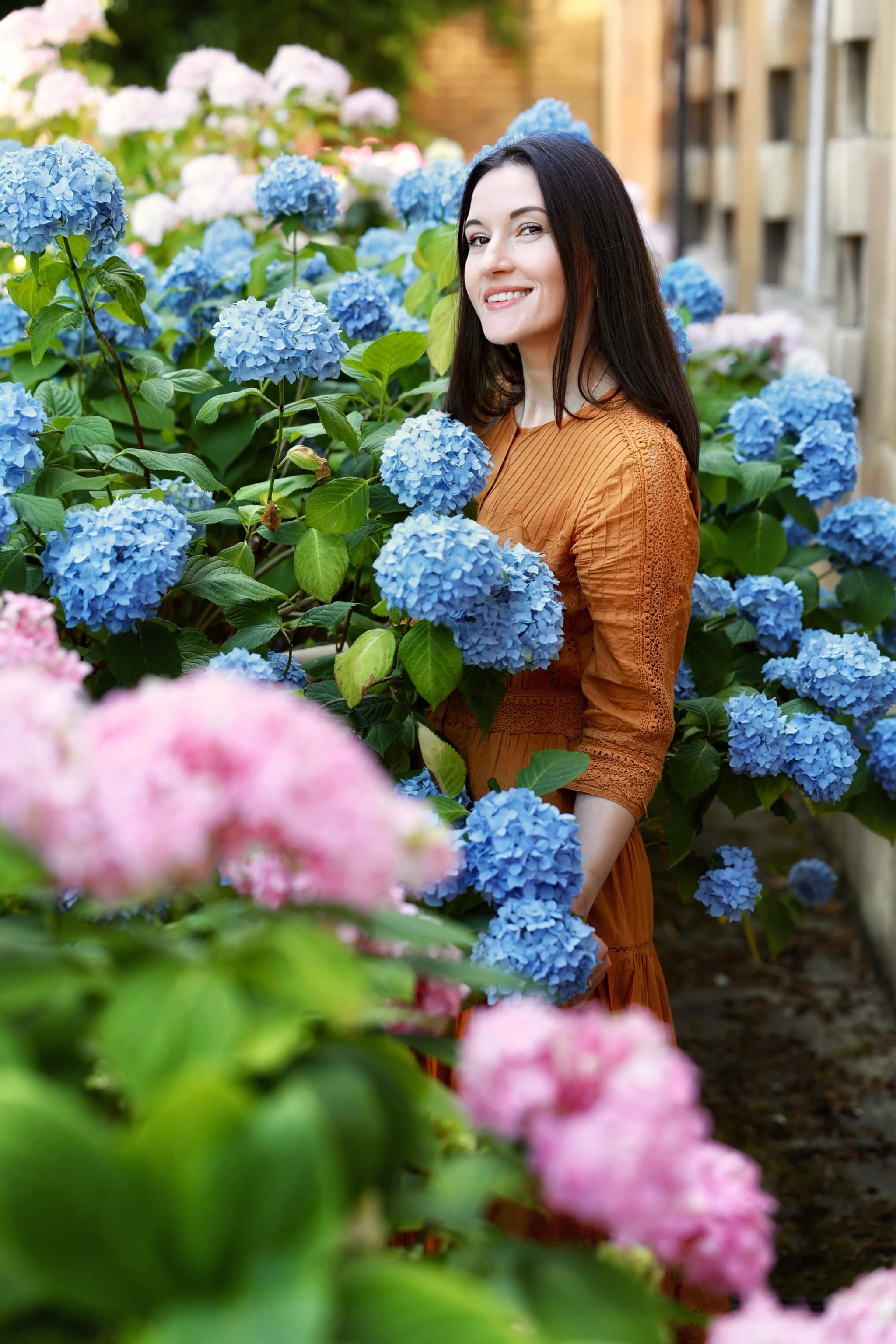
Virtual backgrounds vs real headshots: Why your LinkedIn photo still matters
By Yana Skakun·11 August 2026·6 min read
Over the past couple of years I have watched two things happen at once on LinkedIn and on company "meet the team" pages. AI headshot-generator apps have gone from a novelty to something genuinely common, promising a professional photograph from nothing more than a handful of selfies uploaded to an app. And virtual backgrounds, which became a fact of life on video calls in 2020, have quietly migrated from Zoom calls into some people's actual profile photographs — a real face shot on a phone, dropped onto a fake office or a fake bookshelf. Both are understandable responses to the same pressure: professional photography takes time, costs money, and requires you to actually get in front of a camera. But having looked closely at a lot of both, and having photographed a great many real headshots in the years since, I want to lay out plainly why neither substitute does what people hope it will do, and what actually happens when a genuine, well-lit photograph replaces them.
The AI Profile Photo Problem
Several apps now promise a polished, studio-quality headshot generated entirely from a set of casual selfies. The technology has improved a great deal in a short space of time, and the early, obviously distorted results of a couple of years ago — the extra fingers, the melted ears, the uncanny plastic skin — have largely been ironed out. What remains, though, is a more subtle problem that is harder to fix because it is baked into how the technology works. These tools generate an averaged, idealised version of a face, built from a statistical model of thousands of "good" headshots it has learned from. The result is recognisably the subject's face in a general sense, but it has had the particularity smoothed out of it — the small asymmetries, the specific way this person's eyes crease when they are genuinely amused, the exact texture of their skin under real light. What is left is a face that looks like a category rather than an individual: professional, certainly, but generic in a way that is hard to put your finger on until you compare it directly to a real photograph of the same person.
There is also a more practical issue. Because these tools are trained on generic datasets, they tend to converge on a fairly narrow set of poses, lighting setups, and even clothing styles — the same soft-blurred office background, the same three-quarter turn, the same slightly too-symmetrical smile appears across an enormous number of AI-generated headshots. Scroll through enough LinkedIn profiles and you start to recognise the "look" instantly, which rather defeats the purpose of a headshot, whose entire job is to represent a specific, distinct individual.
Why Specificity Is What Builds Trust
Trust in a professional photograph is, to a significant degree, a function of specificity. When we look at a headshot and unconsciously assess whether we trust the person in it, we are reading a huge number of small, real signals: the direction and quality of the light, the particular way this person's face sits when they are genuinely at ease rather than performing ease, the texture of real skin rather than smoothed pixels, the context suggested by the environment behind them. A photograph that contains all of that specific, non-generic information reads as credible almost instantly, often before a viewer has consciously thought about why.
A face that has been averaged by an algorithm, or a face pasted onto a background it was never actually standing in front of, is missing that layer of specific information — and viewers notice, even if they cannot always articulate what they are noticing. It reads as a "type" of professional photograph rather than as evidence of an actual person in an actual moment. For anyone whose work depends on being trusted quickly by strangers — a solicitor, a consultant, a founder introducing themselves to investors, a therapist whose potential client is deciding whether to make contact — that gap between "type" and "person" matters more than it might first appear.
Virtual Backgrounds and the Credibility Gap
Virtual backgrounds present a related but distinct problem. On a live video call, a virtual background is a reasonably well-understood convention — everyone knows it is there because a spare room is untidy or a work call is happening from a kitchen table, and it is largely forgiven because the call is live, brief, and full of other signals of authenticity: your actual voice, your actual movement, real-time reactions. A static profile photograph offers none of those other signals to compensate. Viewers have as long as they like to look at it, and the longer they look, the more the seams show — a slightly blurred or misaligned edge around the hair, a shadow falling the wrong way relative to the supposed light source in the background, skin tones lit for one environment sitting in front of a backdrop lit for another.
More than the technical artefacts, though, a virtual or composited background sends a specific message whether it is intended to or not: that the environment behind the subject is not real. For casual use that is a minor issue. As a permanent profile photograph representing you professionally — the image a new client sees before their first enquiry, or a recruiter sees before deciding whether to open your CV — it introduces a small but persistent note of "assembled" rather than "taken", and that note undercuts exactly the impression of straightforward competence a headshot is meant to project.
A real photograph, properly lit
If you are updating a LinkedIn profile, a company "about" page, or a set of team headshots, a short session with proper lighting produces a result that holds up under scrutiny in a way no app-generated or composited image currently can.
Enquire about headshot sessionsWhat People Actually Respond To
Set aside the technology question for a moment and think about what happens when someone looks at a profile photograph and decides, in the space of a couple of seconds, whether to click through, send a message, or move on. The photographs that tend to hold attention share a fairly consistent set of qualities: the subject is looking directly at the camera rather than off into the distance, the lighting is even and flattering rather than harsh or mismatched, the background is simple enough that it does not compete with the face, and — critically — the expression looks like something that happened rather than something that was arranged. None of that requires an elaborate studio setup. It requires good light, a photographer who knows how to get a genuine expression out of someone in front of a camera (which is a real skill, distinct from simply operating the camera), and a background that is either real and appropriate or kept deliberately simple and out of focus.
This is also where a professional photographer earns their fee in a way that is easy to underestimate. Most people are not naturally comfortable in front of a camera, and a stiff, over-posed expression is one of the most common reasons a headshot fails to land, whether it was taken by a professional with poor direction skills or produced by an app that has no direction skills at all. Genuine warmth in a headshot — the kind that makes a viewer feel they already have some sense of the person — comes from small conversational prompts, a bit of patience, and enough frames taken that the stiffness of the first thirty seconds has worn off by the time the useful images are captured.
The Practical Argument: Cost, Time, and Longevity
There is also a straightforwardly practical case for a real headshot session over the app-based alternatives, and it is worth setting out plainly because the upfront comparison — a short paid session versus a nearly instant app result — can make the app look like the more efficient option at first glance. A properly shot headshot, taken with attention to lighting, expression, and framing, tends to remain usable for several years. It does not need to be regenerated every time the underlying AI model improves and last year's output starts to look visibly dated, which is already a recognisable pattern with these tools — a photograph generated eighteen months ago frequently now reads as "an early AI headshot" the moment a viewer glances at it, in much the same way a filtered photograph from a particular era of Instagram now reads as dated at a glance.
A real session also produces more than one usable image. In a single appointment it is normal to come away with a primary headshot alongside a small set of variations — a different expression, a slightly different crop, an alternative background or outfit change if that has been arranged in advance — which is useful because different platforms and contexts genuinely call for different things. A LinkedIn profile photograph, a website team-page portrait, and a press or speaker-bio photograph do not always want to be the exact same crop and expression, and having real options from one session, rather than needing to generate and regenerate through an app each time, is a meaningfully more efficient use of both time and money over a period of years.
Who This Matters Most For
The gap between a real headshot and its substitutes matters more in some professional contexts than others. Anyone in a client-facing or trust-dependent role — solicitors, financial advisers, therapists and counsellors, consultants, estate agents, recruiters — is asking a stranger to make a judgement about their competence and trustworthiness from a single small photograph, often before any other contact has taken place. Founders and small business owners face a similar dynamic when introducing themselves to investors, press, or new clients, where the headshot is frequently the very first piece of information a person encounters about them. Teams updating a company "about" or "our people" page have an additional reason to avoid AI-generated or composited images: consistency. A page of headshots where several have clearly been through an app, in slightly different styles, with slightly different lighting logic, looks noticeably more fragmented than a set taken by one photographer in one sitting, where the lighting, colour treatment, and background are consistent across every person on the page.
None of this is an argument against using technology sensibly — a quick AI touch-up on an existing genuine photograph, for example, is a different matter entirely from generating a face from scratch or compositing someone into an environment they were never in. But when the photograph in question is going to represent you or your team consistently across LinkedIn, a website, a press kit, and printed materials for the next several years, the specific, unrepeatable quality that comes from an actual person photographed in actual light is difficult to replace with a shortcut, however convincing that shortcut has become. If you are due an update — whether that is one portrait or a full team session — get in touch and we can find a time that works, in a location and lighting setup suited to how the photographs will actually be used.


Yana Skakun
Photographer · England
Professional wedding, family and portrait photographer based in England. Passionate about capturing authentic emotions and timeless moments.
About Yana →virtual background headshotsAI profile photo LinkedInreal vs AI headshotsprofessional LinkedIn photowhy headshots matter 2026
Business Headshots — Corporate Headshot Photography in Cambridge & England
Corporate photography with Yana Skakun covers individual headshots, team portraits, and event documentation — all delivered with the same consistent quality and professional tone. Available in Cambridge and across England for businesses of all sizes. This guide — Virtual backgrounds vs real headshots: Why your LinkedIn photo still matters — is part of the photography journal: practical, experience-based advice drawn from real sessions across England. Whether you arrived searching for virtual background headshots or ai profile photo linkedin, the same care and attention shapes every session Yana photographs.
Corporate Headshot Photography sessions are available year-round, with bookings open across Cambridge, Ely, Huntingdon, Peterborough, and further afield — East England, London, the Midlands, and beyond. If you have specific questions about real vs ai headshots, mention it in your enquiry. Get in touch through the contact form above to check availability and discuss your session. Enquiries are welcomed from anywhere in the UK.
Frequently Asked Questions
What camera settings should I use for outdoor portraits?+
For outdoor portraits, shoot in aperture priority mode. Use a wide aperture (f/1.8–f/2.8) to blur the background and isolate your subject. Keep ISO as low as possible in good light. In bright conditions, use a neutral density filter or switch to manual to avoid overexposure at wide apertures.
What is the golden hour in photography?+
Golden hour is the period roughly 30–60 minutes after sunrise and before sunset. The sun is low in the sky, producing warm, soft, directional light that flatters skin tones and creates beautiful long shadows. It's widely considered the best natural light for portrait and outdoor photography.
How do you get sharp photos in low light?+
In low light, increase your ISO (accepting some grain), use the widest aperture your lens allows, and slow your shutter speed to the slowest you can hand-hold without camera shake (roughly 1/focal length as a guide). Use image stabilisation if available, and consider a tripod for static subjects.
What is the rule of thirds in photography?+
The rule of thirds divides the frame into a 3×3 grid. Placing your subject on one of the four intersection points — rather than dead centre — creates a more dynamic, visually interesting composition. It's a guideline, not a rule: some of the most powerful images break it deliberately.
How do you edit photos to look professional?+
Professional editing starts with shooting in RAW format. In Lightroom or similar software, correct exposure, white balance, and contrast first. Recover shadow and highlight detail. Apply gentle colour grading for mood. Be conservative with skin retouching — the goal is natural enhancement, not transformation. Consistency across a set of images is what separates professional from amateur editing.
Continue Reading
Related Articles
Business Headshots
Why professional business headshots are worth the investment in 2025
7 min read · Read Article
Business Headshots
The complete corporate headshot guide: What to expect and how to prepare
7 min read · Read Article
Business Headshots
LinkedIn headshot: What actually makes a profile photo work
7 min read · Read Article
Get in Touch
Ready to Book Your Session?
Get in touch to discuss your vision — I'll reply within 24 hours.