Yana Skakun

Brand Photography for Personal Stylists: When Your Image Is Your Business
By Yana Skakun·10 July 2025·5 min read
Personal stylists sell an eye. That is, at its core, what a client is paying for — the ability to look at a wardrobe, a body, a lifestyle, and a budget, and translate all of it into something coherent and flattering. Which means that when a prospective client lands on a stylist's website or Instagram profile, the very first thing they are unconsciously auditing is whether the stylist's own visual presentation lives up to the promise. A beautifully written bio and a glowing testimonial can only carry so much weight if the photograph beside them is a dim phone selfie, a cropped wedding photo, or a five-year-old headshot taken for an entirely different career. I have photographed a number of personal stylists and image consultants across Cambridge and the wider region, and the brief is always some version of the same thing: make my photography say, credibly, that I know what I am doing with how people look.
Why Stylists Face a Higher Bar Than Most Professionals
For most service professionals, a headshot needs to communicate approachability and competence. It is a supporting piece of evidence, not the main argument. For a personal stylist, the photography is closer to a work sample. A client considering booking a wardrobe edit or a personal shopping day is essentially asking, silently, "does this person understand colour, proportion, and composition well enough to apply it to a photograph of themselves?" That is an unusually direct test, and it is one that generic corporate headshot photography, however competently executed, often fails to pass. A stylist photographed in the same flat, evenly lit, neutral-background style as a solicitor or an accountant looks technically fine and strategically wrong — the imagery has to demonstrate personal style, not just professional presentability.
This is also why a single portrait rarely does the job for a stylist's brand in the way it might for other professions. Stylists tend to need a small library of images that can be deployed across a website, an Instagram grid, a press feature, a client welcome pack, and printed marketing material, and each of those contexts asks for something slightly different in tone and framing.
The Core Image Set I Plan Around
Rather than treating a stylist's session as a single portrait sitting, I plan it as a shoot list covering several distinct categories, so the final gallery gives a genuinely usable range rather than thirty variations on one pose in one outfit.
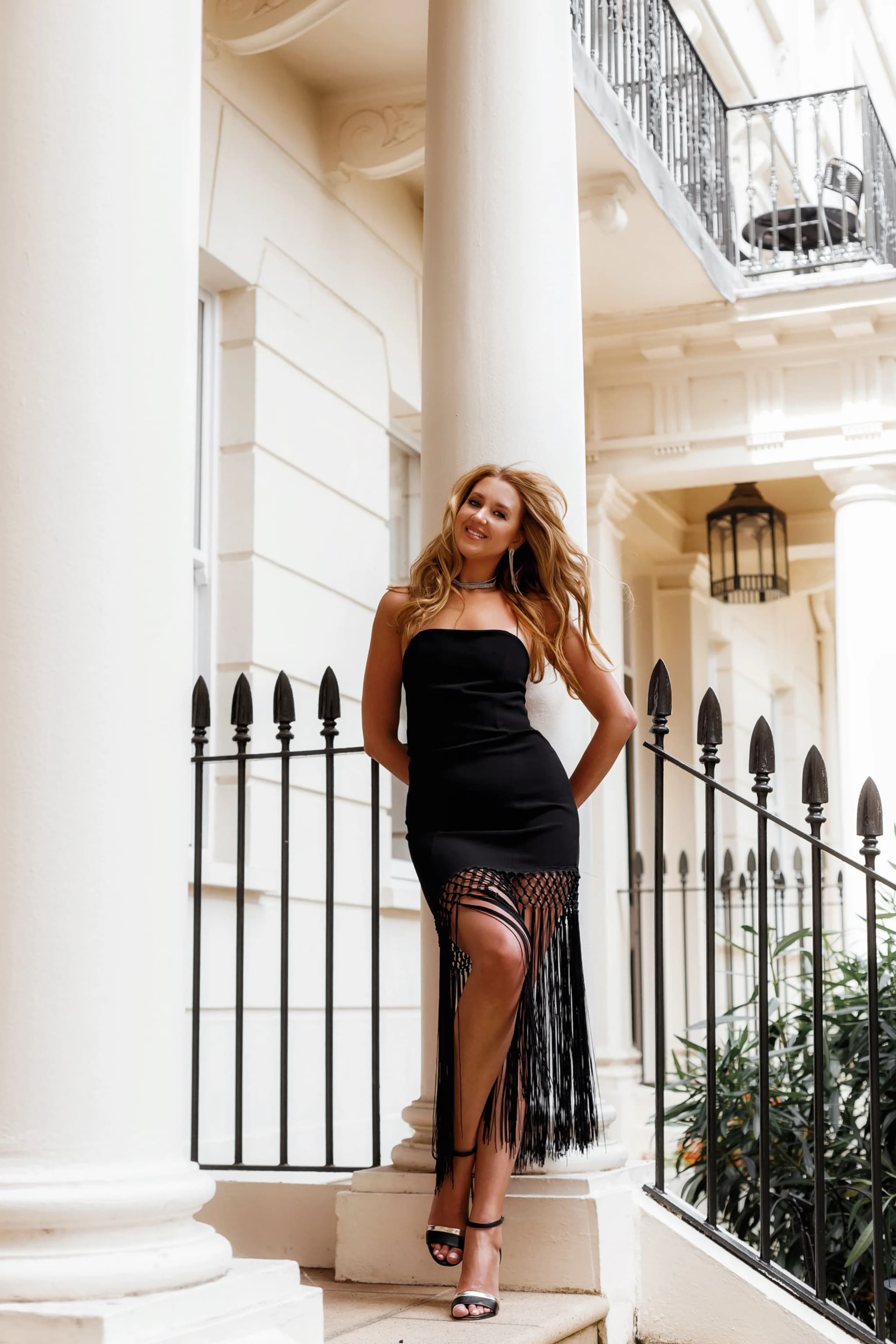
The primary brand portrait is the anchor image — the one used on the homepage, the About page, LinkedIn, and press mentions. It needs to hold up at a range of sizes, from a large hero image down to a small circular avatar, which affects how tightly it should be framed and how much negative space is left around the subject. I generally shoot this with the stylist in a signature piece or outfit that is genuinely representative of how they dress day to day, rather than something borrowed for the occasion, because clients often recognise and respond to consistency between the photograph and the person who turns up to the consultation.
Working images come next — a stylist reviewing a rail of clothing, steaming a garment, laying out a capsule wardrobe on a bed, sketching or annotating a lookbook, holding up two jackets against each other as if mid-decision. These images do real marketing work because they answer a question many potential clients have but rarely ask outright: what actually happens in a session with a stylist? Seeing the process photographed makes an abstract service feel concrete and considerably less intimidating to book.
Detail and texture shots — hands sorting through fabric swatches, a colour palette laid out, the label of a well-chosen garment, an accessory tray — are the unsung workhorses of a stylist's content library. They are quick to shoot, endlessly reusable as filler content between bigger posts, and they reinforce the sense of tactile expertise that stylists are trading on.
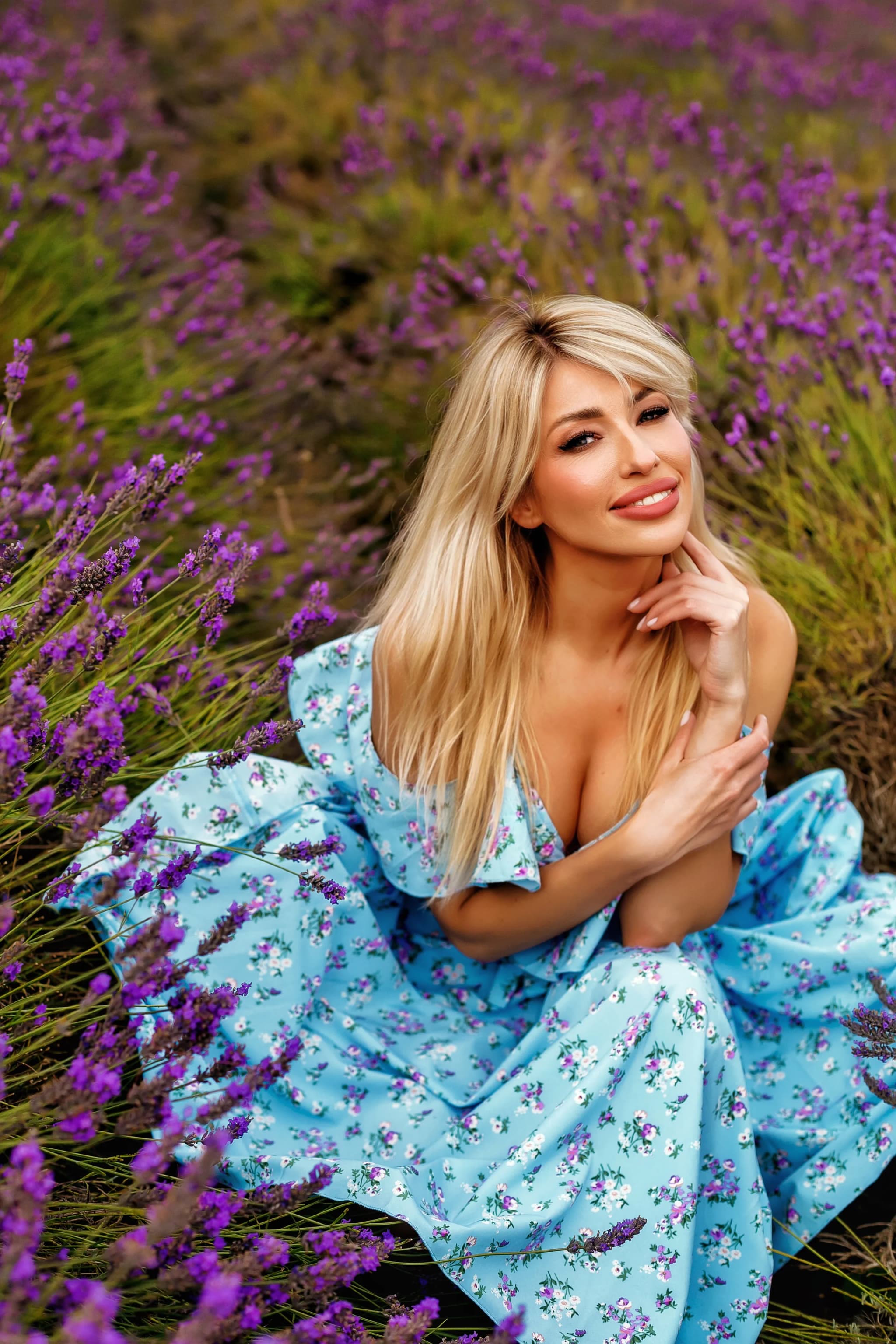
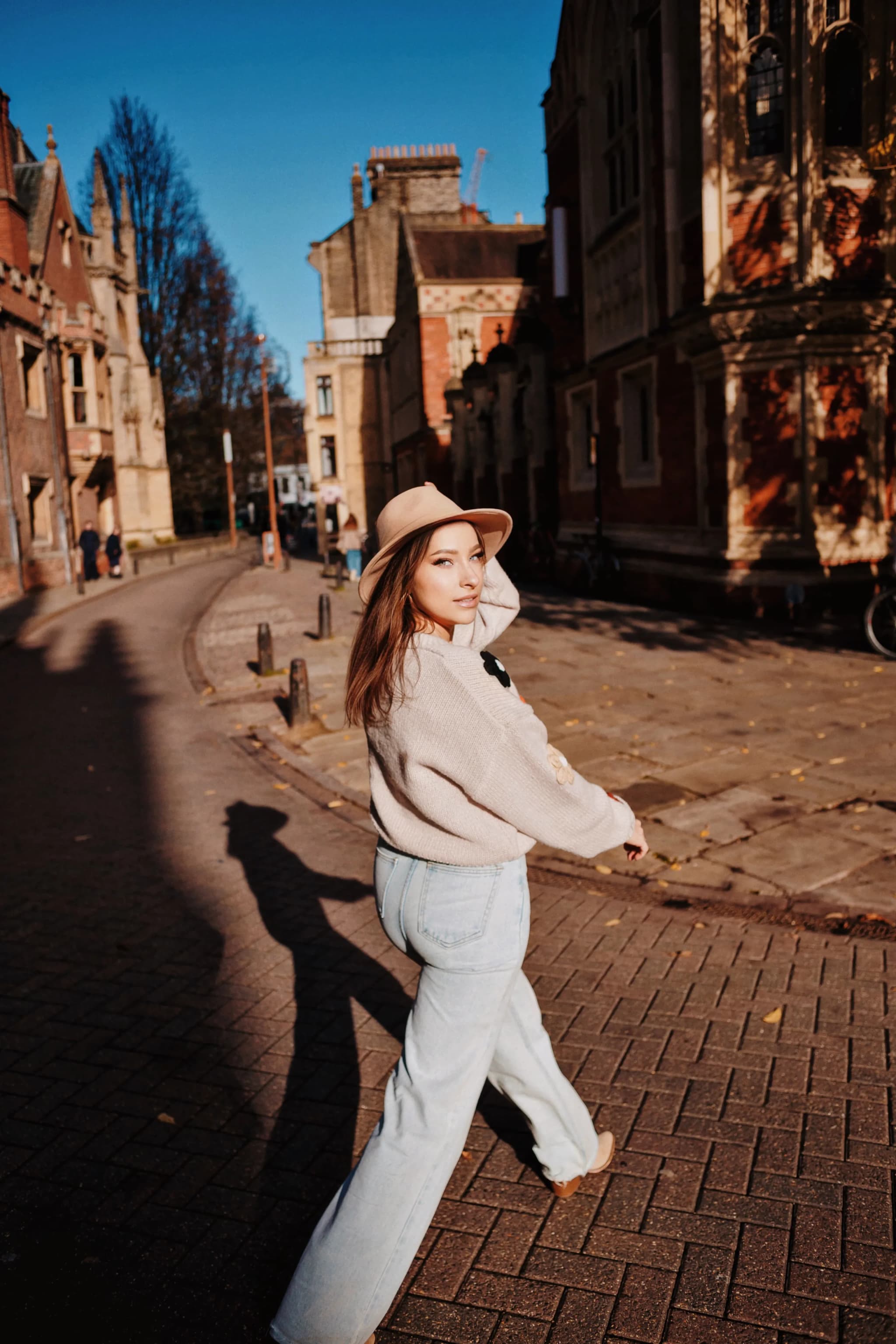
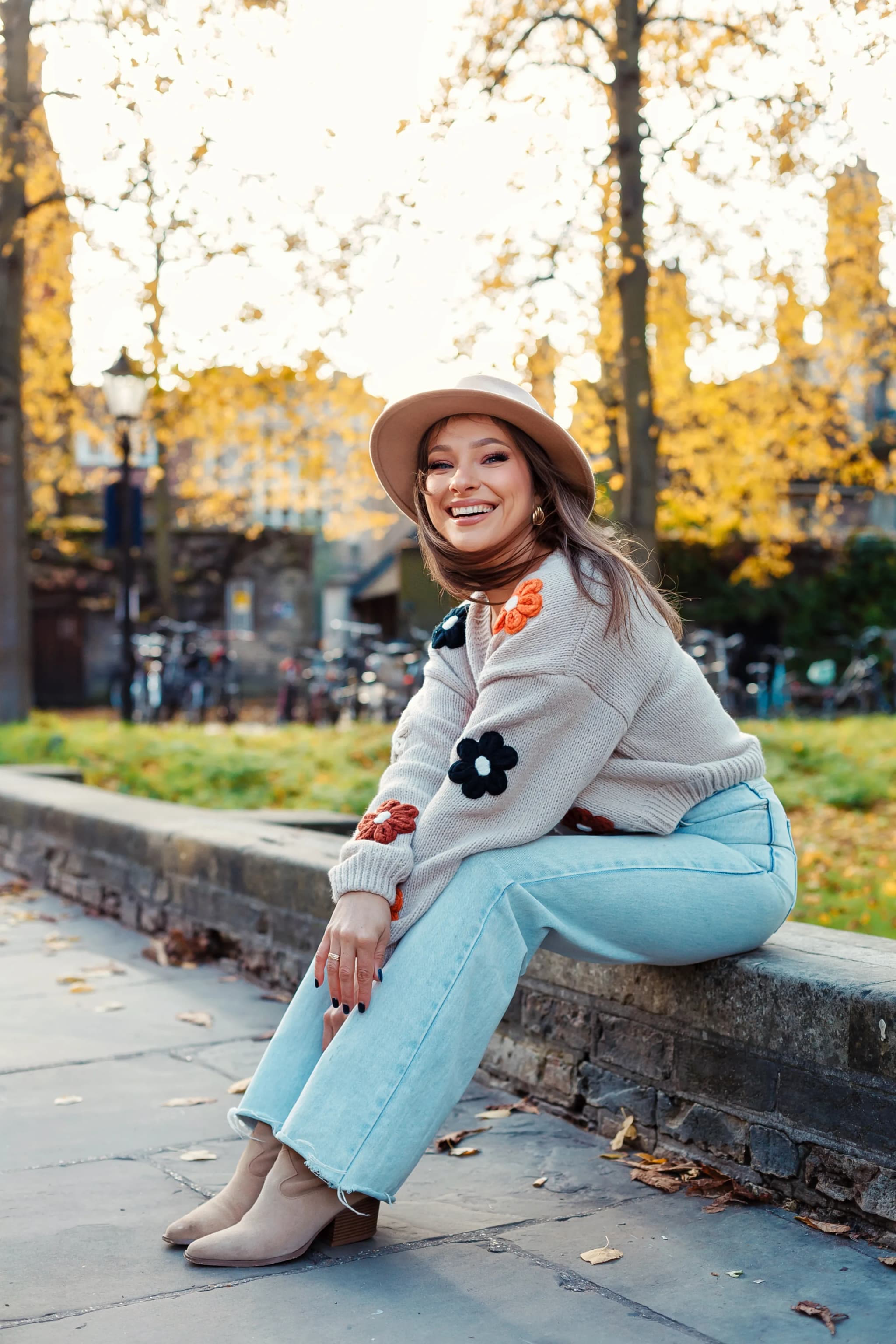
Lifestyle images round out the set for stylists whose brand leans on a particular aesthetic identity — capsule wardrobe minimalism, sustainable and pre-loved fashion, classic British tailoring, colour analysis and seasonal palettes. A shot in a considered outfit at a café table, walking along a Cambridge street, browsing a rail in a boutique, communicates the lifestyle the client is buying into far more effectively than a studio portrait ever could.
Choosing Locations That Reinforce the Brand, Not Just Look Nice
Location choice for a stylist's brand shoot should follow directly from their positioning, not just from what looks photogenic. A stylist working at the luxury end of the market — personal shopping days, wardrobe curation for high-value clients — benefits from settings that carry that same register: a boutique hotel lobby, an elegant period interior, a well-appointed private members' space. A stylist positioned around accessible, everyday styling for working professionals often does better with a contemporary, unfussy setting — a light-filled café, a modern co-working space, a clean urban street — that does not create distance between the stylist and the client they are trying to reach.
Cambridge offers a genuinely useful range for this. The independent boutiques and vintage shops around Mill Road and the Grafton area give a warm, characterful backdrop for stylists whose brand leans towards individuality and personal expression rather than polish. The interiors around the city centre's boutique hotels and the more architecturally distinguished cafés near the market square suit a more refined, luxury-leaning brand. For stylists who want their location to say "Cambridge" specifically — useful if local clientele and reputation matter to the business — the honey-coloured stone of the older streets and college frontages photograph beautifully without ever needing to step onto college grounds, which typically require separate permissions for commercial photography.
I also frequently recommend a stylist's own working space, if they have a studio, fitting room, or dedicated area at home, as at least one location in the shoot. It grounds the working images in a real, specific context rather than a generic rented space, and it gives clients a preview of what a session with that stylist will actually look and feel like.
Wardrobe: The Single Most Important Decision
For every other profession I photograph, wardrobe advice is fairly generic — solid colours, good fit, nothing too busy for the camera. For a personal stylist, wardrobe is not a supporting detail; it is the argument. The outfits worn in the shoot are, in effect, the stylist's own portfolio of taste, and they will be scrutinised by exactly the audience most qualified to notice if something is off.
I ask stylists to bring several outfit options that genuinely represent their range rather than a single "best" look, because a session that moves through two or three considered outfit changes produces material for multiple platforms and contexts without ever feeling repetitive across a client's feed. It is also worth building in outfits that demonstrate versatility — something more formal, something more relaxed, perhaps something that reflects a signature colour palette the stylist is known for. Accessories, layering, and styling details that would be lost in a rushed session are exactly the things worth slowing down for, since they are the visual proof of the expertise being sold.
Colour choices should be made with the eventual use of the images in mind. A brand with a clean, neutral visual identity across its website and social channels benefits from wardrobe choices in a complementary tonal range, so the photography slots seamlessly into existing branding rather than fighting it. A stylist known for bold colour work, conversely, should not shy away from wearing bold colour in their own portraits — it would be a strange contradiction to advise clients toward confident colour choices while photographing yourself exclusively in black and navy.
Brand photography built around what you actually do
I work with personal stylists and image consultants across Cambridge and the wider region to plan sessions that cover portraits, working images, and lifestyle content in one organised shoot.
Get in touch about a brand sessionWorking With Real Clients, Not Just Solo Portraits
Some of the most persuasive images in a stylist's marketing come from genuine or re-created consultation moments — a stylist and a client reviewing options together, holding fabric up against skin tone, standing either side of a mirror mid-fitting. These images require a model or a genuinely consenting client willing to be photographed, and they need to be planned carefully around confidentiality. Many stylists prefer to stage these scenes with a friend, colleague, or model rather than an actual paying client, both for privacy reasons and because a staged scene can be directed for the camera in a way a live consultation cannot. Either approach is legitimate, and I always discuss which makes sense before the shoot rather than assuming.
Where an actual client is willing to be photographed and has given clear consent, these images tend to carry particular credibility precisely because they are not obviously staged. A written release covering how the images will be used is worth having in place regardless of who is in front of the camera with the stylist.
Planning a Session That Delivers a Full Content Library
A brand session for a personal stylist works best when it is planned as a structured shoot list rather than an open-ended "let's see what we get" session. Before the day, I ask stylists to think through where the images will actually be used — website hero image, About page, Instagram grid, press kit, printed materials — because that shapes both the aspect ratios and the framing decisions made on the day. A vertical image intended for an Instagram story needs very different composition to a wide website banner, and it is far easier to plan for both during the shoot than to try to crop one into the other afterwards.
I typically build in time for at least two locations and two to three outfit changes across a session, moving from more formal portrait work into looser, more candid working shots as the stylist relaxes into the camera. The later part of a session, once any initial self-consciousness has worn off, is very often where the most natural and usable images come from, which is one reason I resist rushing this kind of shoot into a single tight hour.
A personal stylist's brand photography is, in the end, a demonstration piece as much as it is marketing collateral — the one place where a client can judge, before ever booking a consultation, whether this is someone whose eye they trust. Getting it right means treating the shoot with the same intentionality a good stylist brings to a client wardrobe: a considered set of images across portraits, working shots, and lifestyle content, planned around where they will actually be seen, rather than a single rushed headshot that leaves the real expertise invisible. If you would like to talk through a brand photography session built specifically around your services and your visual identity, get in touch and we can plan a shoot list that works for how your business actually presents itself.

Yana Skakun
Photographer · England
Professional wedding, family and portrait photographer based in England. Passionate about capturing authentic emotions and timeless moments.
About Yana →personal stylist brand photography UKimage consultant photography UKstylist brand photos Cambridgefashion professional photography UKpersonal stylist headshots UKstyle coach brand photography UK
Business Headshots — Corporate Headshot Photography in Cambridge & England
Corporate photography with Yana Skakun covers individual headshots, team portraits, and event documentation — all delivered with the same consistent quality and professional tone. Available in Cambridge and across England for businesses of all sizes. This guide — Brand Photography for Personal Stylists: When Your Image Is Your Business — is part of the photography journal: practical, experience-based advice drawn from real sessions across England. Whether you arrived searching for personal stylist brand photography uk or image consultant photography uk, the same care and attention shapes every session Yana photographs.
Corporate Headshot Photography sessions are available year-round, with bookings open across Cambridge, Ely, Huntingdon, Peterborough, and further afield — East England, London, the Midlands, and beyond. If you have specific questions about stylist brand photos cambridge, mention it in your enquiry. Get in touch through the contact form above to check availability and discuss your session. Enquiries are welcomed from anywhere in the UK.
Frequently Asked Questions
What camera settings should I use for outdoor portraits?+
For outdoor portraits, shoot in aperture priority mode. Use a wide aperture (f/1.8–f/2.8) to blur the background and isolate your subject. Keep ISO as low as possible in good light. In bright conditions, use a neutral density filter or switch to manual to avoid overexposure at wide apertures.
What is the golden hour in photography?+
Golden hour is the period roughly 30–60 minutes after sunrise and before sunset. The sun is low in the sky, producing warm, soft, directional light that flatters skin tones and creates beautiful long shadows. It's widely considered the best natural light for portrait and outdoor photography.
How do you get sharp photos in low light?+
In low light, increase your ISO (accepting some grain), use the widest aperture your lens allows, and slow your shutter speed to the slowest you can hand-hold without camera shake (roughly 1/focal length as a guide). Use image stabilisation if available, and consider a tripod for static subjects.
What is the rule of thirds in photography?+
The rule of thirds divides the frame into a 3×3 grid. Placing your subject on one of the four intersection points — rather than dead centre — creates a more dynamic, visually interesting composition. It's a guideline, not a rule: some of the most powerful images break it deliberately.
How do you edit photos to look professional?+
Professional editing starts with shooting in RAW format. In Lightroom or similar software, correct exposure, white balance, and contrast first. Recover shadow and highlight detail. Apply gentle colour grading for mood. Be conservative with skin retouching — the goal is natural enhancement, not transformation. Consistency across a set of images is what separates professional from amateur editing.
Continue Reading
Related Articles
Business Headshots
Why professional business headshots are worth the investment in 2025
7 min read · Read Article
Business Headshots
The complete corporate headshot guide: What to expect and how to prepare
7 min read · Read Article
Business Headshots
LinkedIn headshot: What actually makes a profile photo work
7 min read · Read Article
Get in Touch
Ready to Book Your Session?
Get in touch to discuss your vision — I'll reply within 24 hours.