Yana Skakun

Registry Office Wedding Photography: How to Make it Look Epic
By Yana Skakun·10 July 2026·8 min read
Registry office weddings get a reputation for being the "small, simple" option, and in one sense that is true — there is no aisle-length procession, no marquee, no seating plan spreadsheet. But a registry office wedding is not a lesser wedding photographically, and it is certainly not a harder one to make beautiful. What it requires is a photographer who understands the shape of the day, works fast and quietly in tight spaces, and knows how to build a genuine narrative out of what is often forty minutes of ceremony and a handful of hours either side of it. I have photographed dozens of registry office and small civil ceremony weddings across Cambridgeshire, and the images from these days are consistently among my favourites — often more intimate and more honest than anything a five-hundred-guest marquee wedding produces.
Why Registry Office Weddings Are a Photographer's Favourite, Not a Compromise
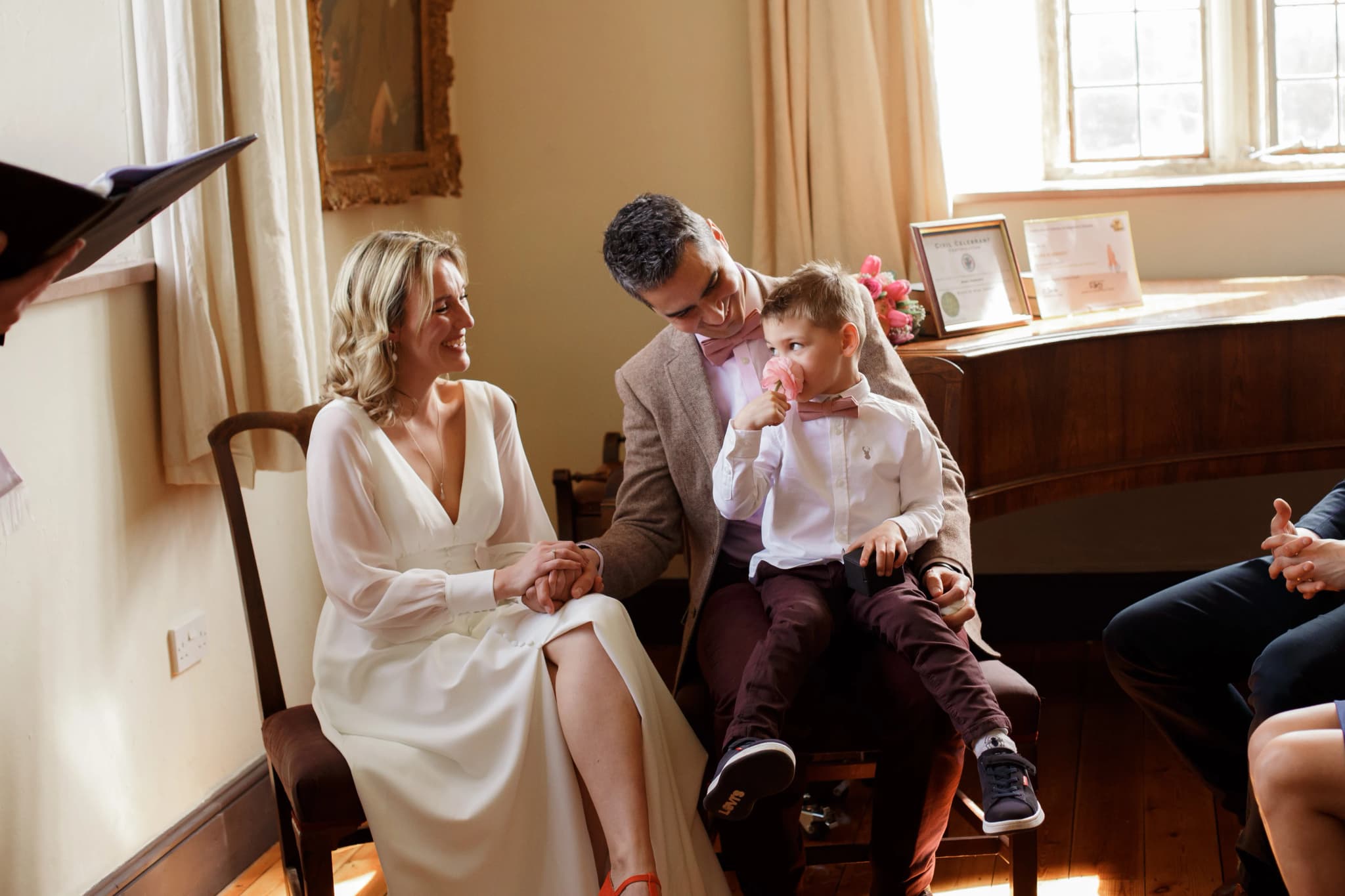
There is a persistent myth that registry office weddings photograph poorly because the rooms are plain and the guest list is small. In practice, the opposite is usually true. Smaller guest counts mean everyone in every photograph actually matters to you, rather than the wide shots being filled with people you barely recognise. Plainer rooms force more attention onto light, expression, and the people themselves rather than relying on an elaborately decorated backdrop to do the work. And because the ceremony itself is short, there is far more time in the day left over for the portraits, the details, and the relaxed moments that end up being the images couples treasure most a decade later.
I approach a registry office wedding exactly as I would any other wedding on my weddings pages — documentary-led, unobtrusive, and focused on real moments rather than staged ones. The scale is different but the philosophy is not. If anything, the intimacy of a small ceremony room amplifies the emotion in a way that a cavernous church sometimes dilutes.
Know the Rules of Your Specific Registry Office Before the Day
This is the single most important piece of practical advice for a registry office wedding, and it is one that catches couples out constantly. Every register office in the UK sets its own photography policy, and those policies vary enormously. Some rooms allow photography throughout the entire ceremony with no restriction. Others permit photography only during the entrance, the signing of the register, and the exit, with the vows and ring exchange strictly off-limits to cameras. A few insist the photographer stays at the back of the room and does not move at all during proceedings.
Cambridge Register Office, South Cambridgeshire Hall, and the various other rooms used across the county each have slightly different rules, and registrars are generally happy to confirm them in advance if you or your photographer ask directly. I always contact the venue ahead of the wedding to confirm exactly what is and is not permitted, so there are no surprises on the day and no awkward moment where a registrar has to interrupt the ceremony to ask a photographer to sit down. Knowing the rules in advance also means I can plan around them — if the vows themselves cannot be photographed, that time is better spent quietly observing guests' reactions from a position I know I am allowed to be in.
Choosing a Room and Ceremony Slot That Photographs Well
If you have any flexibility in choosing your ceremony room or time slot, it is worth thinking about light. Register office ceremony rooms are often on an upper floor with large sash or bay windows, and a slot booked for late morning or early afternoon on a bright day can mean genuinely lovely natural window light falling across the room, rather than the flatter, more artificial look of a room lit only by overhead fittings. If you have a choice between rooms at the same venue, ask to see photographs from each, or ask your photographer if they have shot there before — most photographers who cover a lot of registry office weddings in a local area will know the light and layout of the main rooms already.
Ceremony slots at register offices are typically short and tightly scheduled, often in fifteen or thirty minute blocks with another wedding party waiting outside. This has a real practical consequence: there is very little time for confetti, extended group photographs, or lingering in the ceremony room itself immediately afterwards. Building in a realistic understanding of this from the start, rather than assuming the day will unfold at a leisurely pace the way it might at a private venue, makes a significant difference to how relaxed everyone feels.
Planning a registry office wedding?
I photograph registry office and small civil ceremonies across Cambridge and the wider county throughout the year, and I am always happy to have a call before the day to talk through your specific venue, its photography rules, and how best to structure the timeline around them. It costs nothing to ask and it removes a lot of uncertainty.
Get in touchBuilding a Timeline That Makes the Most of a Short Ceremony
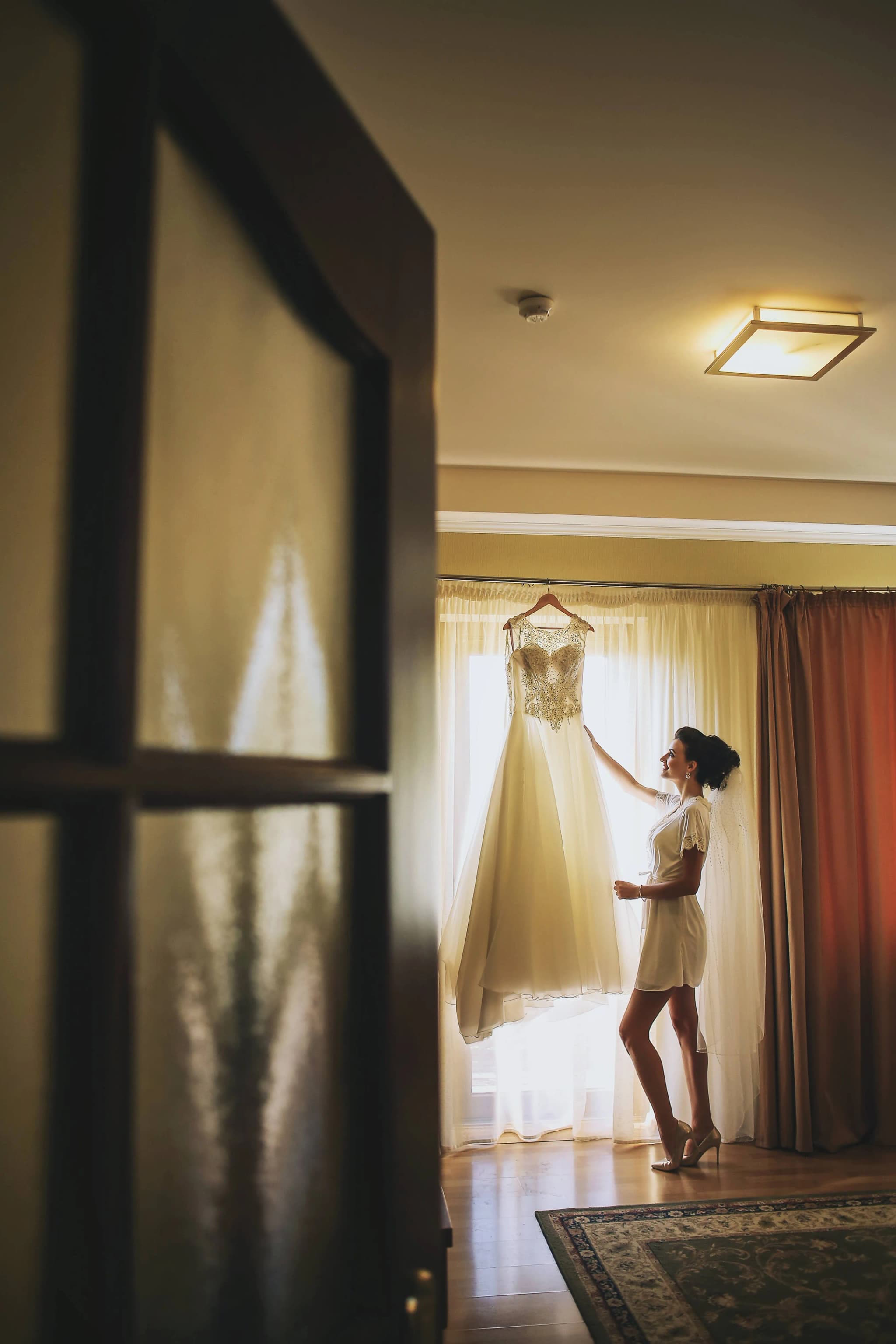
Because the legal ceremony itself is brief, the real photographic opportunity of a registry office wedding lies in everything around it. I encourage couples to think of the day in three distinct chapters: the getting-ready and arrival, the ceremony itself, and everything that follows. The third chapter is where a registry office wedding has genuine freedom that a larger wedding sometimes lacks — because there is no need to be back at a venue for a scheduled breakfast at a fixed time, couples can build in a proper portrait session somewhere beautiful, a relaxed pub lunch with close family, or an evening celebration at a completely different location.
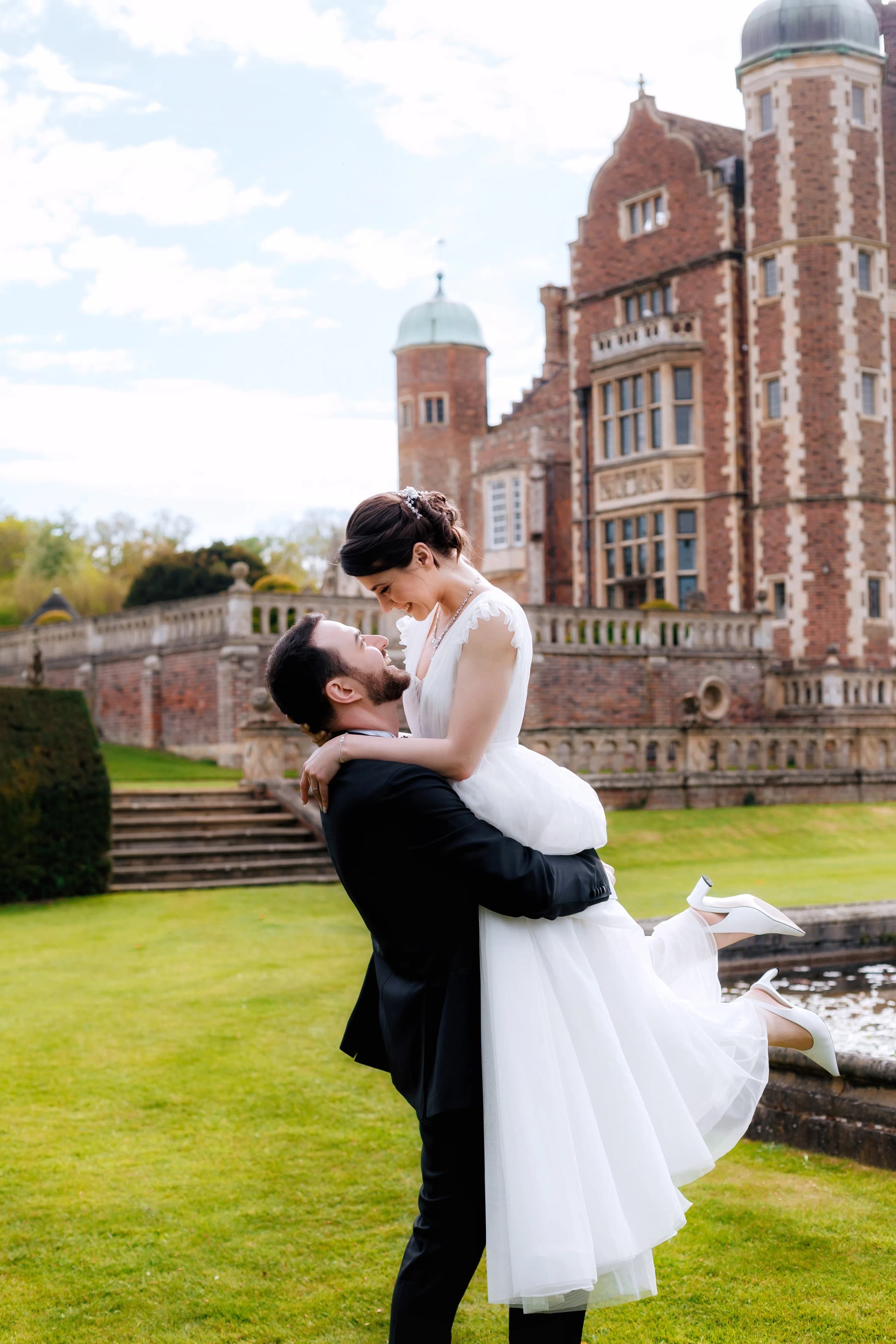
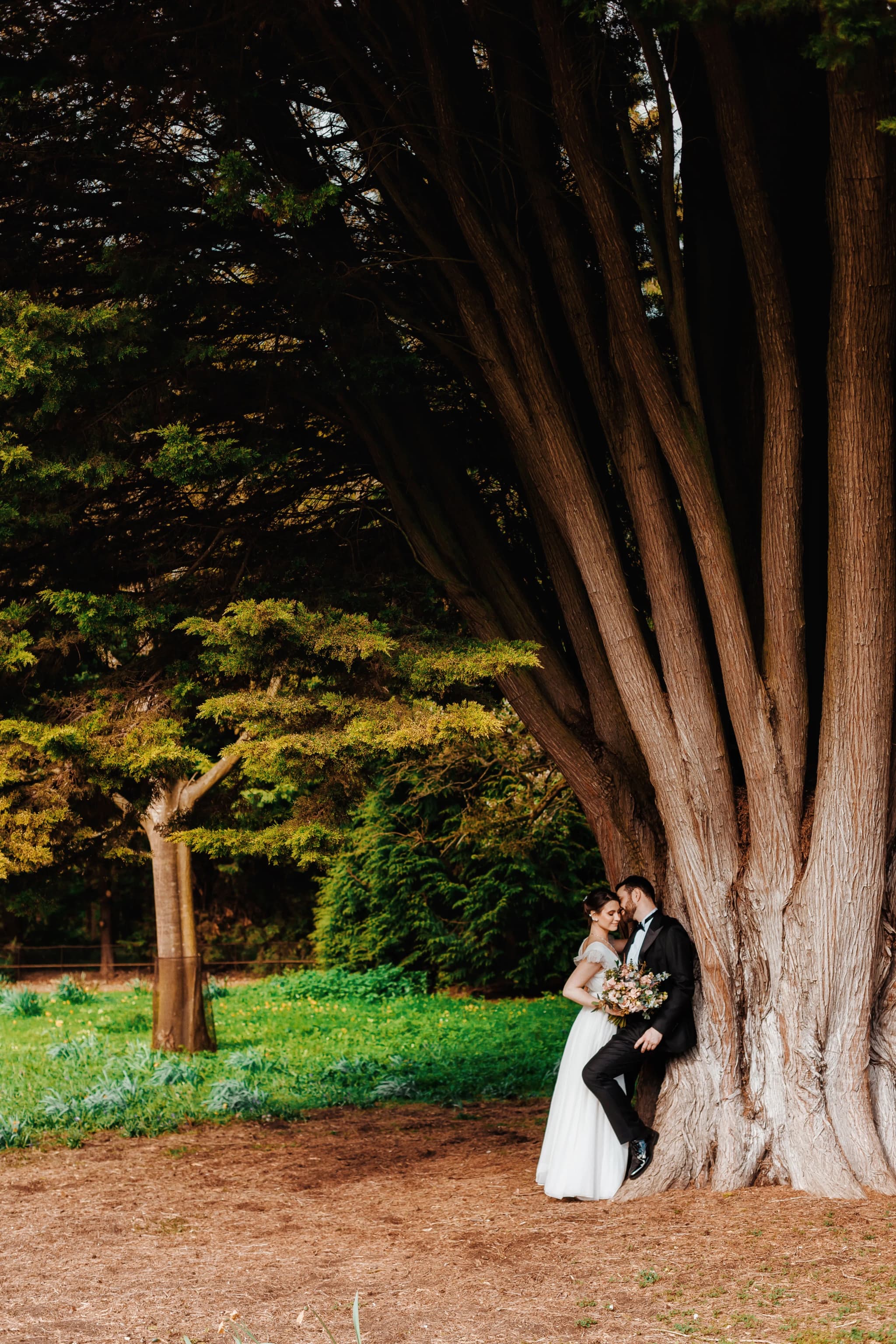
A structure that works well for a lot of my registry office couples: getting ready photographs at home or in a hotel room for thirty to forty minutes, arrival and any pre-ceremony guest mingling, the ceremony itself, confetti and group photographs immediately outside if the venue allows it, then a couple of hours built into the day specifically for portraits somewhere with good light and a setting that means something to you — a favourite Cambridge street, the Backs, a local park, or somewhere with personal history. This is often where the standout images of the whole day come from, precisely because there is no rush and no guest list to manage during that window.
Couples who want an even more pared-back, low-pressure structure sometimes choose to treat the whole day closer to an elopement in spirit — a small ceremony followed by just the two of you and a camera for an extended, unhurried period exploring a location together. It is a format that suits registry office weddings particularly well, since the legal formality is already handled efficiently and the rest of the day can be built entirely around what the two of you actually want, rather than around guest logistics.
Making a Plain Room Look Considered, Not Bare
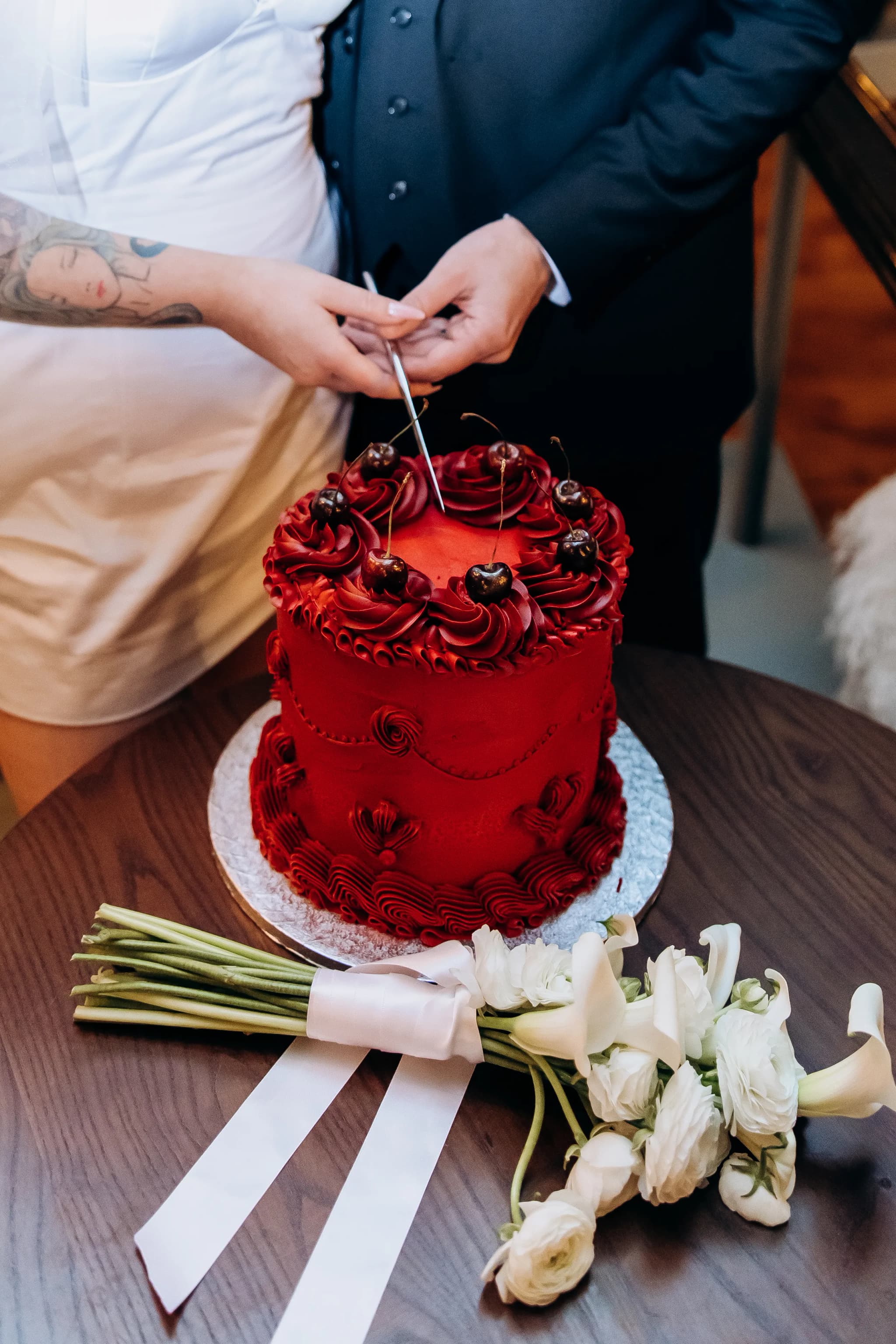
Register office ceremony rooms are, by design, fairly neutral spaces — a table, some chairs, perhaps a fireplace or a set of tall windows, rarely anything approaching the visual richness of a decorated marquee or a church interior. A few small, low-cost choices can lift how the room photographs considerably without requiring any special permission from the venue. A simple bouquet in hand gives colour and shape to almost every ceremony photograph. Buttonholes for the couple and immediate family add a consistent visual thread through the images. If the venue allows a small posy or a couple of stems on the signing table, it draws the eye and adds warmth to what is otherwise a fairly plain surface.
What matters more than any prop, though, is composition and light. A skilled photographer working a plain room will position the couple relative to the window light, choose an angle that uses the depth of the room rather than flattening it, and frame tightly enough during key moments that the room itself becomes secondary to the expressions on people's faces. I would rather photograph a beautifully lit, simply furnished room well than a poorly lit, over-decorated one badly, and in my experience couples end up with images they love regardless of how elaborate the room was to begin with.
Guests, Confetti, and the Bit Outside the Building
Because register offices are frequently in town or city centre locations, the space immediately outside the building is often a shared public pavement or courtyard rather than private grounds, and there may be another wedding party arriving as yours is leaving. Checking with the venue in advance whether confetti is permitted at all, and if so where, saves a stressful moment on the day itself — some venues have a specific designated confetti spot a short walk away rather than allowing it directly outside the entrance.
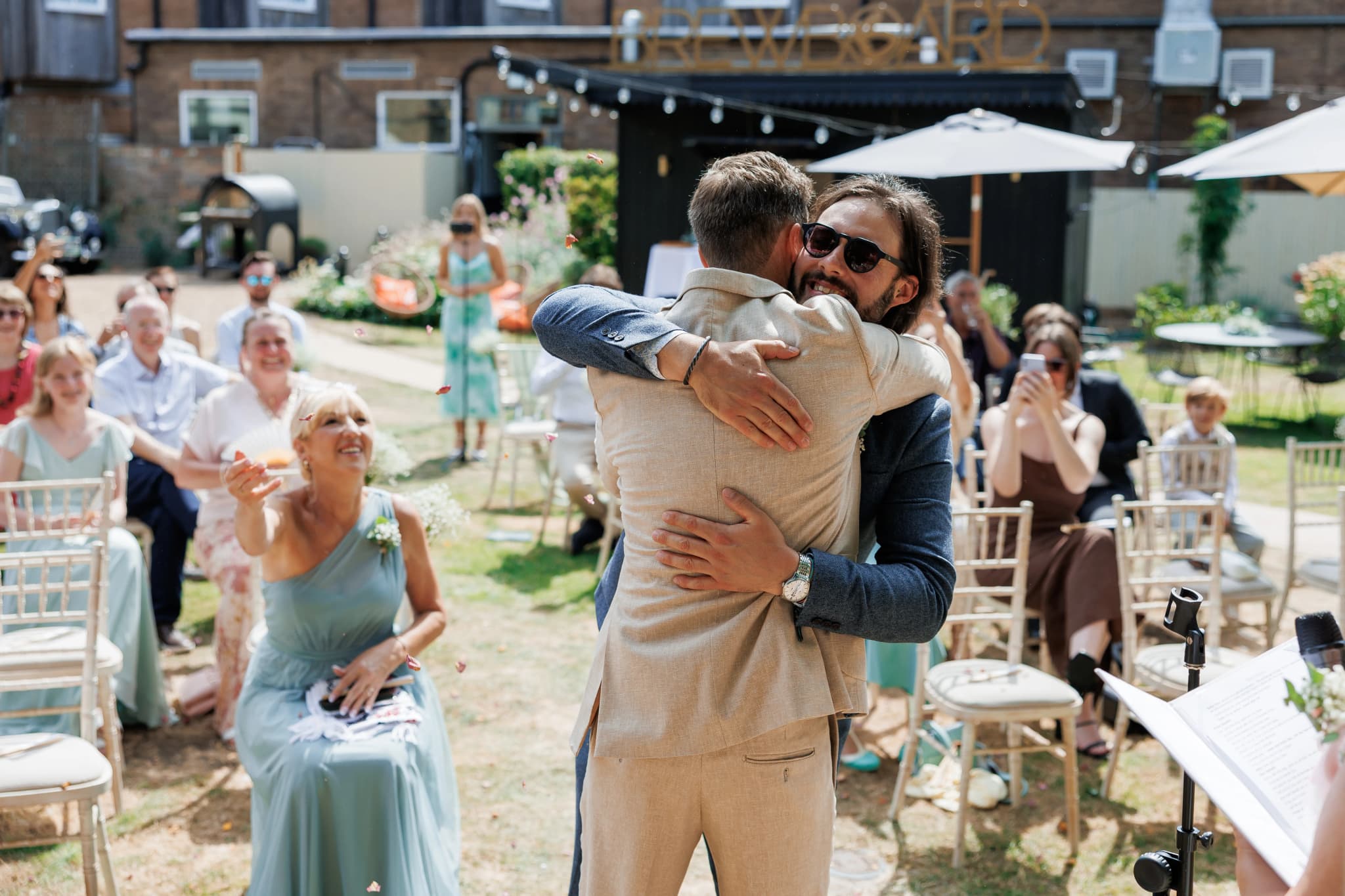
Group photographs outside a register office tend to work best kept brief and focused — immediate family, close friends, the two witnesses if they are being photographed separately — rather than attempting a full extended-family lineup on a public pavement with strangers walking through the background. I generally recommend saving any larger group photographs for later in the day, at a restaurant, garden, or reception venue with more space and privacy, and using the moments directly outside the register office for the genuinely spontaneous ones: confetti, the first kiss as a married couple, family hugging you both, and the walk away from the building as newlyweds.
Choosing the Right Photography Package for a Smaller Day
A registry office wedding does not need the same hours of coverage as a full church-and-reception wedding, and a good photographer's pricing should reflect that. My pricing page sets out coverage options ranging from a few focused hours around the ceremony and portraits through to full-day coverage for couples who are building a longer celebration around a registry office start. It is worth being honest with your photographer about the actual shape of your day — how long the ceremony slot is, whether there is a reception afterwards and where, and how many hours you genuinely want documented — so the package you book fits the day you are actually having, rather than a generic wedding template.
Even with a shorter day, it is worth asking about final image delivery and any wedding album options at the outset. A registry office wedding produces just as many meaningful images as a larger wedding relative to its length, and a printed album is, if anything, an even better way to hold onto the memory of a day that by its nature does not involve two hundred guests all carrying their own cameras and phones.
A registry office wedding, done well, is not a scaled-down version of a "real" wedding — it is its own thing, built around intimacy, brevity, and the freedom to spend the rest of the day exactly as you choose. With the right preparation around venue rules, timeline, and light, the photographs from a registry office day can stand alongside anything from a much larger celebration. If you are planning a registry office wedding in Cambridge or the surrounding area and would like to talk through how the day might work, I would love to hear from you — get in touch and, as Yana Skakun Photography, I will help you plan a day that photographs beautifully from the first vow to the last dance.

Yana Skakun
Photographer · England
Professional wedding, family and portrait photographer based in England. Passionate about capturing authentic emotions and timeless moments.
About Yana →registry office wedding photographycivil ceremony photographerCambridge registry office weddingsmall wedding photography tipsregister office ceremony rulesintimate wedding photographer UK
Venue Guides — Wedding Photography in Cambridge & England
Yana Skakun photographs weddings across England, with particular expertise in regional venues and the distinct lighting and architectural challenges each space presents. Coverage areas include Cambridgeshire, East England, London, and the Midlands. This guide — Registry Office Wedding Photography: How to Make it Look Epic — is part of the photography journal: practical, experience-based advice drawn from real sessions across England. Whether you arrived searching for registry office wedding photography or civil ceremony photographer, the same care and attention shapes every session Yana photographs.
Wedding Photography sessions are available year-round, with bookings open across Cambridge, Ely, Huntingdon, Peterborough, and further afield — East England, London, the Midlands, and beyond. If you have specific questions about cambridge registry office wedding, mention it in your enquiry. Get in touch through the contact form above to check availability and discuss your session. Enquiries are welcomed from anywhere in the UK.
Frequently Asked Questions
What are the best wedding venues in Cambridgeshire?+
Cambridgeshire has excellent options across every budget and style. King's College Chapel and Trinity Hall offer iconic Cambridge settings. Anstey Hall and Ely Cathedral provide classic country house and cathedral drama. Granchester Meadows and various farm venues suit couples wanting a relaxed outdoor feel. The region's historic colleges, riverside venues, and country estates make it one of England's finest wedding destinations.
How do I find a hidden gem wedding venue?+
Look beyond the first page of Google results. Talk to your photographer and caterer — suppliers who work at venues regularly know which ones are genuinely beautiful to work in versus just well-photographed. Visit venues in person rather than relying on Instagram. Historic house venues, working farms, and privately-owned estates sometimes offer exceptional beauty without the premium price of established commercial venues.
What is the average cost of a wedding venue in England?+
Venue hire in England typically ranges from £2,000 to £15,000+ depending on region, exclusivity, catering arrangements, and guest numbers. London and the Home Counties tend to be at the higher end. East Anglia and the Midlands offer excellent venues at more accessible price points. Some venues quote a total minimum spend including catering, so always understand what's included.
Can you get married outside in England?+
Since 2022, couples in England and Wales can legally marry in a wider variety of outdoor settings, though regulations are still evolving. Many licensed venues now offer outdoor civil ceremonies. Check with your local Register Office for current rules and licensing requirements if you want a legal outdoor ceremony.
What is a dry hire wedding venue?+
A dry hire venue provides the space only — you arrange all your own suppliers (caterers, bar, furniture, decorations, entertainment). It gives maximum flexibility and can be more cost-effective than all-inclusive venues, but requires more coordination. Make sure you understand what's included: some 'dry hire' venues include tables and chairs, others are literally just a shell space.

Get in Touch
Ready to Book Your Session?
Get in touch to discuss your vision — I'll reply within 24 hours.