Yana Skakun

How to Legally Get Married in Italy: A Guide for UK Couples
By Yana Skakun·10 July 2026·8 min read
Italy is consistently one of the most requested destinations from the UK couples I work with, and it is easy to see why — the light, the food, the architecture, and the sheer variety of settings from Tuscan hillsides to Amalfi Coast cliffsides make it a genuinely compelling place to marry. What surprises a lot of couples, though, is how complicated the legal side of an Italian wedding actually is. Italy does not make it straightforward for foreign nationals to have a fully legally binding wedding on Italian soil, and the paperwork, translations, and residency requirements catch people out every year. This guide sets out, in practical terms, what UK couples actually need to know if they want to marry in Italy, plus the route that the vast majority of my couples take instead.
The Two Routes: Legal Marriage in Italy vs Symbolic Ceremony Plus UK Legal Marriage
There are two fundamentally different ways UK couples approach getting married in Italy, and understanding the distinction early saves an enormous amount of stress later. The first route is a fully legal marriage conducted in Italy, recognised immediately under both Italian and UK law. The second route, and by far the more common choice among the couples I photograph, is a symbolic or blessing ceremony in Italy combined with a short, private legal marriage completed in the UK either before or after the trip.
The symbolic route exists because Italian civil law requires a level of bureaucratic process that most couples find disproportionate to a wedding that is, for many, primarily about the celebration rather than the legal formality. A symbolic ceremony can be led by a celebrant of your choosing, held at the venue and time you want, with vows you have written yourselves, and it carries all the emotional weight of a wedding day without any of it depending on Italian civil registry timelines. The legal marriage is then handled separately, usually at a UK register office in a fifteen-minute appointment with two witnesses, either a few days before you fly out or shortly after you return.
I want to be clear that neither route is more or less of a real wedding. Plenty of couples find the symbolic-plus-register-office approach genuinely liberating: it separates the legal box-ticking from the day you actually want to remember, and it removes almost all the risk of a paperwork problem derailing the day itself.
What a Fully Legal Italian Wedding Actually Requires
If you do want your marriage to be legally binding in Italy itself, the requirements are significant. You will need a Nulla Osta, a certificate confirming there is no legal impediment to your marriage, issued by the British Consulate in Italy. This document itself requires supporting paperwork from the UK, including a Certificate of No Impediment obtained from your local register office in England, Scotland, Wales, or Northern Ireland, which typically takes a minimum of 28 days notice to issue and is only valid for a limited period once produced.
Every UK document used in the Italian process needs to be translated into Italian by a certified translator and, in most cases, legalised with an apostille from the Foreign, Commonwealth and Development Office. The Italian comune (local municipal authority) where you intend to marry will have its own specific requirements on top of this, and these vary meaningfully between regions and even between individual comuni within the same region, so what worked for a friend who married near Florence is not a guarantee of what a comune near Lake Como will require.
Divorced or widowed applicants face an additional layer of documentation, including decree absolutes or death certificates, also translated and apostilled. The overall process realistically takes several months of lead time, and Italian civil registrars in the more popular wedding regions during peak season are often booking appointments well in advance, so this is not something that can be assembled in the final six weeks before the wedding.
Why Most UK Couples Choose the UK-Legal, Italy-Symbolic Route
In practice, the majority of the couples I have photographed in Italy chose to complete their legal marriage quietly in the UK and treat the Italian day as the wedding they had actually planned around. This is not a compromise or a lesser option; it is simply the more practical structure given how the two countries' systems interact, and it gives you complete control over the ceremony itself rather than being constrained by what an Italian comune will permit for a foreign civil ceremony.
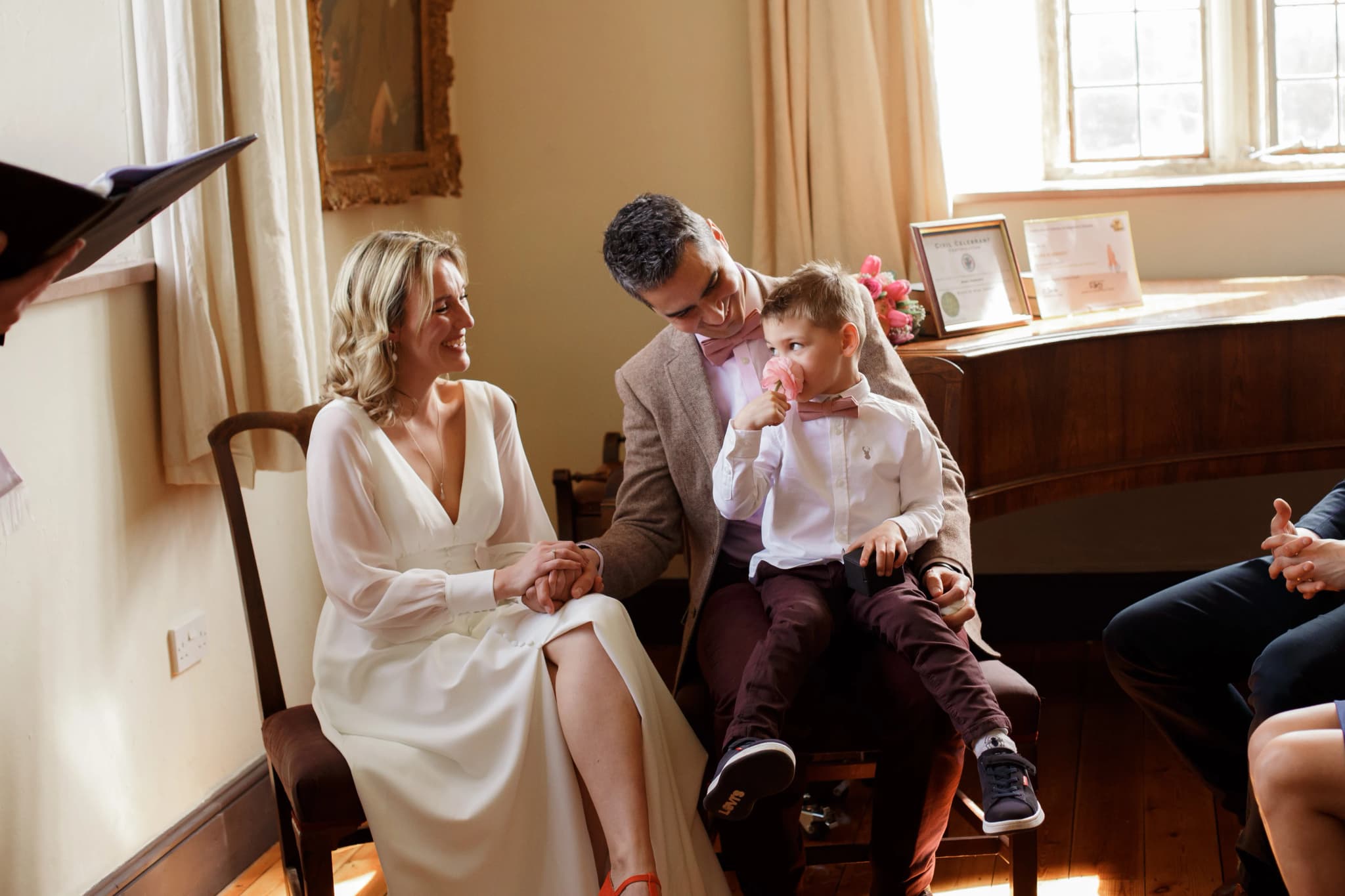
The UK legal appointment can be done at any register office and does not need to happen near your Italian venue or on your wedding date. Many couples do it a few days before flying out, in normal clothes, with two witnesses (often parents or close friends) and no ceremony beyond the legal vows themselves. Others prefer to do it quietly after returning, treating the Italian day as the wedding day in every meaningful sense and the register office appointment as a formality that happens afterwards. Either order works; what matters is getting the UK appointment booked early, since register offices require notice of intention to marry (usually a minimum of 28 days) before the appointment can take place, and popular register offices book up during spring and summer.
From a photography perspective, this structure is genuinely good news. It means the symbolic ceremony in Italy can happen at golden hour on a terrace overlooking the hills, led by a celebrant speaking in English, with vows and readings chosen entirely by you, unconstrained by the more rigid format an Italian civil ceremony would require. If you are drawn to Italy specifically for the light and the landscape, this is worth reading more about on our page dedicated to the Italy elopement and wedding photography we offer, which covers regional locations in more depth.
Planning an Italian wedding or elopement?
I have photographed weddings and elopements across Italy, from Tuscan farmhouses to coastal cliff-top ceremonies, and I am very used to helping UK couples think through the legal-versus-symbolic decision alongside the creative planning. If you are at the early stages of deciding how to structure your Italian wedding day, I am happy to talk through what has worked well for past couples.
Get in touchChoosing Your Region: What Actually Differs
Tuscany remains the most requested Italian wedding region among UK couples, largely because it offers the combination people picture when they imagine an Italian wedding: rolling vineyards, cypress-lined driveways, and converted farmhouses or villas that can host both the ceremony and the reception in one place. Umbria offers a similar landscape with noticeably fewer other weddings happening in the same week, which matters if you want a venue and region that does not feel like it is running three ceremonies a day in high season.
The Amalfi Coast and Lake Como bring a different character entirely — more dramatic, more vertical, with the sea or the lake doing a lot of the visual work. These regions tend to suit couples who want fewer guests and a more intimate structure, partly because venues along the coast and lakeside are smaller and partly because the logistics of moving a large guest list along narrow coastal roads or across a lake by boat add real complexity. Puglia, in the south, has become increasingly popular for couples wanting whitewashed trulli architecture and a lower price point than Tuscany or the lakes, along with genuinely excellent, unpretentious food.
Wherever you choose, it is worth visiting or at minimum doing a thorough video call with the venue before booking, since photographs online rarely convey how a space actually sits in relation to light through the day. I always ask venues about their preferred ceremony time and orientation relative to the sun before confirming a photography schedule, since an afternoon ceremony facing directly into low sun can undermine even the most beautiful setting.
Guest Logistics and Timing
Italian weddings for UK couples tend to run over several days rather than a single event, partly because guests are travelling and want to make the most of the trip, and partly because Italian venues often expect a longer hire period than UK venues do. A welcome dinner the evening before, the wedding day itself, and a relaxed final morning or brunch before people disperse is a common structure, and it gives your photographer the chance to capture more than just the formal day — the arrivals, the informal dinners, and the more relaxed final morning often produce some of the most genuine images of the whole trip.
May, June, and September are the most reliable months for weather without the intensity of July and August heat, which can be genuinely difficult for guests unused to it, particularly for anyone in formal wear during an afternoon ceremony. If you are set on a summer date, building in shade, water, and a realistic ceremony time (later afternoon rather than midday) makes a meaningful difference to guest comfort and to how relaxed everyone looks in photographs.
For couples considering a much smaller guest list, or none beyond witnesses, Italy also works exceptionally well as an elopement destination, and the legal structure described above applies in exactly the same way whether you are bringing eighty guests or just the two of you. If a smaller, more private day appeals, it is worth reading about how wedding photography coverage differs between a full wedding day and a smaller elopement-style day, since the timing and shot list change considerably with fewer people involved.
Budgeting for an Italian Wedding as a UK Couple
Currency fluctuation between sterling and the euro is worth factoring into your budget with some margin, since venue deposits and supplier payments are often made months in advance and rates can move meaningfully in that time. Beyond the venue itself, UK couples marrying in Italy typically underestimate two costs: supplier travel (photographers, videographers, hair and makeup artists travelling from the UK or elsewhere in Italy all charge for travel time and expenses) and guest transport once people land, since many Tuscan and Umbrian venues are a genuine hour or more from the nearest airport with no practical public transport option.
On photography specifically, it is worth asking any photographer you are considering, myself included, directly about travel fees, accommodation requirements, and whether a second shooter is included or additional, since these vary a great deal between photographers and can meaningfully affect a like-for-like price comparison. Our pricing page sets out how destination coverage is structured, and I am always glad to talk through a specific venue and guest count before you commit to a package.
A Practical Checklist and Timeline
As a rough guide, twelve months out is a sensible point to have chosen your region and be actively looking at venues, since the best Italian wedding venues, particularly in Tuscany and on the Amalfi Coast, are booked well over a year in advance for peak season dates. Nine to ten months out is when I would recommend confirming your photographer and other key suppliers, since good Italian-based and UK-based destination suppliers also book up early for the same dates you are chasing.
If you are pursuing the fully legal Italian marriage route, start the Nulla Osta and Certificate of No Impediment process at least four to six months ahead to allow for translation, apostille, and comune processing time, and confirm your chosen comune's specific document list directly, since generic online guidance does not always reflect local variation. If you are taking the UK-legal, Italy-symbolic route, book your UK register office appointment as soon as you know your general timeframe, give the statutory notice period, and treat it as a separate, low-stress errand entirely distinct from the wedding planning itself.
In the final weeks before travelling, confirm your celebrant's running order and vow format if you are doing a symbolic ceremony, share your final timeline with every supplier including your photographer, and build in more slack than feels necessary around transport between the accommodation, the ceremony, and the reception — Italian rural roads and the general relaxed pace of Italian scheduling both tend to eat time that a UK-timetable mindset does not anticipate.
Italy remains one of my favourite places to photograph a wedding precisely because of that relaxed pace and the quality of light across the different regions, from the soft gold of a Tuscan evening to the sharper blue-white light along the Amalfi coastline. If you are weighing up whether Italy is the right choice for your wedding, or you have already chosen a venue and want to talk through how the legal side and the photography timeline fit together, I would love to hear from you. Get in touch through the contact page and, as Yana Skakun Photography, I can talk you through what has worked well for past couples marrying in Italy from the UK.

Yana Skakun
Photographer · England
Professional wedding, family and portrait photographer based in England. Passionate about capturing authentic emotions and timeless moments.
About Yana →getting married in italy from ukitalian wedding legal requirementsitaly elopement UK couplessymbolic wedding ceremony italydestination wedding photographer italyhow to marry in italy
Wedding Tips — Wedding Photography in Cambridge & England
Yana Skakun is a professional wedding photographer based in Cambridge, covering weddings across England — from intimate elopements to full-day ceremonies at country houses, barns, and city venues. Every couple receives a relaxed, documentary approach that captures the day as it truly unfolds. This guide — How to Legally Get Married in Italy: A Guide for UK Couples — is part of the photography journal: practical, experience-based advice drawn from real sessions across England. Whether you arrived searching for getting married in italy from uk or italian wedding legal requirements, the same care and attention shapes every session Yana photographs.
Wedding Photography sessions are available year-round, with bookings open across Cambridge, Ely, Huntingdon, Peterborough, and further afield — East England, London, the Midlands, and beyond. If you have specific questions about italy elopement uk couples, mention it in your enquiry. Get in touch through the contact form above to check availability and discuss your session. Enquiries are welcomed from anywhere in the UK.
Frequently Asked Questions
How much does a wedding photographer cost in England?+
Wedding photography in England typically ranges from £1,500 to £4,000+ for a full day. Price depends on experience, coverage hours, and whether albums or engagement shoots are included. Most photographers charge between £2,000–£3,000 for 8–10 hours of coverage.
How early should you book a wedding photographer?+
For peak season (May–September), book 12–18 months in advance. For autumn and winter weddings, 9–12 months is usually sufficient. Popular photographers at popular venues fill up fast — as soon as you have a date and venue confirmed, start reaching out.
How many photos do you get from a wedding photographer?+
Most professional wedding photographers deliver 400–800 edited images for a full-day wedding. The exact number depends on coverage hours, how many guests there are, and the photographer's editing style. Quality matters more than quantity — a curated gallery of 500 images tells the story better than 1,500 unedited files.
Do you need a second photographer at your wedding?+
A second photographer is helpful if you want simultaneous coverage of getting-ready moments in different locations, multiple angles during the ceremony, or more candid coverage during the reception. It adds cost but significantly increases the variety and completeness of your gallery.
What is the difference between documentary and editorial wedding photography?+
Documentary (reportage) wedding photography captures moments as they happen — the photographer observes and doesn't intervene. Editorial photography involves deliberate direction: placing you in good light, shaping compositions, creating intentional portraits. Most photographers blend both styles throughout the day.
Continue Reading
Related Articles

Wedding Tips
Sustainable Eco-Friendly Wedding Guide — Planning a Green Celebration
15 min read · Read Article
Wedding Tips
Trash the Dress Session — Complete Planning and Photography Guide
14 min read · Read Article
Wedding Tips
Client Communication for Photographers — From Enquiry to Gallery Delivery
15 min read · Read Article
Get in Touch
Ready to Book Your Session?
Get in touch to discuss your vision — I'll reply within 24 hours.