Yana Skakun

How to Pack Your Wedding Dress for International Flights
By Yana Skakun·10 July 2026·8 min read
If your wedding is happening somewhere other than your home country — a vineyard in Tuscany, a beach on the Amalfi Coast, a quiet elopement in the Scottish Highlands that still involves a flight to get there — there comes a point in the planning where the excitement of an international wedding collides with a very practical question: how do you actually get the dress there in one piece? I have photographed enough destination weddings and elopements to have seen every version of this problem, from a beautifully preserved gown that survived three connecting flights to a bride steaming out creases in a hotel bathroom an hour before the ceremony. It is entirely manageable with the right approach, and it does not require an expensive travel case or a second seat on the plane. Here is what actually works.
Carry It On — Do Not Check It
This is the single most important piece of advice, and it is not negotiable if you can help it. Checked luggage gets thrown, stacked, compressed under other bags, and occasionally lost or delayed entirely. A wedding dress in the hold is a wedding dress at genuine risk, and the stakes are simply too high to save yourself the hassle of carrying it on board. Airlines lose an average of a few bags per thousand passengers, which sounds low until it is your dress on the one flight that goes wrong, three days before your ceremony with no time to source a replacement.
Most airlines will allow a wedding dress as an additional item beyond your standard cabin allowance, provided you ask in advance. Call the airline directly, explain that you are travelling with a wedding gown in a garment bag, and ask what their specific policy is. Some carriers will let you hang it in a closet on board if the aircraft has one and if you ask the cabin crew nicely at boarding; others will have you fold it into an overhead bin in a suitably sized garment bag. Either way, get this confirmed before travel day rather than discovering the policy at the gate.
Choosing the Right Garment Bag
A proper travel garment bag is worth buying if you do not already own one. Look for a bag with a sturdy zip, a decent length so the dress does not need to be folded excessively, and ideally some structure to the shoulders so the bag holds its shape rather than collapsing around the gown. Breathable fabric matters more than most brides expect — a plastic dry-cleaner bag left on a dress for a long flight can trap moisture and cause the fabric to develop a slight odour or, in humid climates, encourage mildew on delicate trims. A canvas or cotton garment bag with a zip closure lets the dress breathe while still protecting it from dust, snagging, and stray coffee spills in the airport.
If your dress has an especially structured bodice, boning, or a heavily beaded section, ask your bridal shop about a bag with reinforced padding around that area. Most bridal boutiques sell or can recommend travel bags designed specifically for gowns, and it is a worthwhile investment even if you never fly with the dress again — it will still protect it for storage afterwards.
The Folding Technique That Actually Prevents Creases
Folding a wedding dress correctly is the difference between a gown that needs a five-minute touch-up with a steamer and one that needs an hour of professional pressing on arrival. The key principle is to fold along the seams and the natural lines of the garment wherever possible, since fabric creases far less along a seam than across open expanses of it.
Start by laying the dress flat, face down, on a clean bed or large table. Stuff the bodice loosely with acid-free tissue paper to help it hold its shape and prevent sharp folds through structured panels. Fold the skirt up from the hem in large, soft folds rather than tight ones — think of it more as gently gathering the fabric than creasing it flat. Layer tissue paper between each fold as you go; this is the single biggest factor in preventing deep creases, since the paper stops fabric layers pressing directly against one another under the weight of the folds above. For dresses with tulle or organza skirts, resist the urge to compress the volume too much: tulle actually recovers from light creasing quite well once hung and given time to relax, so do not fight it into a shape smaller than it wants to be.
Once folded, place the dress into the garment bag with the delicate details — lace appliqué, beading, buttons — facing inward or protected by an extra layer of tissue, so nothing snags against the zip or the bag's lining during transit.
Planning a destination wedding or elopement?
Getting the dress there safely is just one piece of the logistics that come with marrying abroad. If you are planning a wedding or elopement outside the UK and want a photographer who understands the particular rhythm of travel days, timing, and light in an unfamiliar location, I would love to talk it through with you.
Get in touchAirport and Airline Logistics Worth Knowing
Book an aisle seat if you can, ideally near the front of the cabin or in a bulkhead row. This makes it easier to be one of the first to board, which matters enormously when it comes to securing overhead bin space or asking about a closet before the cabin fills up and options disappear. Priority boarding, even if you would not normally pay for it, is genuinely worth the small additional cost on a flight where you are travelling with a dress — it buys you first access to storage space and a calmer, less rushed boarding experience.
At security, be prepared for your garment bag to go through the X-ray scanner separately or to be hand-inspected, particularly if it is bulky. This is routine and nothing to worry about, but building in extra time at the airport means you are not stressed about it. If you are travelling through an airport you do not know well, or connecting through a second country, research the specific security and cabin baggage rules for each leg in advance, since allowances can differ meaningfully between airlines and between short-haul and long-haul aircraft on the same route.
For couples flying with a full bridal party or family members also carrying items for the wedding — suits, shoes, an emergency kit — it is worth having one clear point of contact for the dress specifically, so responsibility for it does not become diffuse across several people who each assume someone else has it covered.
Considering Shipping the Dress Ahead Instead
For some destinations and some dresses, shipping ahead via a reputable courier with tracking and insurance is a genuinely sensible alternative to carrying it through an airport. This tends to make the most sense when you are travelling to a villa, hotel, or venue that can receive and store the parcel securely well ahead of your arrival, giving the dress time to be steamed and hung properly on-site before you even land. It also removes the dress entirely from the list of things you personally have to manage on travel day, which for some brides is worth a great deal of peace of mind.
If you go this route, use a specialist courier experienced with wedding dresses or bridal wear, insure the parcel for its full replacement value, and confirm with the venue exactly who will receive it, where it will be stored, and that someone competent will hang it immediately on arrival rather than leaving it boxed. Build in a buffer of several days between expected delivery and your own arrival, so there is time to resolve any delay before it becomes a genuine problem. I would still recommend carrying a small emergency kit and a recent photo of the dress with you regardless, simply so you have documentation and options if anything does go wrong with a shipment.
Dealing With Creases on Arrival
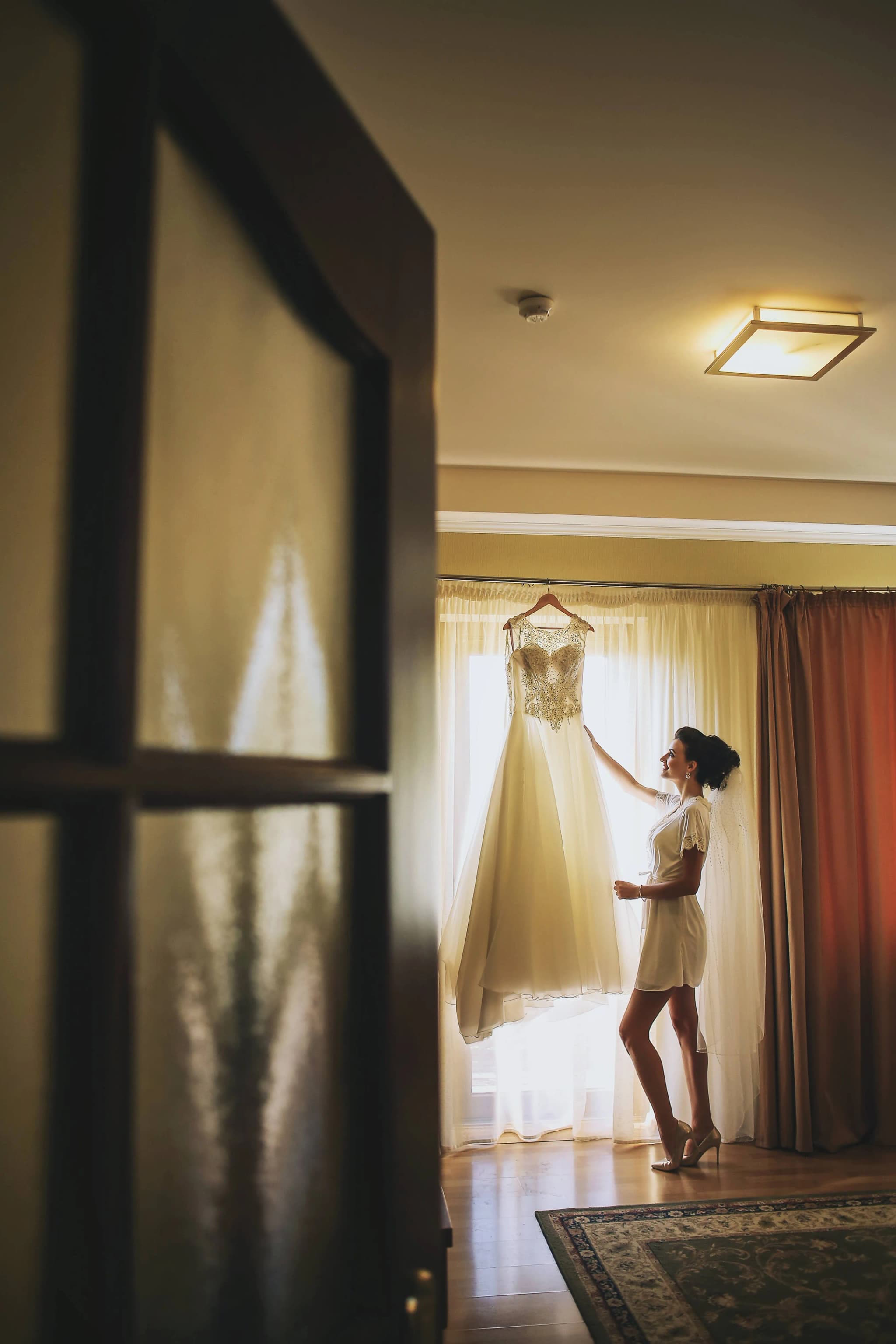
Even with careful folding, most dresses arrive with some degree of creasing, and this is entirely normal and fixable. The first step on arrival, ideally the day before the ceremony, is to unpack the dress and hang it somewhere with good air circulation, away from direct sun or heat sources. Many creases will soften and drop out simply from hanging for twenty-four hours, particularly in tulle, organza, and chiffon.
For anything that persists, a fabric steamer is far safer than an iron for almost every wedding dress fabric — direct heat from an iron risks scorching delicate fibres, melting synthetic beading, or leaving a shine on satin that is very difficult to undo. Hold the steamer several centimetres away from the fabric and let the steam do the work rather than pressing it directly against the dress. If your hotel or venue does not have a steamer, ask the concierge in advance; many hotels in destination wedding hotspots keep one on hand precisely because this situation comes up often, or can arrange a local bridal alterations specialist to help. Building a half day of buffer into your schedule specifically for this step, rather than leaving it to the morning of the wedding, removes a significant source of last-minute stress.
A Simple Pre-Flight Checklist
Confirm your airline's specific policy on carrying a wedding dress as a cabin item at least a week before travel, and get the confirmation in writing where possible, whether that is an email or a screenshot of a chat conversation. Pack the dress in a breathable garment bag with tissue paper between folds, along the natural seam lines rather than across open fabric. Book an aisle seat and pay for priority boarding on the flight carrying the dress. Bring a small emergency kit with safety pins, a small sewing kit, stain-removal wipes, and a lint roller, since these weigh almost nothing and solve a surprising number of small problems. Photograph the dress before you pack it, simply so you have a clear reference of its condition. And build a buffer day into your itinerary between arrival and the ceremony wherever your travel plans allow it, so that steaming, pressing, or any last adjustments do not have to happen under time pressure.
None of this needs to be complicated, and brides fly internationally with their dresses successfully every week of the year. A little preparation, a garment bag with some structure to it, and a plan for what happens on arrival will get you and your dress to the ceremony in good order.
If you are planning a wedding abroad, whether a full destination celebration or a quiet elopement, I photograph weddings across the UK and internationally and I am always happy to talk through the practical side of the day alongside the creative side. Have a look at recent weddings I have photographed, or get in touch directly to discuss dates, travel, and how the day might come together. I am Yana Skakun, and I would love to hear about your plans — get in touch whenever you are ready.


Yana Skakun
Photographer · England
Professional wedding, family and portrait photographer based in England. Passionate about capturing authentic emotions and timeless moments.
About Yana →travel with wedding dresspack wedding dress for flightdestination wedding dress travelcarry on wedding dresswedding dress garment baginternational wedding travel tips
Wedding Tips — Wedding Photography in Cambridge & England
Yana Skakun is a professional wedding photographer based in Cambridge, covering weddings across England — from intimate elopements to full-day ceremonies at country houses, barns, and city venues. Every couple receives a relaxed, documentary approach that captures the day as it truly unfolds. This guide — How to Pack Your Wedding Dress for International Flights — is part of the photography journal: practical, experience-based advice drawn from real sessions across England. Whether you arrived searching for travel with wedding dress or pack wedding dress for flight, the same care and attention shapes every session Yana photographs.
Wedding Photography sessions are available year-round, with bookings open across Cambridge, Ely, Huntingdon, Peterborough, and further afield — East England, London, the Midlands, and beyond. If you have specific questions about destination wedding dress travel, mention it in your enquiry. Get in touch through the contact form above to check availability and discuss your session. Enquiries are welcomed from anywhere in the UK.
Frequently Asked Questions
How much does a wedding photographer cost in England?+
Wedding photography in England typically ranges from £1,500 to £4,000+ for a full day. Price depends on experience, coverage hours, and whether albums or engagement shoots are included. Most photographers charge between £2,000–£3,000 for 8–10 hours of coverage.
How early should you book a wedding photographer?+
For peak season (May–September), book 12–18 months in advance. For autumn and winter weddings, 9–12 months is usually sufficient. Popular photographers at popular venues fill up fast — as soon as you have a date and venue confirmed, start reaching out.
How many photos do you get from a wedding photographer?+
Most professional wedding photographers deliver 400–800 edited images for a full-day wedding. The exact number depends on coverage hours, how many guests there are, and the photographer's editing style. Quality matters more than quantity — a curated gallery of 500 images tells the story better than 1,500 unedited files.
Do you need a second photographer at your wedding?+
A second photographer is helpful if you want simultaneous coverage of getting-ready moments in different locations, multiple angles during the ceremony, or more candid coverage during the reception. It adds cost but significantly increases the variety and completeness of your gallery.
What is the difference between documentary and editorial wedding photography?+
Documentary (reportage) wedding photography captures moments as they happen — the photographer observes and doesn't intervene. Editorial photography involves deliberate direction: placing you in good light, shaping compositions, creating intentional portraits. Most photographers blend both styles throughout the day.
Continue Reading
Related Articles

Wedding Tips
Sustainable Eco-Friendly Wedding Guide — Planning a Green Celebration
15 min read · Read Article
Wedding Tips
Trash the Dress Session — Complete Planning and Photography Guide
14 min read · Read Article
Wedding Tips
Client Communication for Photographers — From Enquiry to Gallery Delivery
15 min read · Read Article
Get in Touch
Ready to Book Your Session?
Get in touch to discuss your vision — I'll reply within 24 hours.