Yana Skakun

Cruelty-Free Bridal Makeup Artists in London: A Photographer's Guide
By Yana Skakun·10 July 2026·8 min read
Every year I photograph brides who care deeply about where their money goes and what it stands for, and increasingly that extends to what goes on their skin on the wedding day itself. Cruelty-free bridal makeup has moved from a niche request to a genuinely common one, and London — with its enormous pool of freelance makeup artists — is well placed to meet it. As a wedding photographer who spends the first two hours of nearly every wedding day in the room while hair and makeup happens, I have a fairly unusual vantage point on this. I see which products go on, how they wear through twelve hours of photographs, and how the artists themselves talk about their kits. This guide is written from that perspective rather than as a straightforward directory, because the practical questions matter more than any list of names.
What "Cruelty-Free" Actually Means in a Makeup Kit
The phrase gets used loosely, so it is worth being precise about it before you start contacting artists. Cruelty-free means the finished product, and ideally its individual ingredients, has not been tested on animals at any stage of development. It is a different claim from vegan, which refers to the absence of animal-derived ingredients such as beeswax, carmine, or lanolin — a product can be cruelty-free but not vegan, and in rarer cases vegan but not certified cruelty-free if the brand sells in a market like mainland China where animal testing has historically been a legal requirement for certain product categories.
Genuinely reliable cruelty-free makeup artists in London tend to work from brands independently verified by Leaping Bunny or PETA's Beauty Without Bunnies programme, rather than brands that simply print "cruelty-free" on the packaging without third-party certification. If cruelty-free sourcing matters to you, it is entirely reasonable to ask an artist directly which brands make up the bulk of their kit — foundation, concealer, setting powder, and false lash adhesive are the products most likely to contain animal-derived ingredients or come from parent companies with mixed testing policies, so those are worth asking about specifically rather than accepting a general reassurance.
Why This Matters Photographically, Not Just Ethically
I bring this up because it genuinely intersects with how a wedding day photographs, not because I have a stake in the ethics of it beyond my own preferences. Cruelty-free and vegan foundations have, in my experience over dozens of weddings, become just as long-wearing and photograph-flattering as their conventional counterparts — that was not always true a decade ago, when vegan formulas sometimes oxidised strangely or separated under studio lighting, but the major reformulations across the industry in the last several years have closed that gap almost entirely. What still matters enormously, cruelty-free or not, is whether the artist colour-matches properly, builds coverage in thin layers rather than one heavy pass, and sets the skin so it survives a receiving line, a first dance, and a dance floor without creasing around the eyes or going shiny under the flash.
A good trial appointment tells you far more than a brand list. Ask the artist to photograph you themselves on their phone under a mix of lighting, or better still, arrange your trial for a day when you can send me a couple of test shots so I can flag anything that reads strangely on camera — certain setting powders with heavy mineral content can cast a slight grey tone under flash, regardless of whether they are cruelty-free or conventional, and it is far better to catch that at a trial than on the morning of the wedding.
Finding Artists and Vetting Their Kits
Instagram remains the most useful search tool for this specifically because cruelty-free and vegan artists tend to say so proudly and repeatedly in their bios and captions — it is a point of differentiation they lean into, so searching hashtags alongside "London bridal makeup" tends to surface a reasonably reliable shortlist. Beyond that, wedding directories increasingly let you filter by specialism, and asking in London-based wedding planning groups will usually get you two or three names within the hour, because brides who have used a cruelty-free artist tend to be enthusiastic about recommending them.
Once you have a shortlist, the vetting conversation is straightforward. Ask what percentage of the kit is cruelty-free certified versus what they carry as a backup for correction work — some artists carry one or two conventional products purely for colour-correcting under extreme circumstances, and a transparent artist will tell you that upfront rather than letting you assume the entire kit is uniform. Ask whether their false lashes, glue, and any glitter or shimmer products used for bridal looks are also cruelty-free, since these are the products most commonly overlooked in an otherwise ethical kit. And ask how they handle allergy patch testing, which is good practice regardless of the ethics of the products and something every bride should request at least a week before the wedding.
Coordinating hair and makeup with your photography timeline
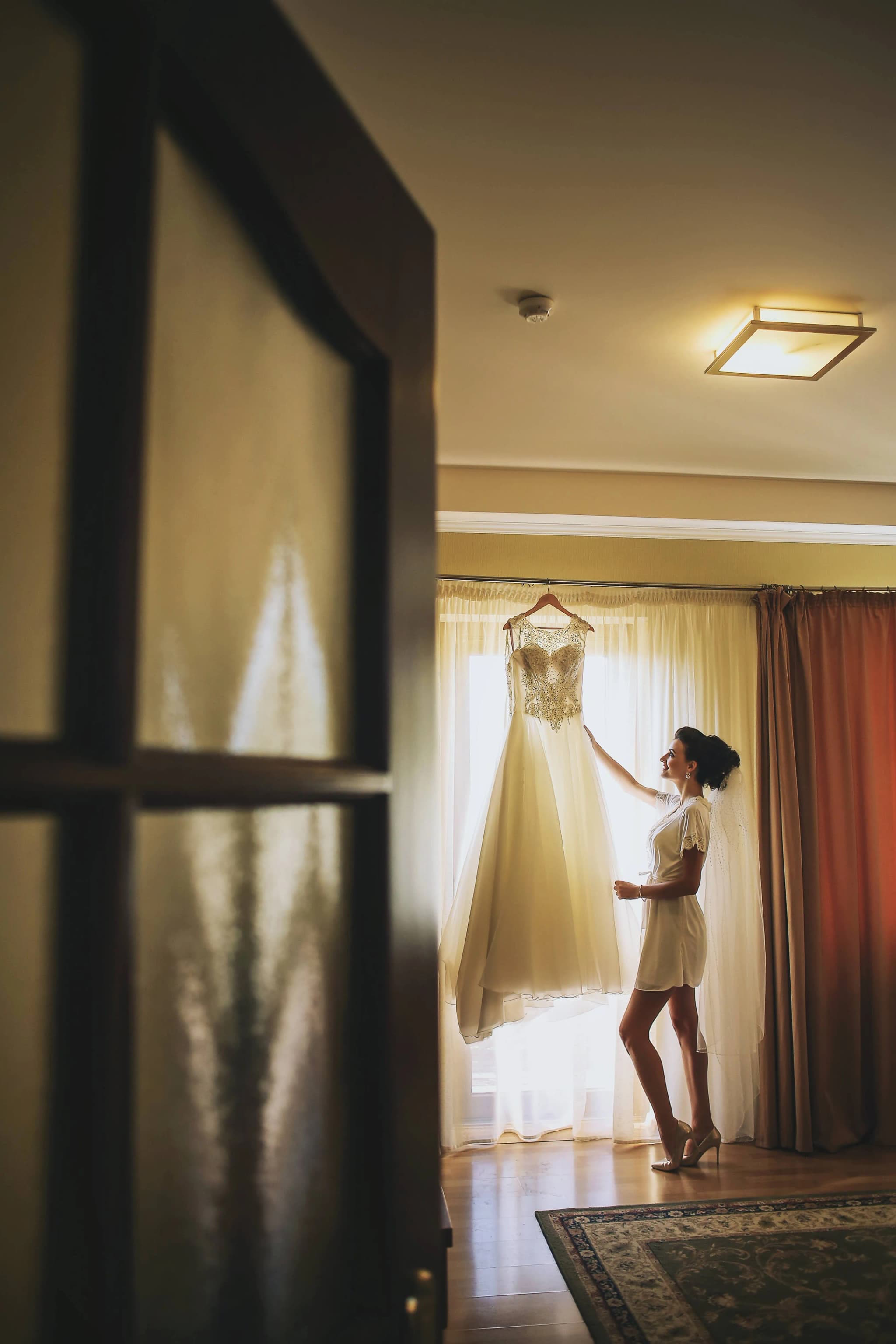
Whichever artist you choose, the getting-ready hours are some of the most important of the day for photography — quiet, natural, and full of genuine emotion before the formality of the ceremony begins. I plan the morning timeline around your makeup artist's schedule so there is no rush at either end, and I am always glad to speak directly with your artist beforehand to coordinate light, space, and timing. If you are still finalising your wedding day plan and want advice on how the morning should flow, I would love to help.
Get in touchLondon vs Travelling Artists: What Actually Makes Sense
A large proportion of the couples I work with are marrying somewhere in Cambridgeshire, Suffolk, or further afield, having found me through my work as a wedding photographer across the UK, and a common question is whether it is worth bringing in a London-based cruelty-free artist rather than sourcing locally. London has by far the deepest pool of specialist artists, so if cruelty-free sourcing is a genuine priority rather than a nice-to-have, it is often worth the travel fee to get an artist whose entire kit and working method you trust, rather than compromising on a locally sourced artist who cannot speak with the same confidence about their products.
That said, travel fees for artists coming out from London to venues an hour or more away add up, particularly if your bridal party is large and the artist needs an assistant to keep to schedule. Most London-based bridal artists charge a call-out fee plus mileage beyond the M25, and it is worth getting that itemised early rather than discovering it at the point of booking. If your venue is well outside London, it is also worth asking whether the artist has done weddings in your specific area before — someone who already knows the drive, the parking, and the light in your venue's getting-ready room will generally run a calmer, more efficient morning than someone doing all of that for the first time on your wedding day.
Trial Appointments: What to Actually Test
Book your trial far enough ahead that a bad result is not a crisis — three to six months out is typical. Wear the closest approximation of your wedding dress neckline and colour that you can manage, and if you know your venue has particularly warm or cool lighting in the getting-ready space, mention it, because some cruelty-free foundations with heavier mineral bases can shift subtly under warm tungsten light in a way that is worth seeing in advance rather than discovering on the day.
Take genuine photographs during the trial, not just a mirror selfie at the end. Photograph in daylight near a window, in a dimmer indoor space, and with flash if you can manage it, because these three conditions cover most of what happens across a real wedding day — the light of a morning getting-ready room, the low ambient light of a reception, and the direct flash of dancefloor photography late in the evening. If the artist offers a second, shorter trial closer to the wedding to fine-tune based on your feedback, that is generally worth taking up, especially if your skin changes seasonally or if you are trying a new skincare routine in the run-up to the wedding.
Longevity: The Question That Matters Most on the Day
Whatever the ethics of the kit, the single most important practical question is how the look holds up over a long day. A typical wedding I photograph runs from getting ready at nine in the morning through to dancing at ten at night — thirteen hours, much of it under warm indoor lighting, some of it outdoors, and a fair amount of it involving tears, laughter, hugging, and eventually dancing. Ask your artist directly what their setting method is for longevity: a good setting spray, strategic powder placement rather than an even heavy dusting across the whole face, and waterproof formulas around the eyes specifically for the ceremony are the things that separate a look that survives the whole day from one that needs touching up by early afternoon.
I always recommend brides ask their makeup artist to build a small touch-up kit into the day — blotting papers, a travel-size setting spray, and the exact lipstick or gloss shade used in the morning, handed to a bridesmaid or kept in a bag, so a quick refresh before the evening portraits and the first dance is simple rather than a scramble. This is one of the small logistical details that makes a genuine difference to how the evening photographs look, regardless of which brand of makeup was used in the morning.
Budgeting for Bridal Makeup in London
Cruelty-free and vegan formulations are not, in my experience, meaningfully more expensive than conventional professional kits at this point — pricing for a London bridal artist tends to be driven far more by experience, demand, and whether you are booking a solo artist or a team for a larger bridal party than by the specific brands in their kit. When you are working out your overall day budget, it is worth thinking about hair and makeup alongside the rest of your vendor costs together, and if you would like a sense of how photography fits into that picture, my pricing page lays out packages clearly so you can plan the morning of the day with a realistic timeline in mind.
For couples having a smaller, more intimate day — something I photograph often through my elopement photography work — a simpler getting-ready morning with one trusted artist rather than a team for a large bridal party is usually entirely sufficient, and the same cruelty-free vetting questions apply regardless of how many people are being made up.
A Photographer's Final Word on Choosing Well
I do not have a financial or professional stake in which makeup brands a bride chooses, but I do have a professional interest in the getting-ready morning running calmly and the finished look photographing beautifully for the next thirteen hours. Every artist I have worked alongside who takes cruelty-free sourcing seriously has also, without exception, been meticulous and communicative about the rest of their process — trial bookings, timeline planning, touch-up kits, allergy testing — and I suspect that is not a coincidence. Care about ingredients tends to come paired with care about craft.
If you are planning your wedding morning and want to talk through how hair and makeup, first look, and getting-ready photography fit together on your specific timeline, or if you would like to see how a finished bridal look photographs across a full day by looking through recent real weddings I have photographed, I am always happy to talk it through. I can also advise on how your chosen images might work in a finished wedding album, since the getting-ready portraits often end up being some of the quietest and most treasured pages. I am Yana Skakun, a Cambridge-based wedding photographer working across the UK, and you can get in touch any time to talk through your plans.

Yana Skakun
Photographer · England
Professional wedding, family and portrait photographer based in England. Passionate about capturing authentic emotions and timeless moments.
About Yana →cruelty free bridal makeup londonvegan wedding makeup artistLondon bridal makeup artistcruelty free makeup weddingwedding getting ready photographyethical bridal beauty
Wedding Tips — Wedding Photography in Cambridge & England
Yana Skakun is a professional wedding photographer based in Cambridge, covering weddings across England — from intimate elopements to full-day ceremonies at country houses, barns, and city venues. Every couple receives a relaxed, documentary approach that captures the day as it truly unfolds. This guide — Cruelty-Free Bridal Makeup Artists in London: A Photographer's Guide — is part of the photography journal: practical, experience-based advice drawn from real sessions across England. Whether you arrived searching for cruelty free bridal makeup london or vegan wedding makeup artist, the same care and attention shapes every session Yana photographs.
Wedding Photography sessions are available year-round, with bookings open across Cambridge, Ely, Huntingdon, Peterborough, and further afield — East England, London, the Midlands, and beyond. If you have specific questions about london bridal makeup artist, mention it in your enquiry. Get in touch through the contact form above to check availability and discuss your session. Enquiries are welcomed from anywhere in the UK.
Frequently Asked Questions
How much does a wedding photographer cost in England?+
Wedding photography in England typically ranges from £1,500 to £4,000+ for a full day. Price depends on experience, coverage hours, and whether albums or engagement shoots are included. Most photographers charge between £2,000–£3,000 for 8–10 hours of coverage.
How early should you book a wedding photographer?+
For peak season (May–September), book 12–18 months in advance. For autumn and winter weddings, 9–12 months is usually sufficient. Popular photographers at popular venues fill up fast — as soon as you have a date and venue confirmed, start reaching out.
How many photos do you get from a wedding photographer?+
Most professional wedding photographers deliver 400–800 edited images for a full-day wedding. The exact number depends on coverage hours, how many guests there are, and the photographer's editing style. Quality matters more than quantity — a curated gallery of 500 images tells the story better than 1,500 unedited files.
Do you need a second photographer at your wedding?+
A second photographer is helpful if you want simultaneous coverage of getting-ready moments in different locations, multiple angles during the ceremony, or more candid coverage during the reception. It adds cost but significantly increases the variety and completeness of your gallery.
What is the difference between documentary and editorial wedding photography?+
Documentary (reportage) wedding photography captures moments as they happen — the photographer observes and doesn't intervene. Editorial photography involves deliberate direction: placing you in good light, shaping compositions, creating intentional portraits. Most photographers blend both styles throughout the day.
Continue Reading
Related Articles

Wedding Tips
Sustainable Eco-Friendly Wedding Guide — Planning a Green Celebration
15 min read · Read Article
Wedding Tips
Trash the Dress Session — Complete Planning and Photography Guide
14 min read · Read Article
Wedding Tips
Client Communication for Photographers — From Enquiry to Gallery Delivery
15 min read · Read Article
Get in Touch
Ready to Book Your Session?
Get in touch to discuss your vision — I'll reply within 24 hours.