Yana Skakun

How to Keep Your Wedding Dress Clean During Outdoor Photos
By Yana Skakun·10 July 2026·8 min read
Every bride who chooses an outdoor location for her wedding photographs asks some version of the same question at some point in the planning process: how do I keep my dress clean? It is a completely reasonable worry. A wedding dress is often the single most expensive garment a woman will ever own, it is usually made of fabric that shows marks easily, and the whole point of outdoor photography is grass, gravel, riverbanks, and woodland — none of which are naturally hygienic environments. The good news is that a beautiful, clean-looking dress and genuinely outdoor, natural photographs are not mutually exclusive. With the right preparation, the right helper on the day, and a photographer who understands how to work with a dress rather than against it, you can have both.
Start With the Right Expectations
The first thing worth accepting before the wedding day arrives is that a certain amount of contact between your hem and the ground is inevitable if you want photographs taken outside. Trying to keep the dress pristine and untouched for the entire day usually means avoiding the outdoors altogether, which defeats the purpose if you have chosen a garden, a country estate, or a woodland setting specifically for its beauty. The goal is not a dress with zero marks on it by the end of the evening. The goal is a dress that photographs beautifully during the portrait session, when the light and the images matter most, and that survives the day in good enough condition to be cleaned or preserved afterwards.
Most brides find this reframing genuinely freeing. Once you stop trying to protect the dress from every blade of grass, you can actually enjoy walking through a field at golden hour instead of flinching every time the hem brushes against something. I always tell couples that the dress is meant to be worn, not preserved in amber for the day, and some of the most striking images come from precisely the moments when a bride has stopped worrying about the fabric and is simply present in the landscape.
Choose the Right Dress for Your Setting
If you already know your wedding will involve outdoor photographs in a field, a garden, or on unpaved ground, this is worth mentioning to your dressmaker or bridal shop consultant while you are still choosing the dress. Certain fabrics and finishes cope with outdoor conditions far better than others. Heavier satins and mikados mark more visibly and take longer to dry if they get damp, while chiffon, tulle, and crepe tend to shake off light dust and dry grass more easily and show less obvious staining even after ground contact. A fitted mermaid silhouette, which drags along the ground with no clearance, will inevitably need more clean-up than an A-line or ballgown with a shorter or bustled hem for the walking parts of the day.
A detachable overskirt or a bustle option is one of the most practical additions a bride can make if outdoor portraits are planned. Many dresses can be bustled up after the ceremony so the train is lifted off the ground entirely for the reception, while still being worn full-length and photographed properly during the formal portrait session when someone is on hand to manage it. If you are planning a countryside wedding, I would always recommend asking your dressmaker directly about this option during your fittings.
Bring a Dedicated Dress Minder for the Portrait Session
The single most effective thing you can do to keep a wedding dress clean during outdoor photography is to have one person, other than the photographer, whose entire job during the portrait session is managing the train and hem. This does not need to be a professional; a bridesmaid, a mother, or a friend who is briefed in advance and given a soft cloth works perfectly well. Their role is simple: lift and arrange the train between shots, keep it off wet grass or puddles while you are walking between locations, and give it a quick brush down if it picks up grass clippings, pollen, or dust.
I work closely with whoever takes on this role during a session. I will tell them exactly when I need the train laid out for a shot and when it is safe to lift it back up while we move to the next spot, so the dress is only actually on the ground for the seconds it needs to be in frame. This coordination makes an enormous difference over the course of an hour-long portrait session compared with a train that trails along unmanaged the entire time.
Practical Kit Worth Having on the Day
A few inexpensive items in someone's emergency bag solve the vast majority of dress problems that come up during outdoor photography. A clean white towel or a groundsheet gives you somewhere to kneel or sit without transferring grass stains directly onto white fabric. Baby wipes or a damp cloth handle fresh mud or grass marks far better than anything applied once they have dried in. A small clothes brush lifts off dry dust, pollen, and grass seed without needing any liquid at all. Safety pins are useful for temporarily pinning up a hem while walking to a location and releasing it again for the shot. Bring these along, or ask your wedding planner or venue coordinator whether they keep an emergency kit, because most experienced UK wedding venues do.
For dew and damp grass specifically, timing matters more than kit. Early morning photographs in a meadow can mean a soaked hem within minutes if the grass is still wet from overnight dew, so if you are shooting first thing, either choose a drier location such as a gravel path or stone terrace, or accept that some dampness is likely and plan for the dress to be cleaned professionally afterwards regardless.
A note from Yana
I always scout the ground conditions at a venue before the wedding day itself where possible, so I already know which spots are dry, which have the softest evening light, and which are best avoided after rain. Couples planning a countryside or garden wedding are always welcome to talk through the practicalities of a location before booking, so there are no surprises on the day.
Get in touchHow I Work With the Dress During a Shoot
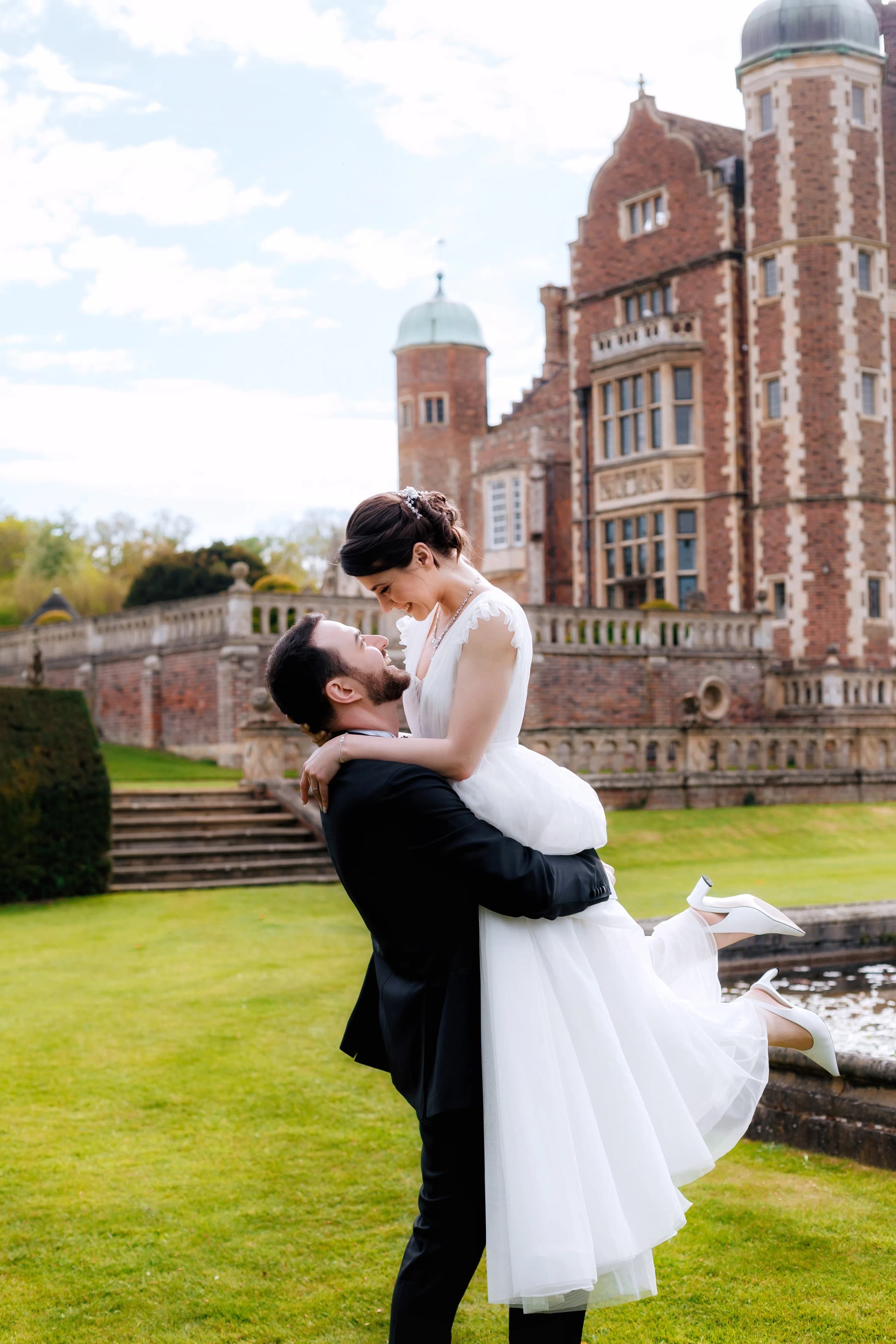
As a photographer, I make a number of small decisions during a session that reduce wear and tear on a dress without the couple ever needing to think about it. I choose ground for standing and walking shots that is drier and firmer where possible, saving any grass-lying or hem-in-the-stream shots for the very end of a session, after the more formal portraits are already safely captured. I also work quickly through any pose that involves the dress touching the ground, so it is only down for the handful of frames that actually need it rather than for the several minutes it might take to get everyone arranged and comfortable.
For couples who want a specific romantic image with the dress fanned out across grass or steps, I will usually shoot that particular set-up early in the session, before the hem has picked up any marks elsewhere, so the fabric looks its cleanest in the photograph that shows the most of it. This kind of sequencing is something experienced wedding photographers plan instinctively, and it is one of the reasons choosing a photographer who has real experience with outdoor and countryside weddings is worth doing. You can see more of how I approach this kind of session on my weddings page.
Special Considerations for Elopements and Adventure Sessions
Couples planning an elopement or an adventure-style shoot in more rugged terrain — a hillside, a beach, woodland trails — tend to have even more contact between dress and ground than a traditional venue wedding, simply because the whole point of the day is walking through dramatic landscape. If this sounds like your plan, it is worth having an honest conversation in advance about which parts of the dress matter most in photographs and which parts you are genuinely relaxed about marking. Many couples in this situation choose a shorter or simpler dress for the adventurous portion of the day and save a fuller gown, if they have one, for a ceremony that takes place on cleaner ground. I cover this kind of planning in more detail with couples booking an elopement photography session, because the logistics differ quite a bit from a standard venue wedding.
Whatever terrain you are working with, a spare pair of flat shoes or wellies for walking between locations, changed out of just before each shot, keeps both the dress hem and your own comfort in far better shape than trudging across a field in heels for the whole session.
Getting the Dress Cleaned and Preserved Afterwards
Once the wedding is over, resist the temptation to deal with the dress yourself with a home stain remover, which can set certain marks permanently or damage delicate beading and embroidery. Take it to a specialist wedding dress cleaner as soon as reasonably possible after the wedding, ideally within a few weeks, since grass and food stains become significantly harder to remove the longer they are left untreated. Most specialist cleaners in the UK offer a preservation service alongside cleaning, which stores the dress in an acid-free box designed to prevent yellowing over the years, and this is worth considering if you hope to pass the dress on or simply want it kept in the condition it was in on the day.
It is also worth knowing that a dress with visible grass stains or a muddy hem is not a failed wedding day. It is evidence of a wedding day that was actually lived in, outdoors, in real weather and on real ground, and the photographs from that day will very likely be the ones you treasure most regardless of what the hem looked like by the final dance.
If you are planning an outdoor wedding in Cambridgeshire or further afield and want to talk through how to protect your dress while still getting genuinely beautiful, natural photography, I am always happy to help you plan the day in detail. You can find more about my approach on the wedding photographer page, browse pricing for wedding coverage, or see how finished images come together in a keepsake wedding album. For questions about your specific venue or dress, get in touch and I will happily talk through what to expect on the day. — Yana Skakun Photography

Yana Skakun
Photographer · England
Professional wedding, family and portrait photographer based in England. Passionate about capturing authentic emotions and timeless moments.
About Yana →keep wedding dress clean outsideoutdoor wedding photographywedding dress tipscountryside wedding photographywedding dress cleaningelopement dress advice
Wedding Tips — Wedding Photography in Cambridge & England
Yana Skakun is a professional wedding photographer based in Cambridge, covering weddings across England — from intimate elopements to full-day ceremonies at country houses, barns, and city venues. Every couple receives a relaxed, documentary approach that captures the day as it truly unfolds. This guide — How to Keep Your Wedding Dress Clean During Outdoor Photos — is part of the photography journal: practical, experience-based advice drawn from real sessions across England. Whether you arrived searching for keep wedding dress clean outside or outdoor wedding photography, the same care and attention shapes every session Yana photographs.
Wedding Photography sessions are available year-round, with bookings open across Cambridge, Ely, Huntingdon, Peterborough, and further afield — East England, London, the Midlands, and beyond. If you have specific questions about wedding dress tips, mention it in your enquiry. Get in touch through the contact form above to check availability and discuss your session. Enquiries are welcomed from anywhere in the UK.
Frequently Asked Questions
How much does a wedding photographer cost in England?+
Wedding photography in England typically ranges from £1,500 to £4,000+ for a full day. Price depends on experience, coverage hours, and whether albums or engagement shoots are included. Most photographers charge between £2,000–£3,000 for 8–10 hours of coverage.
How early should you book a wedding photographer?+
For peak season (May–September), book 12–18 months in advance. For autumn and winter weddings, 9–12 months is usually sufficient. Popular photographers at popular venues fill up fast — as soon as you have a date and venue confirmed, start reaching out.
How many photos do you get from a wedding photographer?+
Most professional wedding photographers deliver 400–800 edited images for a full-day wedding. The exact number depends on coverage hours, how many guests there are, and the photographer's editing style. Quality matters more than quantity — a curated gallery of 500 images tells the story better than 1,500 unedited files.
Do you need a second photographer at your wedding?+
A second photographer is helpful if you want simultaneous coverage of getting-ready moments in different locations, multiple angles during the ceremony, or more candid coverage during the reception. It adds cost but significantly increases the variety and completeness of your gallery.
What is the difference between documentary and editorial wedding photography?+
Documentary (reportage) wedding photography captures moments as they happen — the photographer observes and doesn't intervene. Editorial photography involves deliberate direction: placing you in good light, shaping compositions, creating intentional portraits. Most photographers blend both styles throughout the day.
Continue Reading
Related Articles

Wedding Tips
Sustainable Eco-Friendly Wedding Guide — Planning a Green Celebration
15 min read · Read Article
Wedding Tips
Trash the Dress Session — Complete Planning and Photography Guide
14 min read · Read Article
Wedding Tips
Client Communication for Photographers — From Enquiry to Gallery Delivery
15 min read · Read Article
Get in Touch
Ready to Book Your Session?
Get in touch to discuss your vision — I'll reply within 24 hours.