Yana Skakun

How to Plan a Vow Renewal Ceremony in the UK (Step-by-Step)
By Yana Skakun·10 July 2026·8 min read
Vow renewals are one of the loveliest bits of work I get to do, precisely because they carry none of the anxious logistics of a first wedding. There is no legal paperwork to file, no register office deadline, no seating plan diplomacy to manage between two families meeting for the first time. What is left, once you strip all that away, is the part that actually matters: two people standing in front of the people they love, saying out loud why they would choose each other again. Planning one well in the UK is refreshingly simple once you understand which rules genuinely apply to you and which decisions are entirely yours to make.
Vow Renewals Are Not Legally Binding — And That Is the Whole Point
The first thing to understand is that a vow renewal has no legal status in England, Wales, Scotland or Northern Ireland. You are already married; this ceremony does not change that, add to it, or require it to be registered anywhere. That single fact is what gives a vow renewal its freedom. Because there is no legal register to sign, you do not need a registrar, you do not need two witnesses in the formal legal sense, you do not need a licensed venue, and you are not bound by the fairly strict content rules that apply to civil ceremonies in England and Wales, where certain religious references are restricted. You can hold a vow renewal literally anywhere — a beach at low tide, your own garden, the hill where you had your first date, a marquee, a courtroom-style hall, or a corner of the same venue you married in originally. Nobody needs to approve the location, the wording, or the running order except you.
This also means you can be as flexible with the format as you like. Some couples want something that looks and feels almost identical to their original wedding, right down to the same readings. Others use the freedom to do something they could not have done the first time around — a smaller, quieter gathering after a big first wedding, or conversely a much bigger celebration than a modest original ceremony allowed for.
Choosing a Reason and a Date
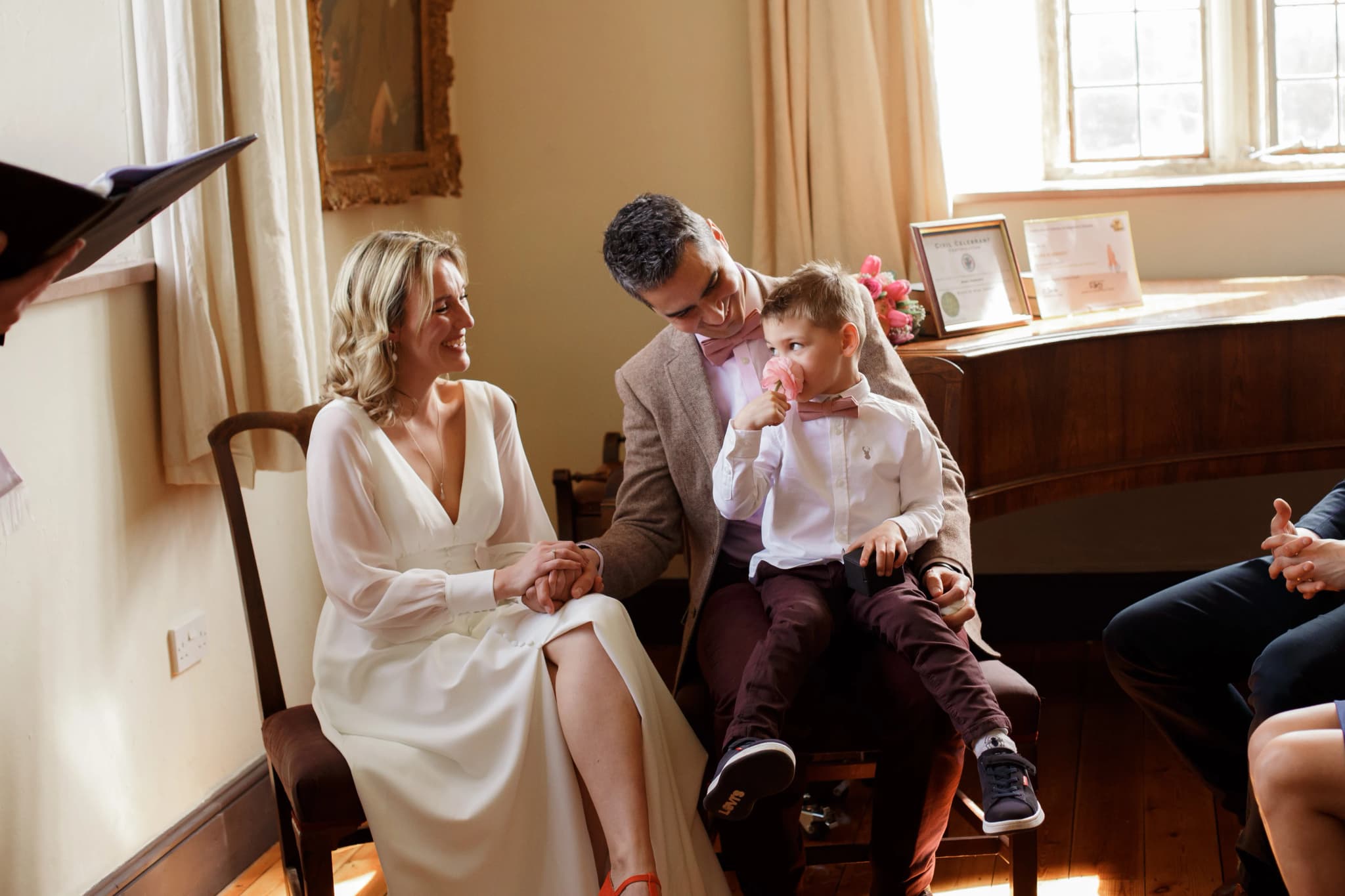
Most couples I photograph for vow renewals are marking something specific: a significant anniversary such as ten, twenty-five or fifty years, having come through a difficult period together, a milestone birthday shared close to the wedding date, or simply the fact that children who were not there the first time can now stand and watch. It is worth being honest with yourselves about what you are actually celebrating, because that reason shapes almost every other decision — who you invite, how formal it is, and what you want the day to feel like emotionally.
On timing, your actual wedding anniversary is the obvious choice but is not compulsory. If you are hoping for reliable weather, late spring through early autumn gives you the best odds anywhere in the UK, and if outdoor photographs matter to you, the same seasonal logic applies as for any wedding — May, June and September tend to offer the calmest combination of decent light and manageable temperatures. If your original wedding was in December, there is nothing stopping you renewing in June instead purely because it makes the day itself, and the photographs, easier to enjoy.
Who Leads the Ceremony
Because there is no legal requirement for a registrar, you have several options for who actually leads the renewal. A civil celebrant is the most common choice for couples who want a proper ceremony structure without religious content — celebrants write and deliver bespoke scripts, and because a vow renewal has no legal constraints, a good celebrant can write something far more personal and specific than the standardised wording a civil marriage often requires. If faith is important to you, your own vicar, priest, imam or rabbi may be willing to conduct a blessing or renewal within a religious setting, though it is worth asking early since this sits outside their usual duties and some have specific views on how it should be structured. A number of couples also ask a close friend or family member to lead the ceremony, sometimes with an online-ordained credential, sometimes simply as a trusted voice reading a script the couple has written themselves. All three routes are equally valid; the right one depends on how formal you want the day to feel.
Guest List: Bigger, Smaller, or the Same
One of the genuine pleasures of a vow renewal is that you get to reconsider the guest list from scratch rather than working from an inherited list of family obligations. Some couples use the day to include people who were not able to attend the original wedding — children, grandchildren, friends made since. Others deliberately go smaller, choosing an intimate gathering of the people who matter most rather than the wider circle that a first wedding often has to accommodate. If you are drawn to the idea of a very small, private renewal, it is worth reading through our guide to elopement photography, since the planning logic and the kind of documentary coverage that suits a two-person or handful-of-guests ceremony overlaps closely with how I approach elopements.
Whatever size you settle on, resist the temptation to invite people purely out of a sense of obligation. Without the social pressure of a first wedding, a vow renewal guest list can be genuinely curated, and the atmosphere on the day reflects that.
Writing Vows That Actually Say Something New
The vows themselves deserve real thought, because reciting the exact same words a second time can feel flat if you do not add anything to them. Most couples find it more meaningful to write new vows that reflect on the years actually lived together — specific memories, things learned, promises that feel earned rather than aspirational. A structure that works well is to keep one or two lines from the original vows as a deliberate callback, then build the rest around what has actually happened since: a house bought, children raised, a hard year survived, a habit you have come to love in each other. This is also where the freedom from legal wording restrictions genuinely helps — you can reference faith, family, in-jokes, or anything else that would not have been permitted in a civil ceremony script.
Write your vows separately and keep them private from each other until the day itself if you want the same emotional charge that surprise vows carry at first weddings. It consistently produces the most genuine reactions and the photographs that couples end up loving most.
Documenting a vow renewal
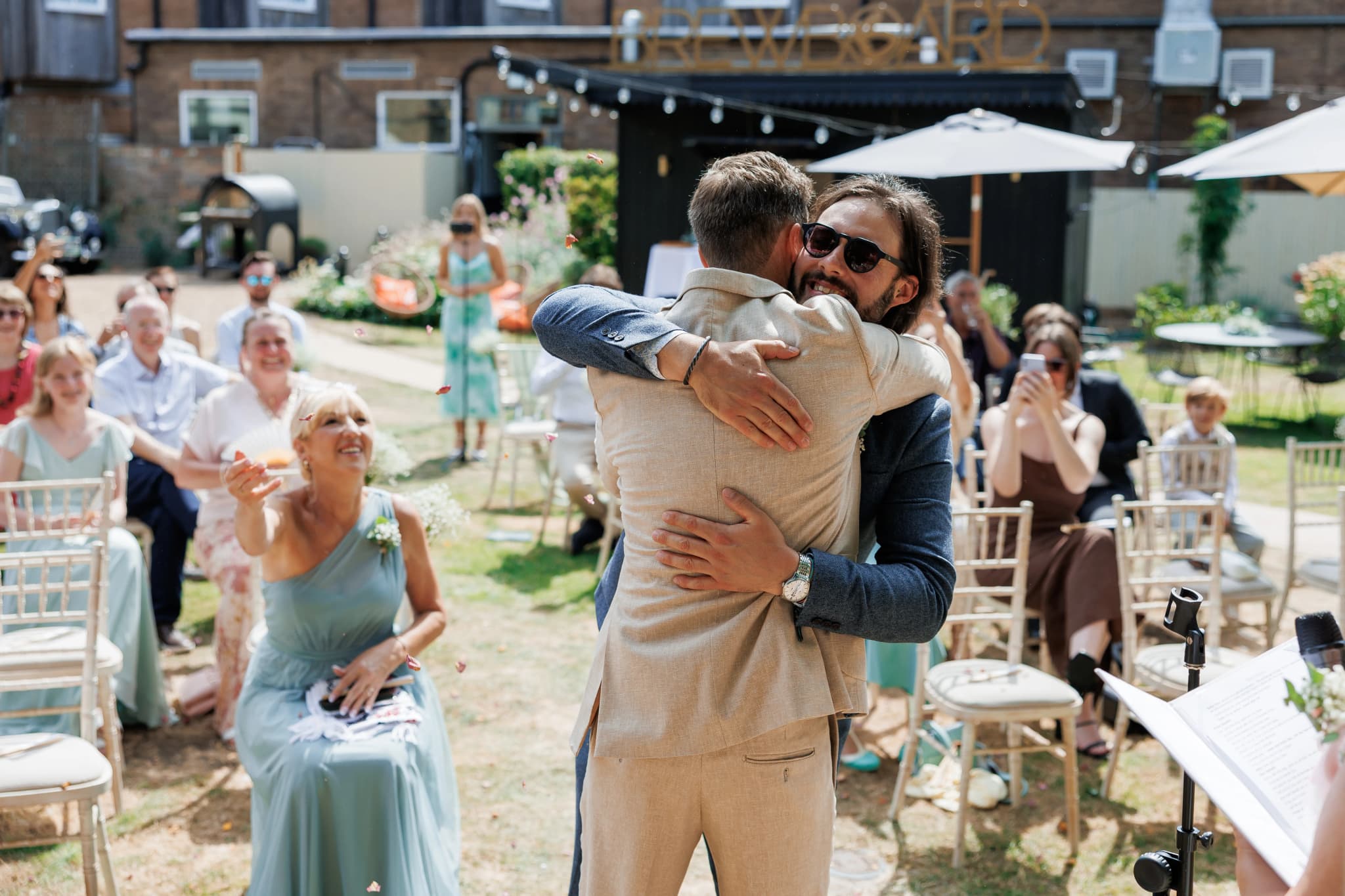
Vow renewals photograph beautifully precisely because they are unhurried. There is no ceremony timeline dictated by a venue's turnaround, no rigid schedule to hit before the wedding breakfast, and often a much smaller group to work around. I approach them the same way I approach any wedding day — documentary-led, with a small amount of considered portrait time built in — and I am always happy to talk through what a renewal day could look like, whatever size and setting you are imagining.
Get in touchVenue and Setting: What's Actually Available to You
Because a vow renewal is not a legal ceremony, none of the licensing rules that govern where a civil wedding can take place apply. You are not restricted to a licensed room or a registered religious building. This opens up genuinely any location: your own back garden, a favourite stretch of Cambridgeshire countryside, a National Trust property, a hotel that would not usually offer wedding licensing, or a return to the exact spot you married the first time, even if that building no longer holds a marriage licence. For couples wanting a UK countryside setting near Cambridge, I have covered ceremonies everywhere from riverside gardens to open fields, and the same principles that guide venue choice for any wedding apply here — light, shelter from wind for outdoor audio, and a backdrop that means something to you rather than one chosen purely for convenience. Our overview of working as a wedding photographer across the UK covers the kind of locations and travel arrangements that apply equally well to a renewal.
If your original wedding venue holds meaning for you, it is always worth asking whether they will host a small renewal even outside their usual wedding operation — many venues are happy to arrange this for a fraction of the cost of a full wedding hire, since there is no legal ceremony room requirement and often a much smaller headcount involved.
Budgeting for a Renewal
Vow renewals typically cost a fraction of an original wedding, largely because the biggest expenses of a first wedding — the registrar or licensed venue fee, and often the largest single guest list you will ever host — simply do not apply in the same way. That said, it is worth being deliberate about where you do want to spend. Couples I work with most often prioritise photography, a celebrant or officiant fee, flowers, and a meal or reception afterwards, while scaling back or skipping entirely things like invitations, favours, and elaborate stationery that mattered more the first time around. If you are weighing up photography coverage for a smaller-scale day, our pricing guide sets out how coverage can be tailored to shorter, more intimate ceremonies rather than a full wedding day package.
A useful rule of thumb is to decide on a total budget first, then allocate roughly a third to the ceremony and officiant, a third to photography and any videography, and the remainder to food, flowers and everything else — adjusting freely based on what you actually care about. Because there is no legal minimum spend anywhere in this process, a renewal can be done meaningfully for a genuinely modest amount if that is what you want.
A Simple Planning Timeline
Renewals do not need the twelve-to-eighteen-month runway of a full wedding, but giving yourself some structure still helps. Roughly six months out, settle on a date and confirm your venue or setting, and book your celebrant or officiant and photographer, since good ones are booked well in advance even for shorter renewal ceremonies. Around three to four months out, finalise the guest list, order any invitations, and start drafting your vows so you have time to revise them rather than writing under pressure the week before. At six to eight weeks out, confirm catering or reception arrangements, finalise the ceremony running order with whoever is leading it, and settle outfits. In the final fortnight, confirm timings with every supplier, including your photographer, and simply protect the time so the day itself is not squeezed between other commitments.
Once the day is done, many couples choose to mark it the same way they would a first wedding — with a proper album of images rather than letting the photographs sit unused in a digital folder. Our guide to wedding albums covers the same design and printing process for renewal ceremonies, and a number of couples choose to have their renewal album sit alongside their original wedding album as a continuation of the same story.
A vow renewal, done well, is not a re-run of your wedding day — it is a chance to say, with the benefit of everything you now know about each other, that you would do it all again. Whether you are planning something small in your own garden or gathering the whole family for a proper celebration, the planning itself does not need to be complicated. If you are thinking about a vow renewal anywhere in Cambridgeshire or further afield and would like to talk through how the day might be photographed, I would love to hear from you — you can read more about how I cover weddings generally, or simply get in touch directly through Yana Skakun Photography to start the conversation.

Yana Skakun
Photographer · England
Professional wedding, family and portrait photographer based in England. Passionate about capturing authentic emotions and timeless moments.
About Yana →vow renewal UKhow to plan a vow renewalvow renewal ceremonyanniversary vow renewalUK wedding celebrantvow renewal photography
Wedding Tips — Wedding Photography in Cambridge & England
Yana Skakun is a professional wedding photographer based in Cambridge, covering weddings across England — from intimate elopements to full-day ceremonies at country houses, barns, and city venues. Every couple receives a relaxed, documentary approach that captures the day as it truly unfolds. This guide — How to Plan a Vow Renewal Ceremony in the UK (Step-by-Step) — is part of the photography journal: practical, experience-based advice drawn from real sessions across England. Whether you arrived searching for vow renewal uk or how to plan a vow renewal, the same care and attention shapes every session Yana photographs.
Wedding Photography sessions are available year-round, with bookings open across Cambridge, Ely, Huntingdon, Peterborough, and further afield — East England, London, the Midlands, and beyond. If you have specific questions about vow renewal ceremony, mention it in your enquiry. Get in touch through the contact form above to check availability and discuss your session. Enquiries are welcomed from anywhere in the UK.
Frequently Asked Questions
How much does a wedding photographer cost in England?+
Wedding photography in England typically ranges from £1,500 to £4,000+ for a full day. Price depends on experience, coverage hours, and whether albums or engagement shoots are included. Most photographers charge between £2,000–£3,000 for 8–10 hours of coverage.
How early should you book a wedding photographer?+
For peak season (May–September), book 12–18 months in advance. For autumn and winter weddings, 9–12 months is usually sufficient. Popular photographers at popular venues fill up fast — as soon as you have a date and venue confirmed, start reaching out.
How many photos do you get from a wedding photographer?+
Most professional wedding photographers deliver 400–800 edited images for a full-day wedding. The exact number depends on coverage hours, how many guests there are, and the photographer's editing style. Quality matters more than quantity — a curated gallery of 500 images tells the story better than 1,500 unedited files.
Do you need a second photographer at your wedding?+
A second photographer is helpful if you want simultaneous coverage of getting-ready moments in different locations, multiple angles during the ceremony, or more candid coverage during the reception. It adds cost but significantly increases the variety and completeness of your gallery.
What is the difference between documentary and editorial wedding photography?+
Documentary (reportage) wedding photography captures moments as they happen — the photographer observes and doesn't intervene. Editorial photography involves deliberate direction: placing you in good light, shaping compositions, creating intentional portraits. Most photographers blend both styles throughout the day.
Continue Reading
Related Articles

Wedding Tips
Sustainable Eco-Friendly Wedding Guide — Planning a Green Celebration
15 min read · Read Article
Wedding Tips
Trash the Dress Session — Complete Planning and Photography Guide
14 min read · Read Article
Wedding Tips
Client Communication for Photographers — From Enquiry to Gallery Delivery
15 min read · Read Article
Get in Touch
Ready to Book Your Session?
Get in touch to discuss your vision — I'll reply within 24 hours.