Yana Skakun

How to Write Your Vows for Photos on the Morning of the Wedding
By Yana Skakun·10 July 2026·8 min read
Somewhere between the hairdresser finishing the last curl and the first knock on the door announcing it is time, there is a quiet stretch of morning that couples consistently underestimate. It is the best window of the whole day for a handful of vow book photographs — the ring, the paper, the handwriting, your hands, the light through the window — and yet it is also the window most likely to be swallowed by hair and makeup running late, nerves, and a to-do list that never quite finishes. Writing your vows in good time, and thinking briefly about how they will be photographed, turns this morning stretch into some of the most personal images from your entire wedding.
Why Vow Books Matter to Your Photographs, Not Just Your Ceremony
A vow book is a small, physical, tangible object in a day that is otherwise full of fleeting moments. Rings get photographed because they are solid and specific. Vow books work the same way — they give me something real to focus on that represents the words you are about to say to each other, rather than trying to photograph an abstract feeling. A leather-bound vow book on a windowsill, half-open, catching morning light, tells a much richer visual story than a phone screen or a folded piece of printer paper ever will.
Couples who invest even modestly in a proper vow book — and there are lovely options at every price point, from simple linen-covered notebooks to hand-lettered leather sets — consistently end up with detail images they treasure years later. It sits alongside the invitation suite, the rings, and the flowers in that quiet flat-lay sequence that opens most wedding galleries, and it is often the image couples choose for their thank-you cards or anniversary prints.
Write Them Days Before, Not the Morning Of
The single most useful piece of advice I can give couples about vows is also the simplest: write them at least three or four days before the wedding, not the night before and certainly not the morning of. This is not really about the quality of the writing, though a rested mind writes better than an exhausted one. It is about what those few extra days let you do with the finished vows once they exist.
If your vows are finished by the Tuesday before a Saturday wedding, you have time to have them written or printed properly into your vow books, time to practise reading them aloud so you are not seeing the words for the first time under pressure, and time to hand them to me or your planner the evening before so they can be laid out ready for photographs before you have even woken up. None of that is possible if you are still drafting sentences in your head while a makeup artist works around you.
I generally suggest couples treat vow-writing like any other pre-wedding task with a real deadline — something that goes on the planning timeline alongside final headcounts and seating plans, not something left to inspiration. If you are working with a wedding photographer in the UK for your full day, ask what time photography coverage begins and work backwards from there so the vow books are genuinely ready, not still being written, when the camera arrives.
What to Actually Write, and How Long It Should Be
You do not need to be a natural writer to produce vows that mean something. The vows that photograph and read best are rarely the most poetic; they are the most specific. A line about the exact moment you knew, a private joke only the two of you understand, a promise rooted in something real about how you actually behave with each other — these carry more weight than borrowed phrases from the internet, however beautifully worded those might be.
For length, two to three minutes of reading time is a good ceremony target, which usually works out to around 300 to 400 words on the page. That is roughly one side of A5 in a reasonably sized hand, which matters practically because it is a size that photographs well as a flat-lay and fits comfortably in a small vow book without looking cramped or requiring tiny writing. If you are working with a wedding stationer or calligrapher on the transfer, give them the final word count early so the book's pages are sized correctly.
A simple structure that works for most couples: open with why you are standing there (a short, honest sentence, not a grand statement), move into two or three specific promises grounded in real behaviour, and close with something forward-looking. Read it aloud to yourself at least twice before the day. Vows that have never been spoken out loud tend to trip on words that look fine on paper but are awkward in the mouth.
Getting Vow Books Photographed on the Morning
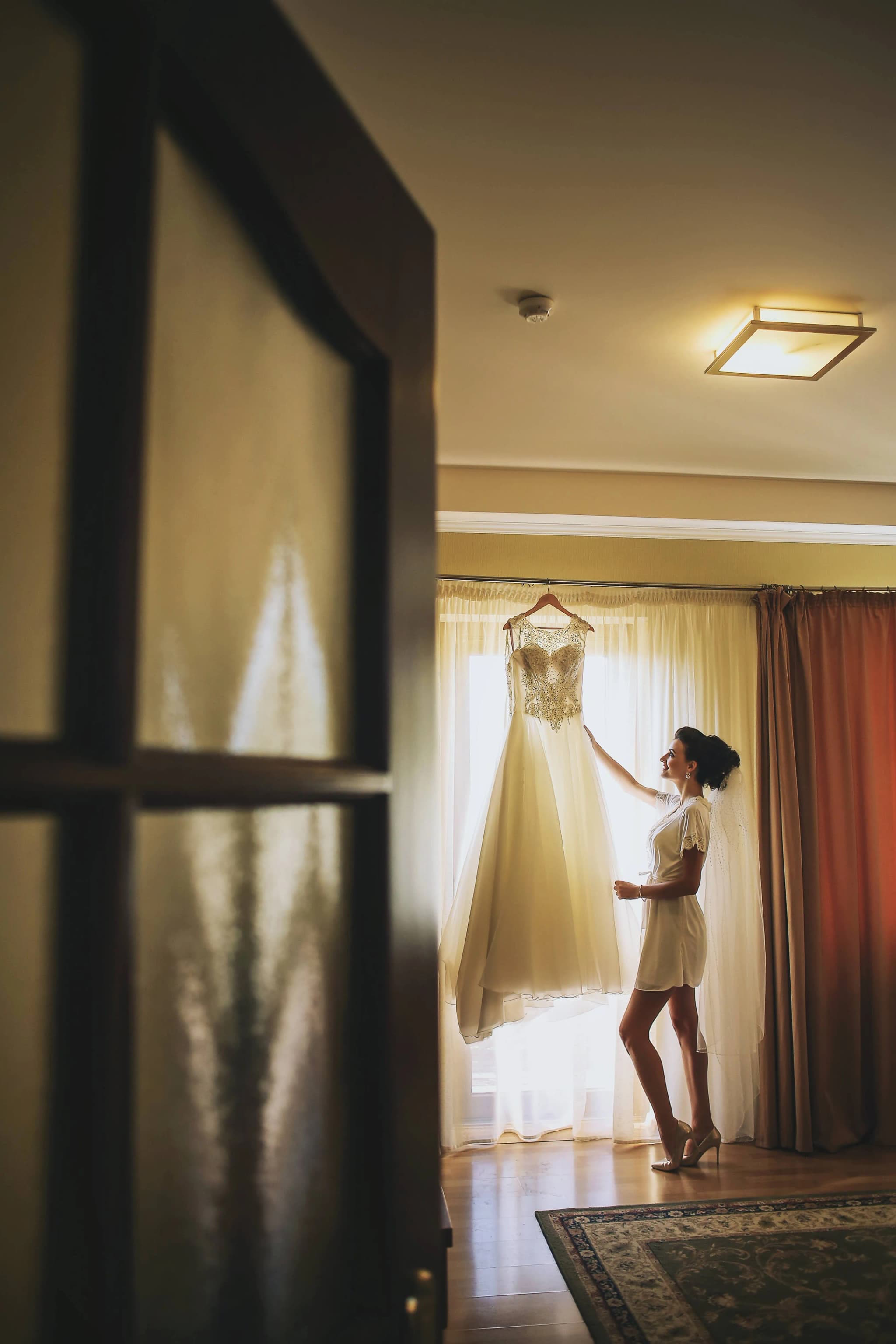
On the morning itself, the vow book photographs happen during the getting-ready coverage, usually in the same window as rings, invitations, and other flat-lay details, before hair and makeup finish and the dress or suit goes on. This is a deliberate choice: it is calmer, the light in a bedroom or suite is often better earlier in the day, and it means the detail shots are done and out of the way before the more time-pressured parts of the morning begin.
Practically, this means the finished vow books need to be in the room, given to me or set aside somewhere findable, the evening before or first thing that morning — not tucked away in a suitcase that gets loaded into a car before I arrive. I will usually ask for the vow books alongside the rings and any other sentimental details (a grandparent's handkerchief, a pressed flower, a love letter) so I can style and photograph them as a set rather than chasing down individual items one at a time.
A window with soft, indirect daylight is nearly always the best setting for these images — north-facing light, or a window with net curtains or a sheer blind, gives an even, flattering glow without harsh shadows. Direct midday sun through an uncovered window can be surprisingly difficult to work with on paper and leather, so if your morning happens to fall on a very bright day, I will usually move to whichever window in the room is softest rather than the brightest.
Choosing Vow Books That Photograph Well
Not every vow book needs to be expensive, but a little thought about materials goes a long way in photographs. Textured covers — linen, leather, watercolour paper — catch light and shadow in a way that smooth glossy card does not, and they photograph with much more depth and character. Matching or coordinating covers for the two books (rather than two entirely unrelated notebooks) reads well as a pair in a flat-lay, though deliberately mismatched books chosen to reflect each partner's personality can be just as striking when done intentionally.
If you are having your vows professionally written or transferred by a calligrapher, order early — good calligraphers are often booked out months ahead during peak wedding season, and a rushed transfer job the week of the wedding rarely produces the quality of handwriting you actually want on camera. If you are writing them yourself, take your time and use a pen you like the feel of. Handwriting that is unhurried and confident photographs far better than handwriting that looks rushed, even if the content is identical.
A note for elopements and small ceremonies
Vow books matter just as much, if not more, for couples having intimate weddings or elopements, where there are fewer guests to witness the ceremony and the photographs carry more of the weight of remembering exactly what was said. If you are planning a smaller day, an elopement photographer who understands how to work these quiet, personal details into the morning is worth prioritising alongside the ceremony coverage itself.
Get in touchCommon Mistakes Worth Avoiding
The most common mistake is simply leaving it too late, which I have already covered, but a few smaller ones come up repeatedly. Writing vows on loose printer paper and only transferring them into the vow books after the wedding means you lose the photograph entirely — by the time the books are filled in, the morning coverage is long finished. Similarly, keeping the vow books in a bag that travels separately from the rest of the getting-ready details means they often get missed in the morning flat-lay sequence simply because no one thought to bring them into the room.
Another one worth mentioning: couples sometimes write vows that are genuinely private and are then surprised when they are asked to read them aloud in front of a full room. If part of what you have written is for your partner's eyes only, that is completely fine — write two versions, a fuller private one for the vow book and a shorter one for the ceremony itself, or simply let your partner know in advance that some lines are just for them, read quietly before or after the ceremony rather than in front of guests.
Finally, do not feel obliged to write vows that sound like everyone else's. The vows that make the best photographs and the best memories are the ones written in your own voice, saying things only you would say to each other, on paper you chose because you liked the way it felt in your hands.
Bringing It All Together on the Day
Vow books are a small detail in the scheme of an entire wedding day, but they consistently punch above their weight in the finished gallery. Written with time to spare, handed over the evening before or first thing in the morning, and photographed in soft window light before the rush of hair and makeup takes over, they become some of the quietest and most personal images from the whole day — the kind that end up printed and framed rather than simply scrolled past. If you are still finalising your day and want to see how morning details, ceremony coverage, and the rest of the timeline fit together, have a look through recent weddings or the pricing page for what full-day coverage includes, and consider how a wedding album can bring the vow book photographs together with the rest of your story in print.
I am Yana Skakun, a Cambridge-based wedding photographer, and I love the quiet morning hours of a wedding day as much as the ceremony and reception that follow. If you would like to talk through your timeline, your vows, or anything else about the morning of your wedding, get in touch — I am always happy to help couples plan this part of the day properly.

Yana Skakun
Photographer · England
Professional wedding, family and portrait photographer based in England. Passionate about capturing authentic emotions and timeless moments.
About Yana →vow books wedding photographywedding vowsgetting ready photoswedding morning timelineCambridge wedding photographerelopement vows
Wedding Tips — Wedding Photography in Cambridge & England
Yana Skakun is a professional wedding photographer based in Cambridge, covering weddings across England — from intimate elopements to full-day ceremonies at country houses, barns, and city venues. Every couple receives a relaxed, documentary approach that captures the day as it truly unfolds. This guide — How to Write Your Vows for Photos on the Morning of the Wedding — is part of the photography journal: practical, experience-based advice drawn from real sessions across England. Whether you arrived searching for vow books wedding photography or wedding vows, the same care and attention shapes every session Yana photographs.
Wedding Photography sessions are available year-round, with bookings open across Cambridge, Ely, Huntingdon, Peterborough, and further afield — East England, London, the Midlands, and beyond. If you have specific questions about getting ready photos, mention it in your enquiry. Get in touch through the contact form above to check availability and discuss your session. Enquiries are welcomed from anywhere in the UK.
Frequently Asked Questions
How much does a wedding photographer cost in England?+
Wedding photography in England typically ranges from £1,500 to £4,000+ for a full day. Price depends on experience, coverage hours, and whether albums or engagement shoots are included. Most photographers charge between £2,000–£3,000 for 8–10 hours of coverage.
How early should you book a wedding photographer?+
For peak season (May–September), book 12–18 months in advance. For autumn and winter weddings, 9–12 months is usually sufficient. Popular photographers at popular venues fill up fast — as soon as you have a date and venue confirmed, start reaching out.
How many photos do you get from a wedding photographer?+
Most professional wedding photographers deliver 400–800 edited images for a full-day wedding. The exact number depends on coverage hours, how many guests there are, and the photographer's editing style. Quality matters more than quantity — a curated gallery of 500 images tells the story better than 1,500 unedited files.
Do you need a second photographer at your wedding?+
A second photographer is helpful if you want simultaneous coverage of getting-ready moments in different locations, multiple angles during the ceremony, or more candid coverage during the reception. It adds cost but significantly increases the variety and completeness of your gallery.
What is the difference between documentary and editorial wedding photography?+
Documentary (reportage) wedding photography captures moments as they happen — the photographer observes and doesn't intervene. Editorial photography involves deliberate direction: placing you in good light, shaping compositions, creating intentional portraits. Most photographers blend both styles throughout the day.
Continue Reading
Related Articles

Wedding Tips
Sustainable Eco-Friendly Wedding Guide — Planning a Green Celebration
15 min read · Read Article
Wedding Tips
Trash the Dress Session — Complete Planning and Photography Guide
14 min read · Read Article
Wedding Tips
Client Communication for Photographers — From Enquiry to Gallery Delivery
15 min read · Read Article
Get in Touch
Ready to Book Your Session?
Get in touch to discuss your vision — I'll reply within 24 hours.